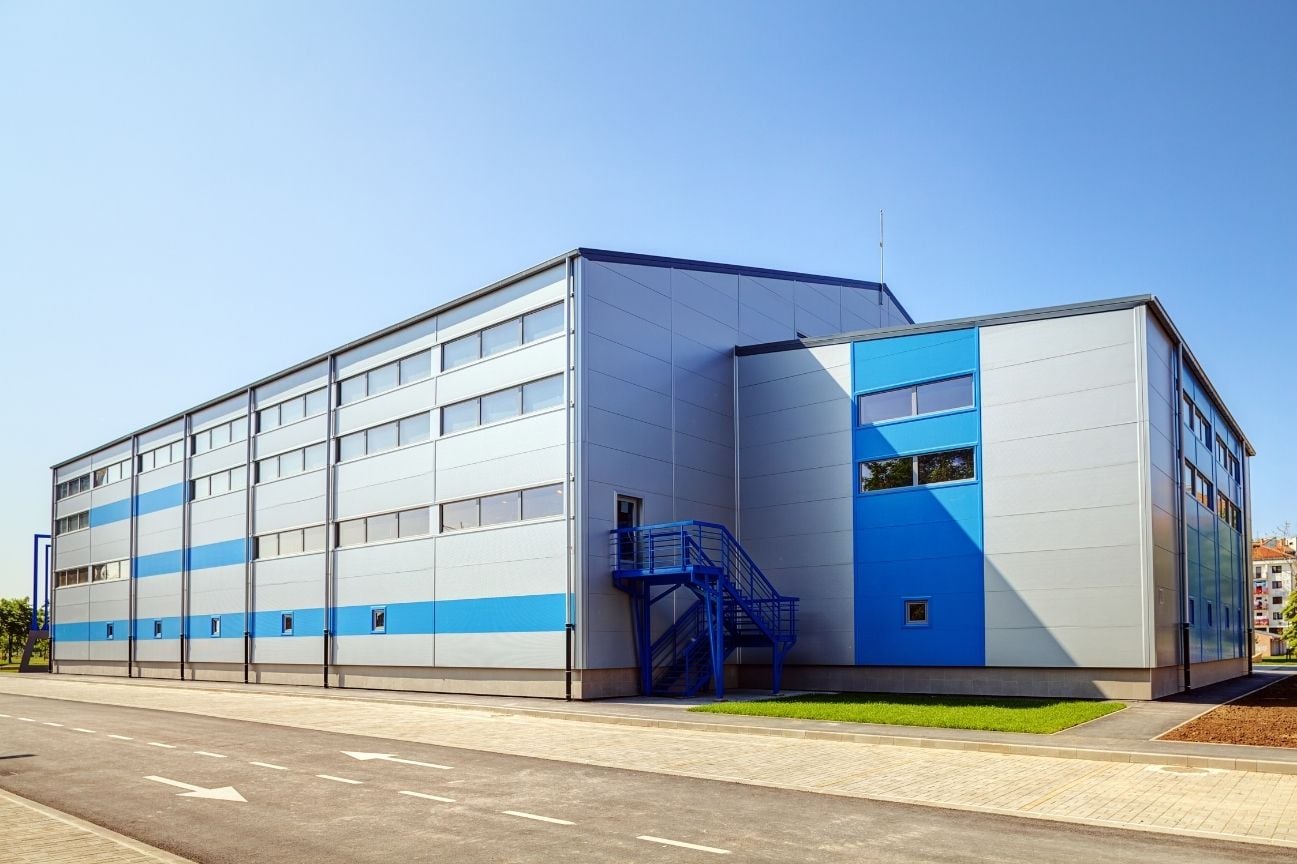
Industrial buildings carry inspection priorities that few other commercial asset types share. Large-span structures, heavy floor loads, fire suppression complexity, dock equipment, and elevated environmental risk all influence how an industrial property should be evaluated. Core Building Inspections performs industrial building inspections for buyers, sellers, lenders, and asset managers across the Philadelphia metro area and the broader PA, NJ, NY, and DE region.
Our industrial inspections are performed in general conformance with ASTM E2018 and are structured for the underwriting expectations of banks, credit unions, REITs, and institutional investors. As CCPIA, ICC, and ASTM-credentialed inspectors, we evaluate warehouses, distribution centers, light manufacturing, flex space, and cold storage facilities.
Each inspection is scoped to the property type, prior and current use, and the transaction. We focus on the systems and risk areas that actually influence value, financing, and long-term ownership cost in industrial real estate.
Industrial buildings are evaluated through a different lens than office, retail, or multifamily. The shell is typically simpler — tilt-up concrete, pre-engineered metal, or masonry with steel framing — but the systems supporting the shell are often more demanding. Large-span low-slope roofs, ESFR sprinkler systems, dock-high and grade-level loading, heavy-duty electrical service, and the floor slab itself all influence asset value and capital exposure.
Industrial property also carries elevated environmental risk. Prior or current uses such as manufacturing, automotive, metal fabrication, chemical handling, dry cleaning, and fuel dispensing can create recognized environmental conditions that warrant separate environmental review.
Our industrial inspections capture both the physical asset and the practical risk areas that influence underwriting and capital planning.
Industrial roofs are typically large-span low-slope membranes — single-ply (TPO, EPDM, PVC) or built-up — with significant rooftop penetrations for HVAC, exhaust, and skylights. We evaluate the membrane, flashings, drainage, parapets, and penetration conditions, and provide a professional opinion on remaining useful life. Industrial roof replacement is a major capital line item and is treated accordingly.
Tilt-up concrete panels, pre-engineered metal framing, CMU walls, and steel structures are evaluated at an observational level. We document panel cracking, joint condition, expansion separations, and any visible structural concerns.
The concrete slab is one of the most important elements in an industrial asset. We evaluate the slab for cracking, spalling, joint conditions, and visible signs of settlement or deflection. Where slab loading capacity is a transaction concern, we note our observations in context.
Dock doors, dock levelers, seals, shelters, bumpers, and grade-level doors are reviewed for condition and operation. Dock equipment is high-use and a common deferred maintenance area.
Sprinkler systems — wet, dry, ESFR, and in-rack — are reviewed at an observational level. The presence and apparent classification of the system is documented, along with visible piping and head condition.
Industrial HVAC ranges from packaged rooftop units to unit heaters and warehouse ventilation systems. Office areas within industrial buildings have their own HVAC scope. We evaluate condition, apparent age, and configuration.
Industrial electrical service is frequently three-phase with significant capacity. We review service entrance, switchgear, distribution panels, and visible wiring for condition and capacity considerations.
Domestic water, sanitary waste, restrooms, and visible plumbing are evaluated. Trench drains, oil-water separators, and process plumbing are noted where present.
Truck courts, asphalt, concrete aprons, parking lots, sidewalks, drainage, lighting, fencing, and gates are evaluated. Truck court condition and trailer parking layout frequently drive capital planning conversations in industrial.
We document observable conditions that may indicate environmental concerns — staining, prior storage tanks, drum storage, floor drains, and similar items — and recommend a Phase I Environmental Site Assessment where appropriate.
Industrial property risk concentrates in a handful of recurring areas. Aging low-slope roofing is almost always part of the capital conversation. Floor slab condition, dock equipment, parking and truck court pavement, sprinkler system upgrades, and electrical capacity for modern tenant uses are all common items.
Environmental risk is the single most important consideration that distinguishes industrial from other property types. Even buildings with clean current use may have prior occupancies that warrant environmental review. Industrial inspections frequently lead directly to a Phase I ESA recommendation, and we coordinate closely between the two scopes.
Industrial capital planning often centers on roof, pavement, and dock equipment. Our reports provide professional opinions on remaining useful life and identify near-term repairs and longer-horizon capital items. For larger transactions, this aligns with our Property Condition Assessment scope and supports lender reserve underwriting.
For triple net leased industrial buildings, our work supports lease documentation, condition baselines, and end-of-lease evaluations through our Triple Net Lease Inspections service.
Our industrial inspection clients include commercial real estate buyers and sellers, owner-occupiers, industrial REITs, private and institutional investors, banks and credit unions, attorneys, brokers, and asset managers. Reports are structured for transaction use and ongoing portfolio management.
We provide industrial building inspections throughout the Philadelphia metropolitan area, all of New Jersey, New Castle County in Delaware, and select markets in New York. Our regional footprint supports investors and operators with single-asset and multi-asset industrial portfolios.
For more on environmental due diligence standards, see the EPA All Appropriate Inquiries guidance.


Certified under nationally recognized commercial inspection standards to ensure consistency, accuracy, and professional accountability.

CCPIA Certified
Certified under nationally recognized commercial inspection standards to ensure consistency, accuracy, and professional accountability.
ICC Certified
Ongoing education and training aligned with current safety practices, codes, and inspection methodologies.
ASTM Member
Inspections performed in general conformance with ASTM standards, supporting due diligence and lender requirements.

Years of Experience
Extensive field experience inspecting diverse commercial properties across multiple asset types and markets.

Highly Trained
Continuous training and practical expertise focused on risk identification, system performance, and long-term planning.
Yes. Dock doors, levelers, seals, and shelters are reviewed at an observational level. Fire suppression systems are documented for type, visible condition, and apparent classification.
Yes. Where observable conditions or prior uses suggest environmental concerns, we recommend a Phase I ESA. Industrial properties frequently warrant environmental review based on current and historical use.
Yes. Cold storage adds insulation systems, refrigeration equipment, and freezer-floor considerations to the standard industrial scope. We document refrigeration systems at an observational level and recommend specialized review where warranted.
Yes. Industrial roofs and truck court pavement are typically the two largest capital line items. We provide professional opinions on remaining useful life and identify anticipated replacement timing.
Yes. We inspect light manufacturing, food processing, fabrication, and similar manufacturing facilities. Process equipment is outside the scope of a standard PCA but related building systems are evaluated.
Most industrial inspections involve one to two site days followed by report preparation. Turnaround typically ranges from one to two weeks depending on size and scope.
