
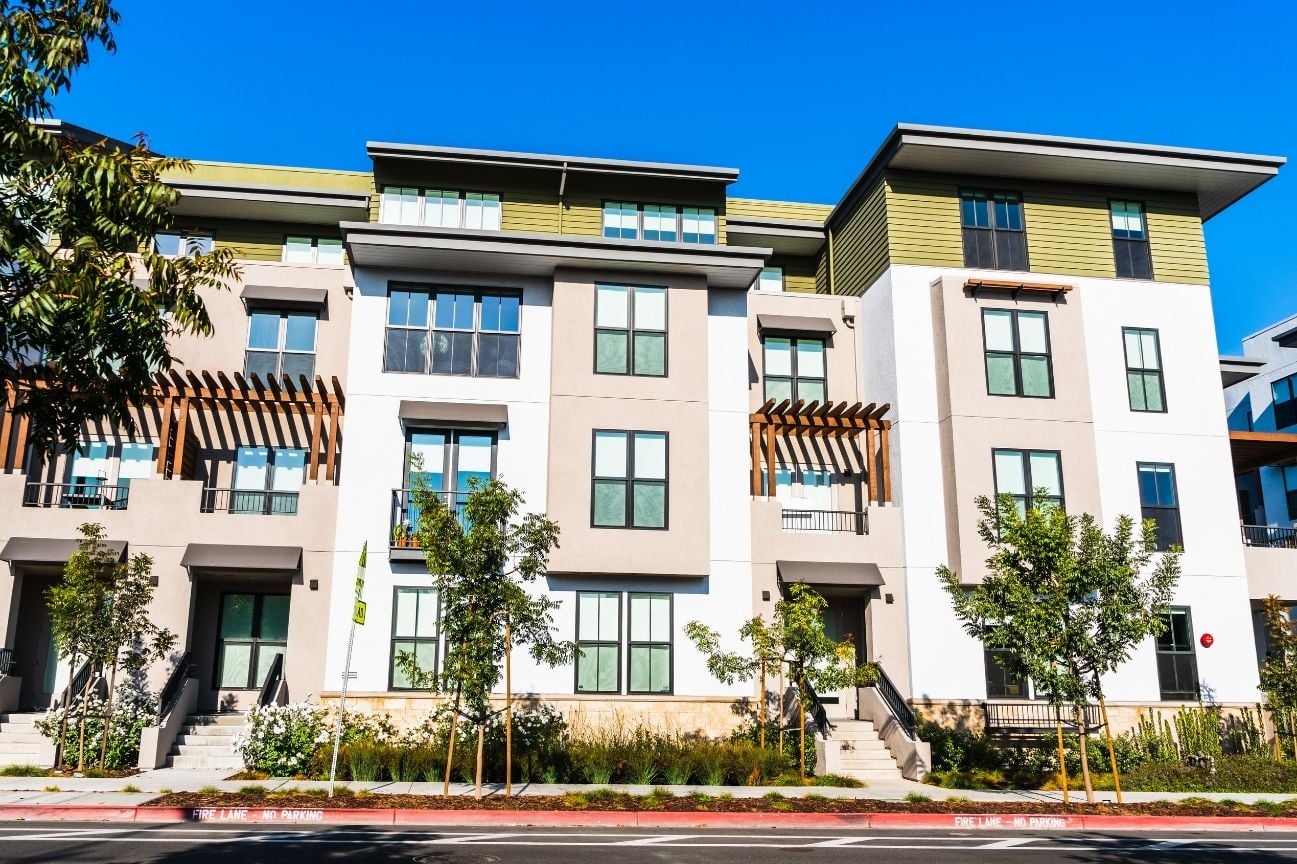
Multifamily properties require a different inspection approach than other commercial asset types. Unit-level conditions, shared building systems, deferred maintenance from continuous occupancy, and the lending requirements that come with agency financing all influence how an apartment property should be evaluated. Core Building Inspections performs multifamily property inspections for buyers, lenders, owners, and operators across the Philadelphia metro area and the broader PA, NJ, NY, and DE region.
Our multifamily inspections are performed in general conformance with ASTM E2018 and reflect the structure expected by banks, agency lenders, and institutional investors. As CCPIA, ICC, and ASTM-credentialed inspectors, we evaluate garden-style, mid-rise, and high-rise apartment assets along with smaller two-to-twenty-unit residential investment properties.
Each inspection is scoped to the property type, vintage, and the transaction. We focus on the conditions that actually influence underwriting decisions, capital reserves, and ownership economics.
Multifamily inspections require attention at two levels: the building shell and shared systems, and the condition of the units themselves. A capital reserve number that reflects only the exterior misses the largest sources of in-unit deferred maintenance. A unit-level review that ignores roofing, building envelope, and central systems misses the long-term capital exposure that drives ownership cost.
The age of a multifamily asset is also more predictive of risk than in many other commercial property types. Plumbing failures in 1970s and 1980s garden-style apartments, aluminum branch wiring in older properties, polybutylene supply lines, fire-suppression issues in pre-code conversions, and balcony and walkway concerns are recurring themes that surface in inspection after inspection.
Our reporting addresses both the shell and the units, with an emphasis on what a lender, investor, or owner-operator actually needs to know.
We evaluate the roof — pitched shingle, low-slope membrane, or built-up — along with flashings, drainage, ventilation, and parapets where applicable. Roofing is a leading capital item in multifamily and is reviewed accordingly.
Siding, masonry, stucco, EIFS, sealants, balconies, walkways, stairs, railings, and entrances are evaluated. Balcony and walkway condition is an increasingly significant risk area in multifamily, with structural concerns and accessibility considerations both in play.
Central boiler plants, individual furnaces, packaged heat pumps, PTACs, water heaters, and shared HVAC distribution are reviewed for condition, apparent age, and maintainability. We identify systems approaching the end of their useful life.
Service capacity, distribution, panels, sub-meters, and visible wiring are reviewed. Older multifamily properties may have aluminum branch wiring, knob-and-tube remnants, or undersized service that warrants careful documentation.
Domestic water, sanitary waste, water heaters, and visible fixtures are evaluated. Galvanized, polybutylene, and aging copper supply lines are noted as relevant. Sub-metering, where present, is documented.
Sprinklers (where present), alarm systems, smoke detectors, emergency lighting, exit signage, and means of egress are reviewed at an observational level. Older garden-style properties without sprinklers are documented in context.
We evaluate a representative sample of units, including down units, model units, and units in different building positions. Kitchens, baths, flooring, paint, windows, and appliances are reviewed for general condition and capital exposure.
Lobbies, hallways, laundry rooms, fitness rooms, pools, leasing offices, and other amenities are reviewed for condition, deferred maintenance, and capital needs.
Parking lots, sidewalks, curbing, drainage, lighting, fencing, landscaping, retaining walls, dumpster enclosures, and playgrounds are evaluated.
Several risk areas surface consistently. Aging roof systems and building envelope issues are common in 1980s and earlier garden-style properties. Plumbing failures from polybutylene and galvanized supply lines drive both insurance and capital exposure. Balcony, walkway, and stair systems are increasingly subject to inspection and regulatory attention. Pool and spa equipment, fire suppression, and ADA compliance in common areas are also frequent areas of focus.
For value-add and reposition investors, deferred unit interiors typically represent the largest single capital number in a transaction. Our reports support both shell-level and interior-level capital planning. For granular cost forecasting tied to specific repair items, see our Cost to Cure Reporting service.
Multifamily capital planning has to balance near-term repairs against long-term reserve requirements. Our reports provide professional opinions on remaining useful life for major systems and identify deferred maintenance, immediate repairs, and anticipated capital items. For agency lender transactions and larger assets, this aligns with our Property Condition Assessment scope.
Where environmental concerns are present — older properties on former industrial sites, underground storage tanks, or proximity to dry cleaners or gas stations — we may recommend a separate Phase I Environmental Site Assessment.
Our multifamily inspection clients include private and institutional investors, syndicators, REITs, banks and credit unions, agency lenders, attorneys, brokers, property managers, and owner-operators. Reports are structured for transaction use, agency lender requirements, and ongoing portfolio management.
We provide multifamily inspections throughout the Philadelphia metropolitan area, all of New Jersey, New Castle County in Delaware, and select markets in New York. This regional footprint supports portfolio investors and operators working across multiple states.
For industry context on multifamily ownership and operations, see the National Multifamily Housing Council.



Certified under nationally recognized commercial inspection standards to ensure consistency, accuracy, and professional accountability.

CCPIA Certified
Certified under nationally recognized commercial inspection standards to ensure consistency, accuracy, and professional accountability.

ICC Certified
Ongoing education and training aligned with current safety practices, codes, and inspection methodologies.

ASTM Member
Inspections performed in general conformance with ASTM standards, supporting due diligence and lender requirements.

Years of Experience
Extensive field experience inspecting diverse commercial properties across multiple asset types and markets.

Highly Trained
Continuous training and practical expertise focused on risk identification, system performance, and long-term planning.
For most transactions, a representative sample of units is inspected — typically a percentage of total units that includes down units, model units, and units in varied building positions. Larger sample sizes can be requested depending on transaction needs.
Our multifamily inspections are performed in general conformance with ASTM E2018 and are structured to support agency lender review. We coordinate with lenders directly when scope or format adjustments are needed.
Our Property Condition Assessment scope includes professional opinions on remaining useful life and anticipated capital needs, which is functionally equivalent to what many lenders refer to as a capital needs assessment.
Yes. Where visible, we identify polybutylene supply lines, galvanized piping, aluminum branch wiring, and other vintage-specific concerns common in older multifamily assets.
Most multifamily inspections involve one to two site days followed by report preparation. Turnaround typically ranges from one to three weeks depending on unit count and scope.
Yes. We routinely support value-add investors and provide both condition documentation and capital line-item detail to inform business plans and renovation budgets.
