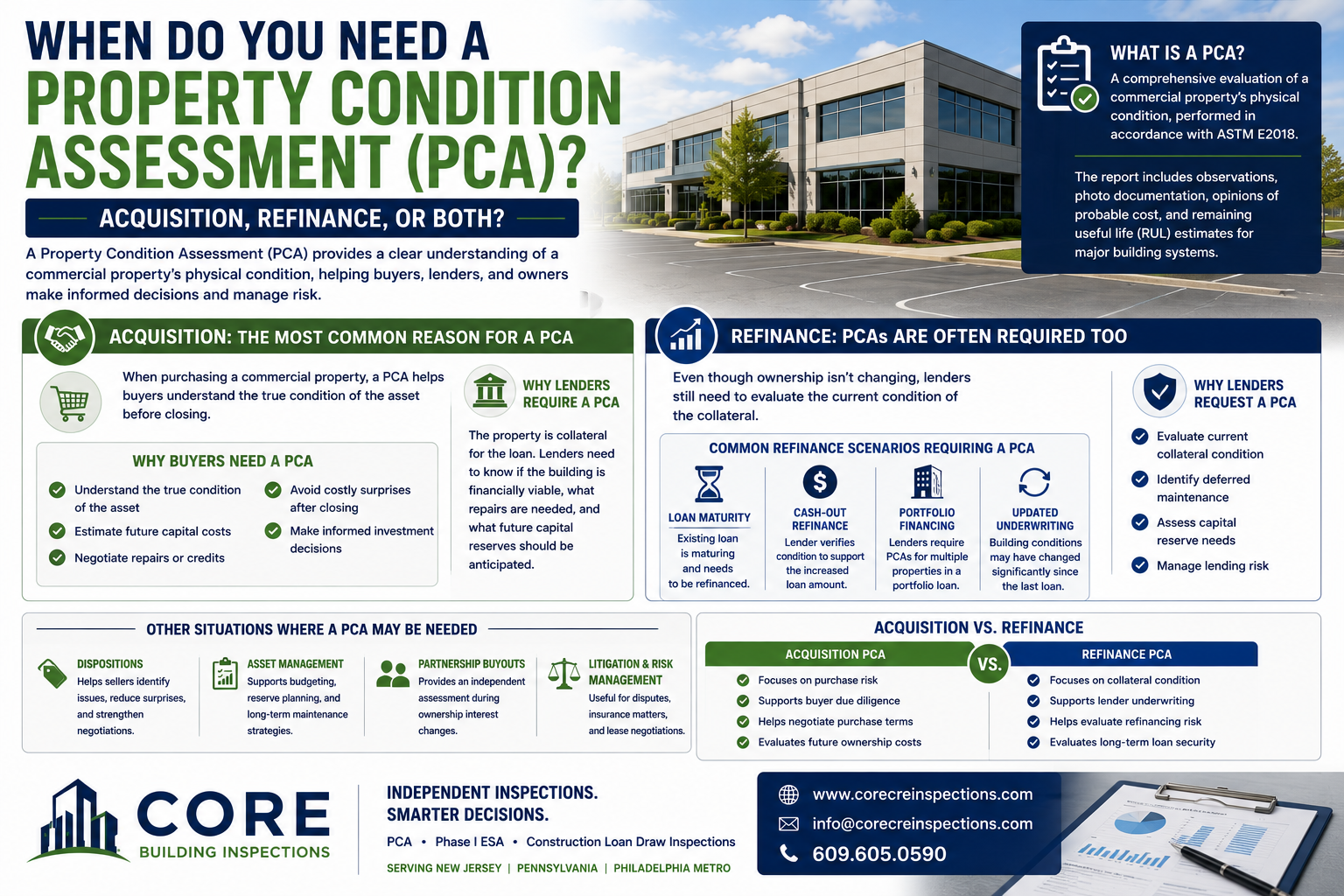
Of all the building systems evaluated during a commercial Property Condition Assessment, the HVAC system consistently generates the largest and most consequential findings. Equipment that appears to be running during a site visit can still carry significant deferred maintenance, remaining useful life concerns, or capital exposure that never appears on the surface. For buyers, lenders, and investors operating in the New Jersey and Pennsylvania markets, understanding what inspectors look for — and why it matters — is an essential part of informed due diligence.
A PCA conducted under ASTM E2018-15 standards requires a systematic visual assessment of all accessible HVAC equipment, including identification of system types, approximate age determination, general operational observations, deferred maintenance documentation, remaining useful life opinions, and capital reserve projections. What follows is a practitioner’s account of the conditions that raise the most concern.
Equipment Age and Remaining Useful Life
Age is the first thing a commercial inspector evaluates when approaching HVAC equipment. Serial numbers and manufacturer data plates are cross-referenced against production records to establish approximate equipment age, which is then compared against published estimated useful life ranges for each system type.
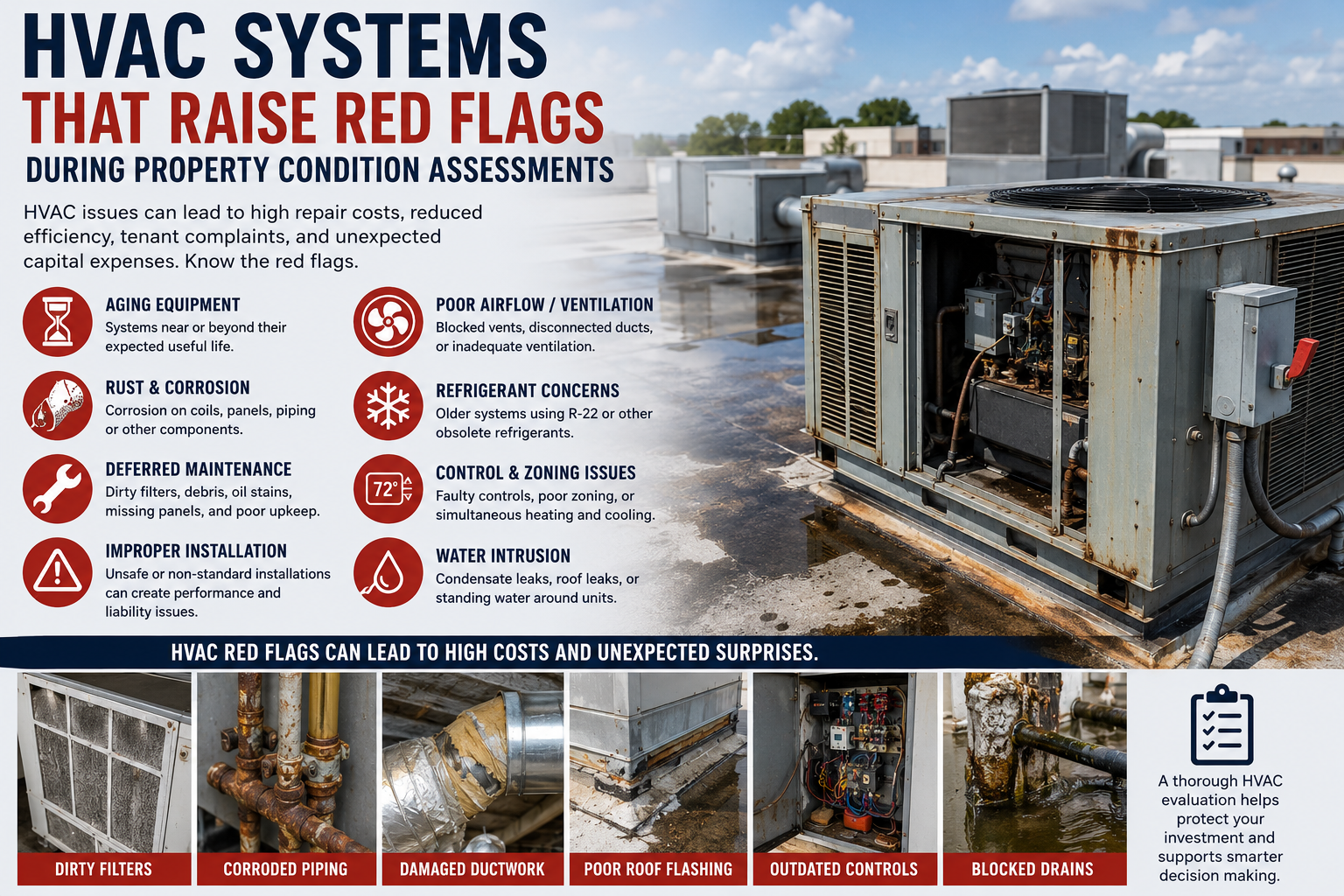
Residential-style split systems typically carry a useful life of 12 to 18 years. Commercial rooftop units run 15 to 20 years under normal maintenance conditions. Boilers and chillers, when properly maintained, can extend to 20 or 30 years. Exhaust fans generally have a shorter service window of 10 to 15 years. When equipment is approaching or has already exceeded these thresholds, the implications for capital planning are immediate. Even systems that are still operational at the tail end of their useful life create elevated failure risk, reduced energy efficiency, limited parts availability, and growing reserve exposure that must be reflected in any responsible cost projection.
Rust, Corrosion, and Moisture Exposure
Corrosion tells a story. When a commercial inspector finds heavy rust on burner assemblies, corroded evaporator coils, deteriorated rooftop unit cabinets, or corrosion at refrigerant line connections, the condition is rarely isolated. Long-term moisture exposure, inadequate condensate drainage, roof leaks above equipment, and environmental conditions all contribute to a corrosion pattern that tends to compound over time.
Rusted gas piping and corroded electrical disconnects carry additional safety implications that elevate the urgency of any finding. When corrosion is severe across multiple components, the equipment may be nearing the end of its serviceable life regardless of what the installation date suggests.
Rooftop Unit Condition and Maintenance Practices
Rooftop units are the workhorse of commercial HVAC in retail centers, office buildings, warehouses, restaurants, and strip malls throughout the region. They are also among the most neglected components observed during commercial inspections. A poorly maintained RTU tells a broader story about how the property has been managed.
Common deficiencies include missing or damaged access panels, dirty condenser coils, failed economizers, improper roof curb flashing, standing water accumulation around unit bases, unsupported conduit and refrigerant lines, and deteriorated flexible connectors. Each of these conditions carries its own cost-to-cure implication, and when they appear together, the findings often signal that deferred maintenance has been the ownership’s operating philosophy — not an isolated oversight.
Deferred Maintenance as a Portfolio Risk Signal
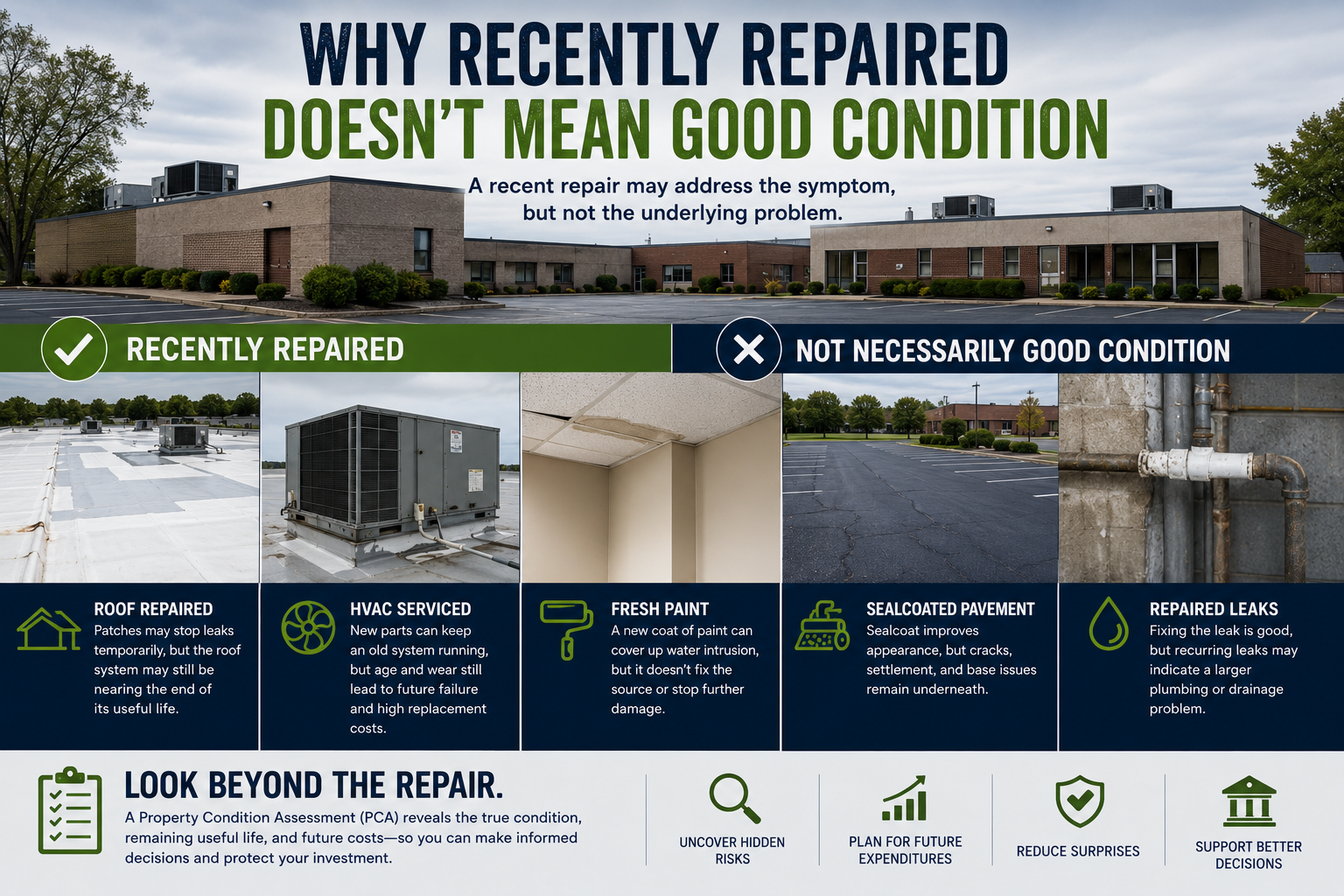
Deferred HVAC maintenance is one of the strongest indicators of neglect that a commercial inspector encounters. The evidence is rarely subtle. Dirty filters left unchanged for extended periods, excessive dust accumulation on equipment surfaces, missing or outdated maintenance tags, inoperative thermostats, improvised field repairs, disconnected ductwork segments, nonfunctional exhaust fans, and oil staining around equipment all point to the same conclusion: maintenance has been deferred in favor of other priorities, and the building’s systems are paying the price.
The compounding effect of deferred maintenance is what makes it so consequential for buyers and lenders. Equipment that might otherwise have reached the high end of its useful life is often cut short by 20 to 30 percent when maintenance has been consistently skipped. That translates directly into earlier capital expenditure requirements that must be reflected in reserve planning.
Improper Installation and Code Compliance Concerns
Improper HVAC installations create both operational and liability exposure. The conditions inspectors encounter most frequently include improperly supported flexible ductwork, condensate drains installed without required traps, combustion air deficiencies that create safety concerns, improperly supported gas piping, missing flue connections, unsealed duct penetrations at fire-rated assemblies, inadequate equipment clearances, and abandoned HVAC equipment left in place without proper decommissioning.
These conditions are particularly significant in New Jersey commercial properties governed by the Uniform Construction Code, where mechanical system installations are expected to comply with both manufacturer requirements and the applicable edition of the International Mechanical Code. Improper installations may not have been permitted or inspected, which adds a permitting history dimension to findings that an experienced commercial inspector will investigate further.
Ventilation Deficiencies and Indoor Air Quality
Inadequate ventilation is a finding that affects more than just occupant comfort. Inspectors regularly observe conditions that include persistent hot and cold zones within a building, blocked supply diffusers, disconnected duct segments, excessively noisy operation, poor measured airflow relative to space size, improper exhaust termination, and negative pressure conditions that pull unconditioned outside air through building envelope gaps.
The stakes are elevated in certain occupancy types. Restaurants, medical facilities, daycares, and multifamily properties all carry specific ventilation requirements tied to occupant health and indoor air quality standards. When deficiencies are identified in these property types, the findings carry added weight in the due diligence conversation.
Refrigerant Obsolescence
Older commercial HVAC equipment may still operate on R-22, a refrigerant that was phased out of production under the Montreal Protocol. While systems utilizing R-22 can continue to function, serviceability becomes increasingly difficult and expensive over time as the refrigerant supply shrinks and prices rise. For a buyer or lender evaluating a property with multiple R-22 systems, the refrigerant issue is not just a maintenance note — it is a capital planning trigger that may accelerate replacement timelines that the equipment’s age alone would not yet justify.
Simultaneous Heating and Cooling
In larger commercial buildings with multi-zone HVAC systems, inspectors sometimes find zones in simultaneous heating and cooling mode — an operational condition that wastes energy and indicates control system failures. The root causes vary: faulty building automation systems, failed zone dampers, thermostat calibration errors, or outdated controls that no longer communicate effectively with the equipment. The financial impact shows up in utility costs, and the operational impact affects tenant comfort and retention. Both dimensions matter in a commercial due diligence evaluation.
HVAC-Related Water Intrusion
Moisture generated by HVAC systems represents one of the more insidious failure patterns in commercial buildings. Overflowing condensate pans, blocked condensate drain lines, roof leaks at RTU curb flashings, and rust staining on interior ceilings below rooftop equipment all point to water intrusion conditions that damage not just the HVAC system itself but the surrounding building materials, including insulation, roof decking, and interior finishes.
When microbial growth is observed in proximity to HVAC equipment — at drain pans, on insulation, or in ductwork — the finding escalates from a maintenance concern to a potential indoor air quality issue that may require specialist evaluation beyond the scope of a standard visual PCA.
Absence of Service Documentation
A well-maintained commercial HVAC system leaves a paper trail. Preventative maintenance contracts, filter replacement logs, service records, repair history, and inspection documentation are all indicators that ownership has treated the HVAC system as a managed asset rather than an afterthought. When none of that documentation is available, the inspector is left to evaluate equipment condition entirely on observed evidence — which increases uncertainty and tends to shift capital reserve projections toward the more conservative end of the range.
The absence of records does not automatically mean the equipment has been neglected, but it eliminates the ability to verify that it has not been. In a lender’s underwriting context, that uncertainty has real consequences.
What HVAC Findings Mean for Buyers, Lenders, and Investors
HVAC deficiencies identified during a commercial PCA directly influence capital reserve planning, cost-to-cure estimates, negotiation leverage, escrow requirements, loan underwriting decisions, tenant satisfaction, and insurance considerations. In many NJ and PA commercial transactions, HVAC findings represent the single largest line item within the Property Condition Assessment — and occasionally the finding that determines whether a transaction proceeds at all.
Understanding which conditions are immediate repair priorities versus longer-term reserve items versus deferred maintenance patterns is the kind of practitioner judgment that separates a thorough ASTM E2018-15 PCA from a checklist inspection. The difference matters when capital is on the line.
Core Building Inspections delivers ASTM E2018-15 Property Condition Assessments for commercial real estate throughout New Jersey and the greater Philadelphia region. If you are evaluating a commercial asset and need a thorough, practitioner-driven PCA — including a rigorous HVAC evaluation — contact us at www.corecreinspections.com.
Core Building Inspections | NJ License No. 24GI00245900 | CCPIA-003719 | www.corecreinspections.com