PCA Requirements for SBA Loans: What Borrowers Need to Know
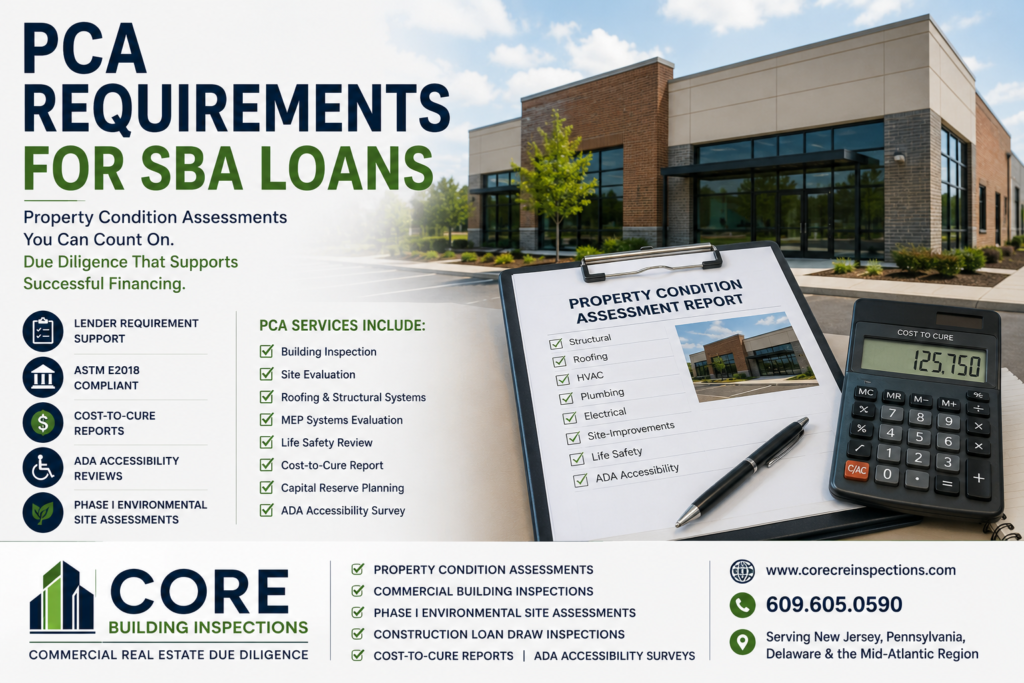
Understanding Property Condition Assessments for SBA-Financed Commercial Real Estate in NJ and PA If you are purchasing or refinancing commercial real estate using a Small Business Administration loan, there is a reasonable chance your lender will require a Property Condition Assessment before the transaction closes. Many borrowers encounter this requirement for the first time mid-transaction […]
What Is a Phase 1 Environmental Site Assessment?
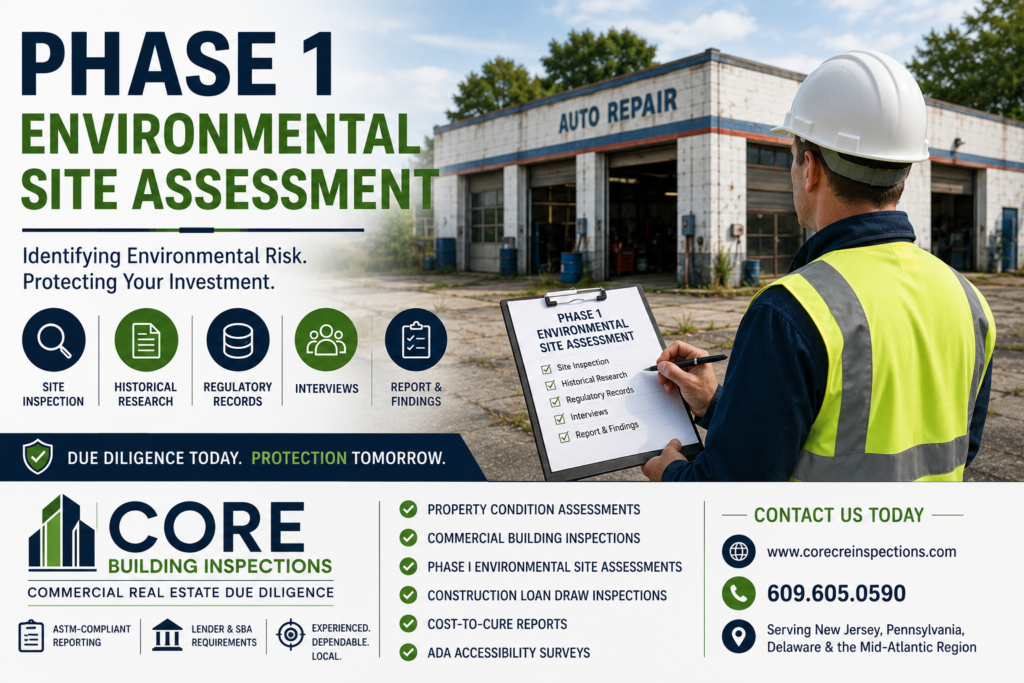
A Guide for Commercial Real Estate Buyers, Lenders, and Investors in NJ and PA When purchasing, refinancing, or evaluating commercial real estate, understanding potential environmental liabilities is just as important as evaluating the physical condition of the building. A property can appear to be in excellent shape while still carrying environmental risks that affect its […]
“Recently Repaired” Doesn’t Mean Good Condition — And Here’s What That Costs CRE Buyers
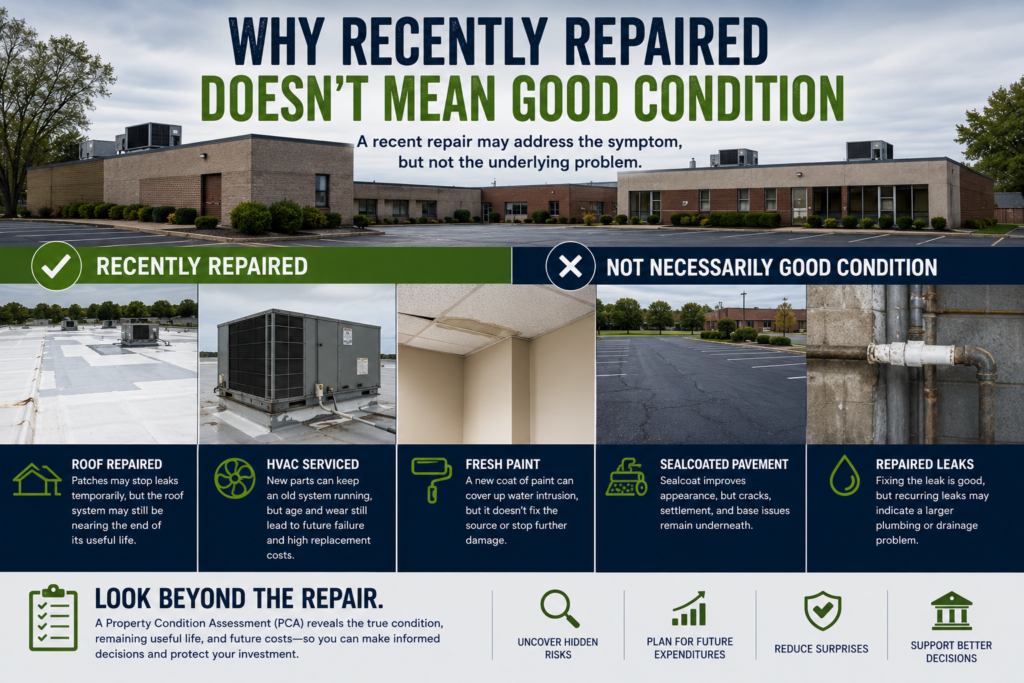
One of the most common statements heard during commercial real estate due diligence is some version of: “That was just repaired.” Sellers say it. Brokers repeat it. And buyers, lenders, and investors often accept it as reassurance that a potential problem has been resolved. It hasn’t — at least not necessarily. In commercial real estate, […]
When Do You Need a Property Condition Assessment?
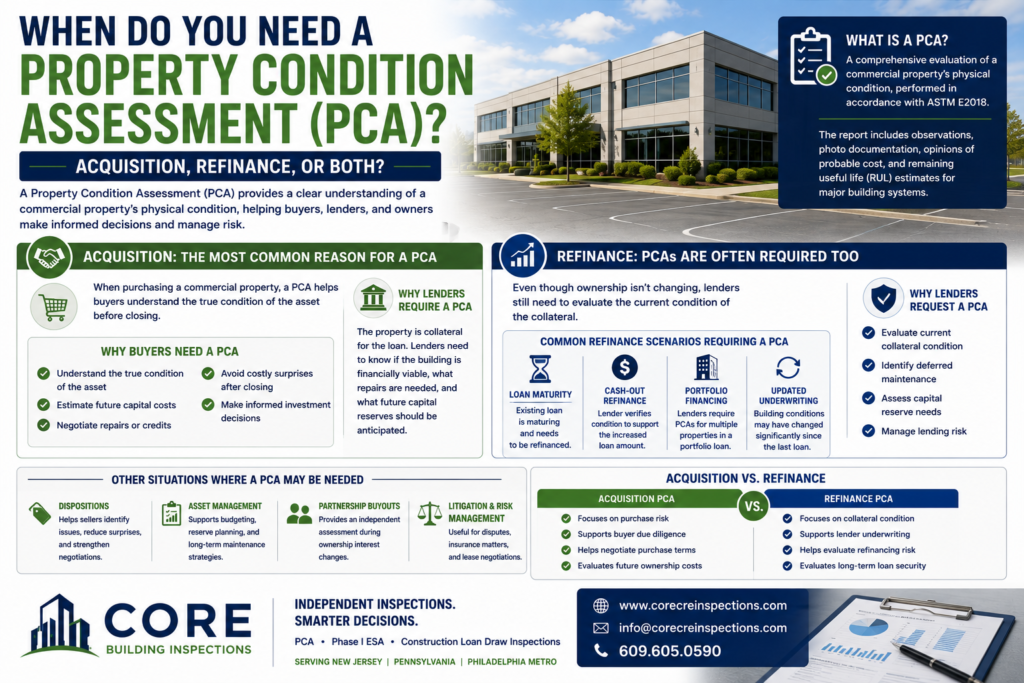
One of the most common questions I hear from commercial real estate buyers, borrowers, and property owners is some version of: When does a Property Condition Assessment actually get required? The answer surprises a lot of people — because it’s not just acquisitions. Lenders, investors, and owners across New Jersey and the Philadelphia metro area […]
What Is a Construction Loan Draw Inspection?
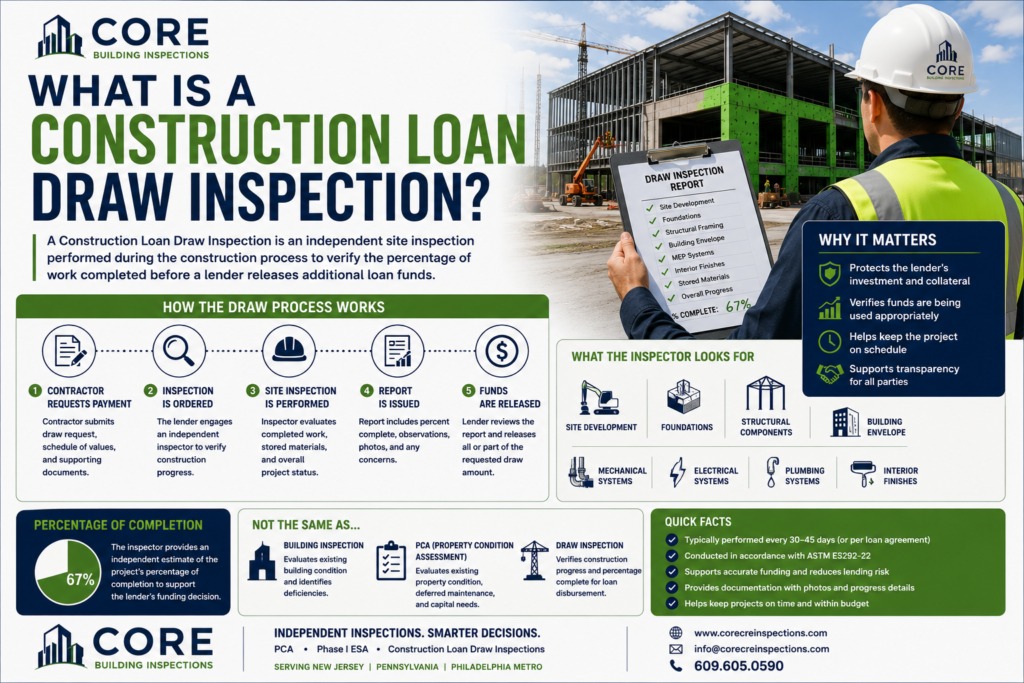
When a commercial construction project is financed through a construction loan, the lender’s exposure doesn’t end at closing — it deepens with every draw request. Unlike a conventional mortgage where a completed building serves as collateral from day one, a construction lender is funding a project that exists only in progress: footings being poured, steel […]
What Is a Phase I Environmental Site Assessment (ESA)?
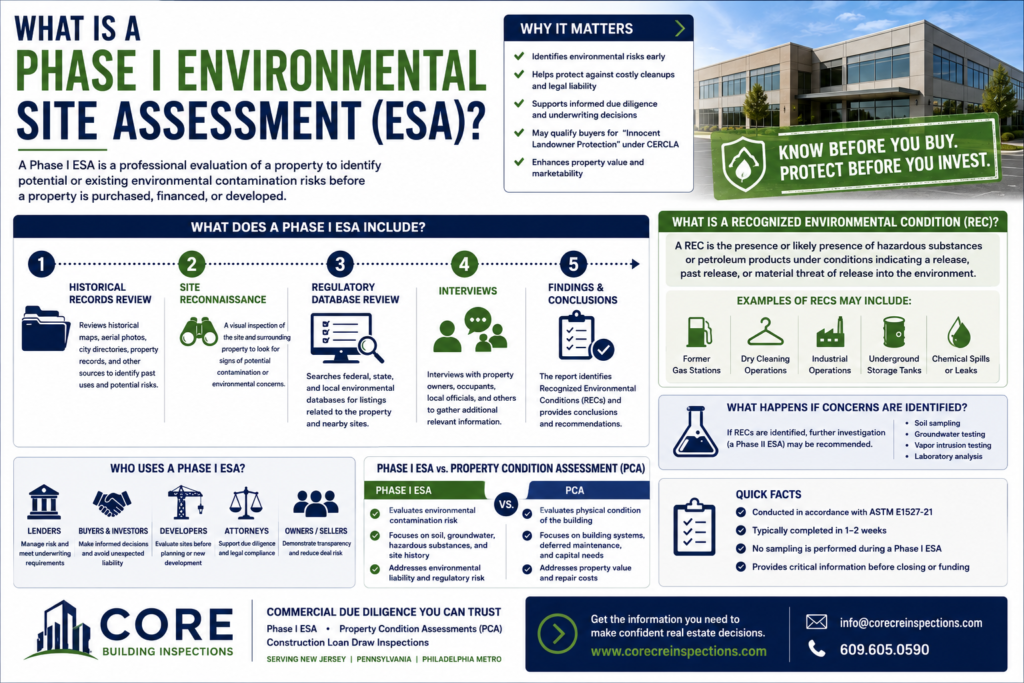
A due diligence guide for commercial property buyers, lenders, and investors in New Jersey and the Philadelphia metro area. Physical building condition tells one part of the story. Environmental risk tells another. In commercial real estate, skipping the environmental side of due diligence can expose buyers, lenders, and developers to liability that no amount of […]
Short-Term vs. Long-Term Repairs in a Property Condition Assessment
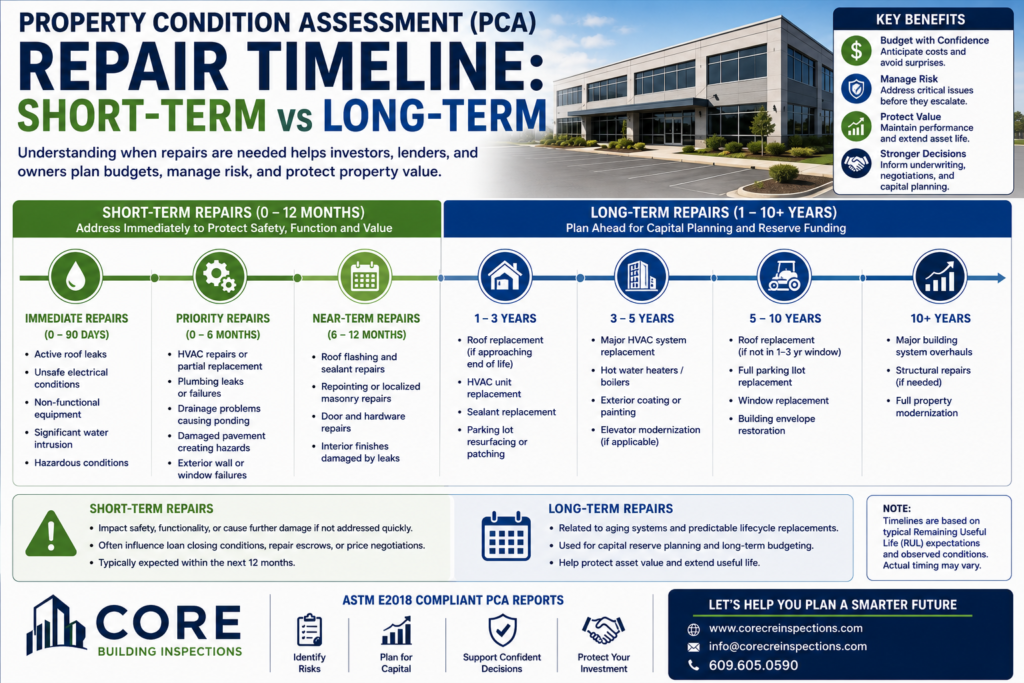
When a lender, investor, or buyer orders a Property Condition Assessment, they are not simply asking whether a building has problems. They are asking when those problems become financial obligations. The distinction between short-term and long-term repairs is one of the most consequential outputs of a well-executed PCA — and one of the most misunderstood. […]
HVAC Red Flags That Surface During a Commercial Property Condition Assessment
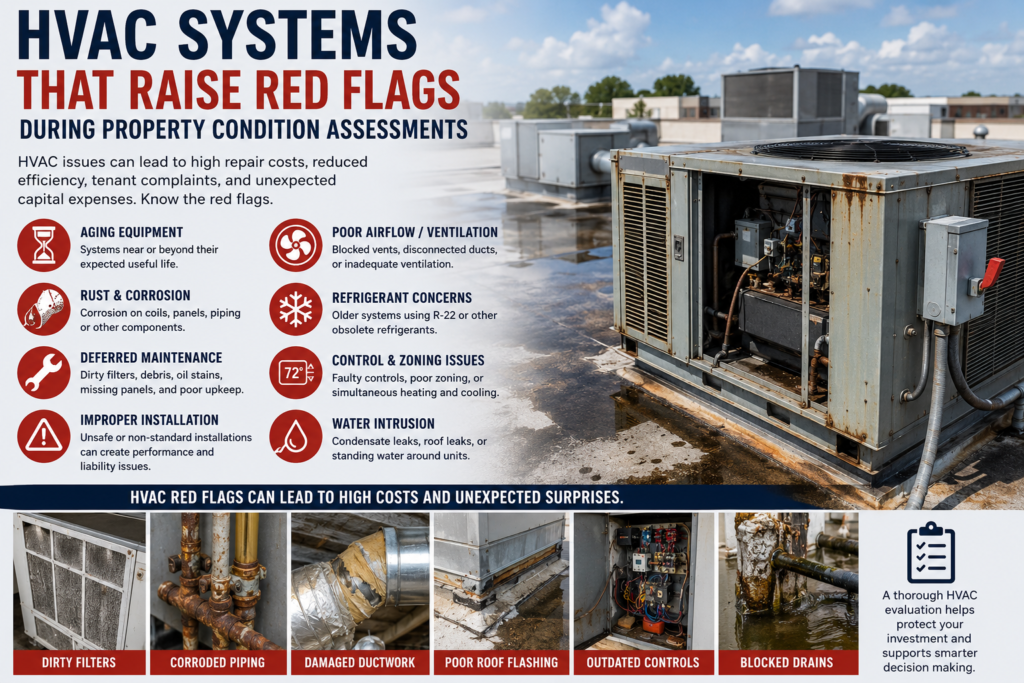
Of all the building systems evaluated during a commercial Property Condition Assessment, the HVAC system consistently generates the largest and most consequential findings. Equipment that appears to be running during a site visit can still carry significant deferred maintenance, remaining useful life concerns, or capital exposure that never appears on the surface. For buyers, lenders, […]
Pre-Engineered Metal Buildings: What Inspectors Look for During a PCA
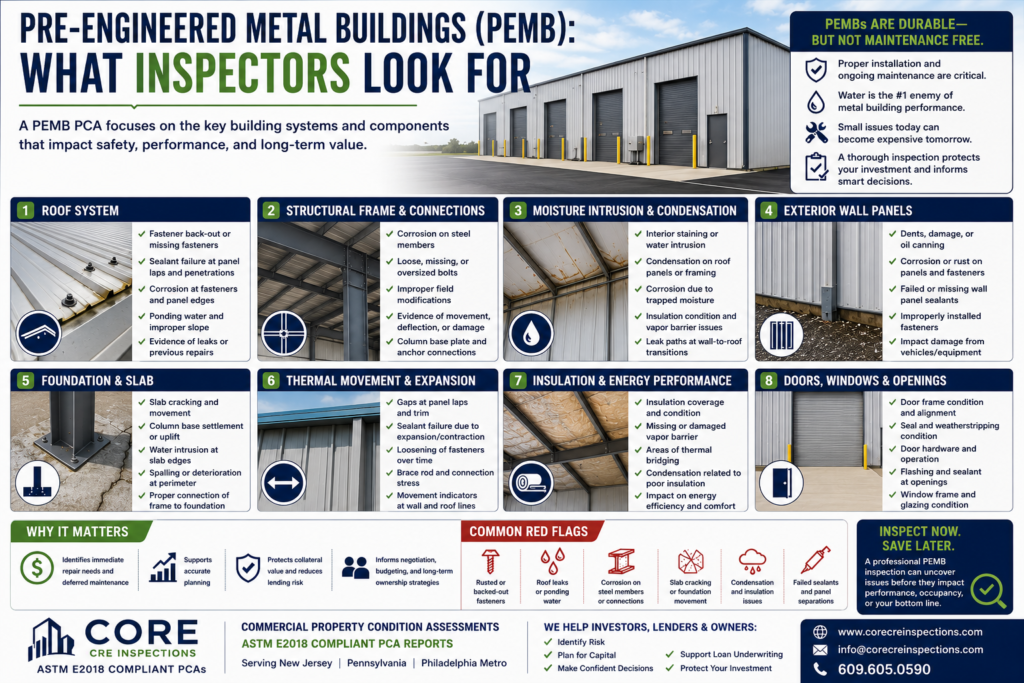
Pre-engineered metal buildings are everywhere in New Jersey and the Philadelphia metro area. Drive through any industrial corridor in Burlington County, swing through the flex parks off Route 1 in Middlesex, or cut through the warehouse districts along I-78, and you’re looking at PEMBs. They’re practical, they’re scalable, and when they’re maintained, they perform. But […]
What Lenders Look for in a Property Condition Assessment
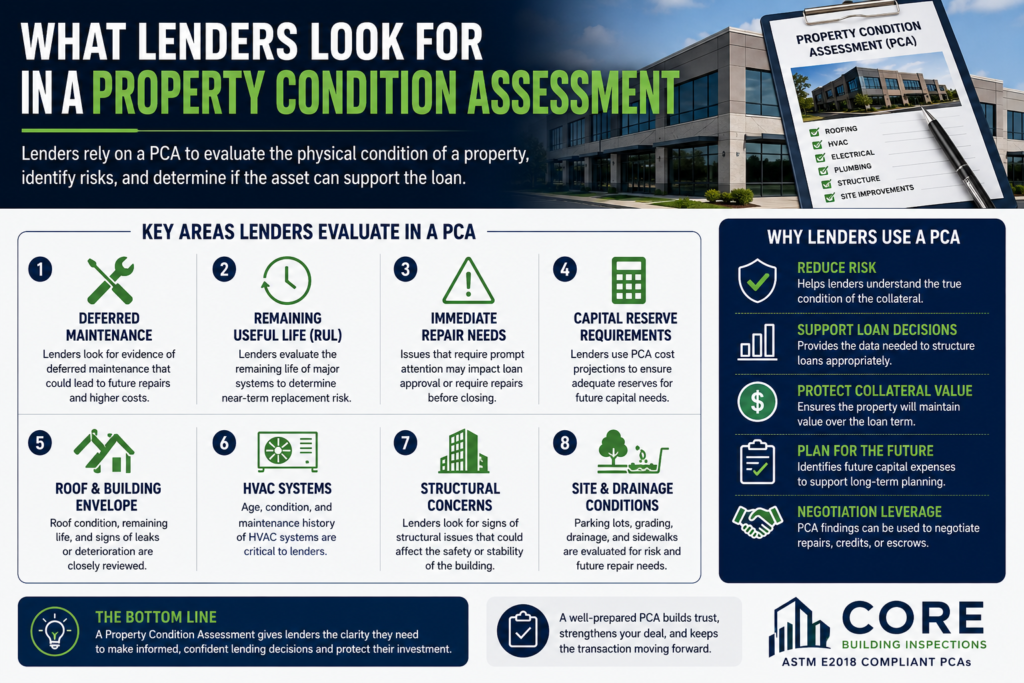
When a commercial lender underwrites a loan, they’re not taking your word for the building’s condition. They’re commissioning an independent physical evaluation of the collateral — and the findings in that report directly shape how the loan gets structured, what reserves get required, and in some cases, whether the deal closes at all. That evaluation […]
