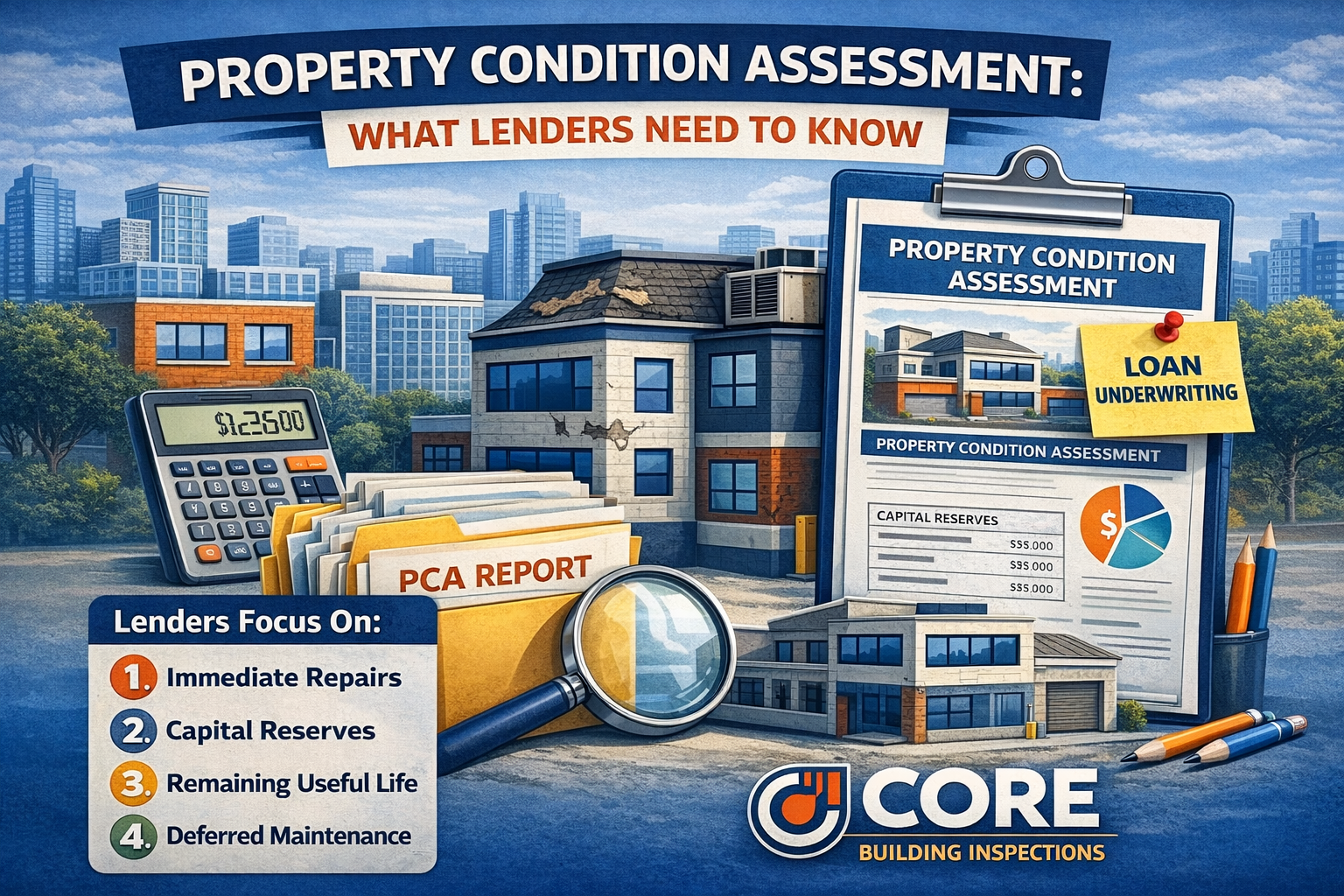
When financing commercial real estate, lenders are not just underwriting the borrower—they are underwriting the asset itself. One of the most important tools used to evaluate physical risk is the Property Condition Assessment (PCA). Understanding property condition assessment: what lenders need to know is critical for avoiding surprises, managing risk, and protecting loan performance.
At Core Building Inspections, we prepare PCAs for lenders, investors, and financial institutions throughout New Jersey, Pennsylvania, and the Philadelphia Metro area. These assessments play a central role in acquisition financing, refinancing, and portfolio risk management.
What Is a Property Condition Assessment (PCA)?
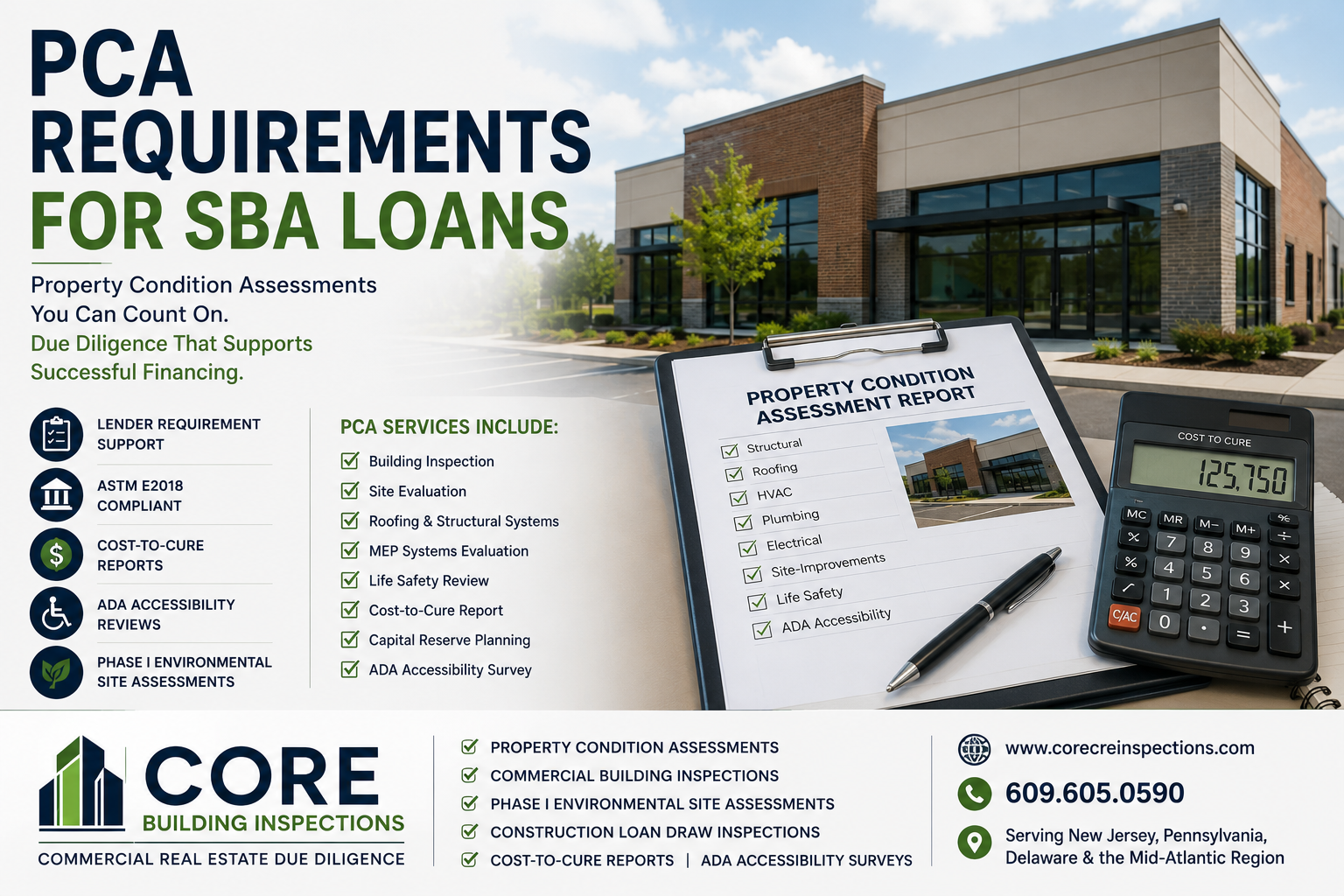
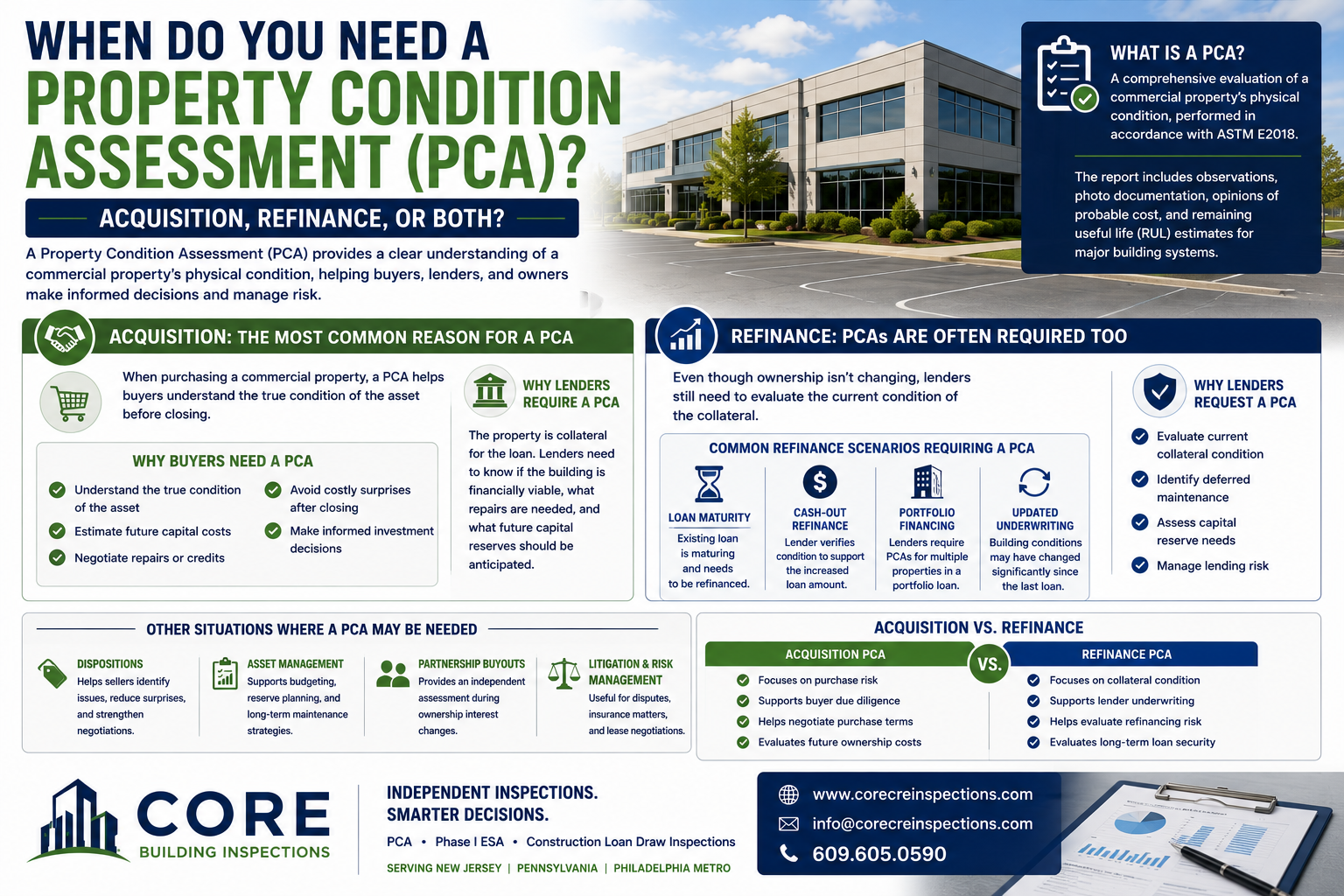
A Property Condition Assessment is a comprehensive evaluation of a commercial property’s physical condition, typically prepared in general conformance with ASTM E2018-18. Unlike a basic inspection, a PCA is designed specifically for lenders and investors and focuses on both current deficiencies and future capital needs.
A PCA evaluates:
- Building structure and foundations
- Roofing systems
- Building envelope (walls, windows, doors)
- Mechanical systems (HVAC)
- Electrical and plumbing systems
- Fire and life-safety systems
- Site improvements (parking, drainage, lighting)
The final report provides a risk-based analysis, not just a list of defects.
Why Lenders Rely on Property Condition Assessments
From a lender’s perspective, a PCA answers one fundamental question:
Will the physical condition of this property negatively impact loan performance?
A properly prepared PCA helps lenders:
- Identify immediate repair needs
- Forecast capital expenditures over the loan term
- Evaluate deferred maintenance risk
- Determine whether repair escrows or holdbacks are necessary
In competitive markets like NJ and PA, PCAs are often a deciding factor in credit committee approvals.
Key PCA Components Lenders Focus On
1. Immediate Repairs (Cost-to-Cure)
Lenders pay close attention to immediate repair items—deficiencies that should be corrected now or in the near term.
Examples include:
- Active roof leaks
- Life-safety deficiencies
- Electrical hazards
- Failed HVAC equipment
These items often drive:
- Repair escrows
- Seller credits
- Loan condition requirements
2. Capital Reserve Forecasts
A core PCA deliverable is the capital reserve table, typically projecting costs over a 10–12 year period.
Lenders use this data to:
- Assess future cash flow strain
- Validate borrower reserve assumptions
- Understand long-term asset risk
Major systems such as roofs, HVAC, paving, and electrical infrastructure are closely scrutinized.
3. Remaining Useful Life (RUL)
Remaining Useful Life estimates are critical to lender decision-making.
Lenders want to know:
- When major systems are likely to fail
- Whether replacements will occur during the loan term
- If capital expenditures align with underwriting assumptions
Short RULs without a clear replacement plan often raise red flags.
4. Deferred Maintenance Trends
PCAs do more than identify isolated defects—they reveal patterns of deferred maintenance.
Common lender concerns include:
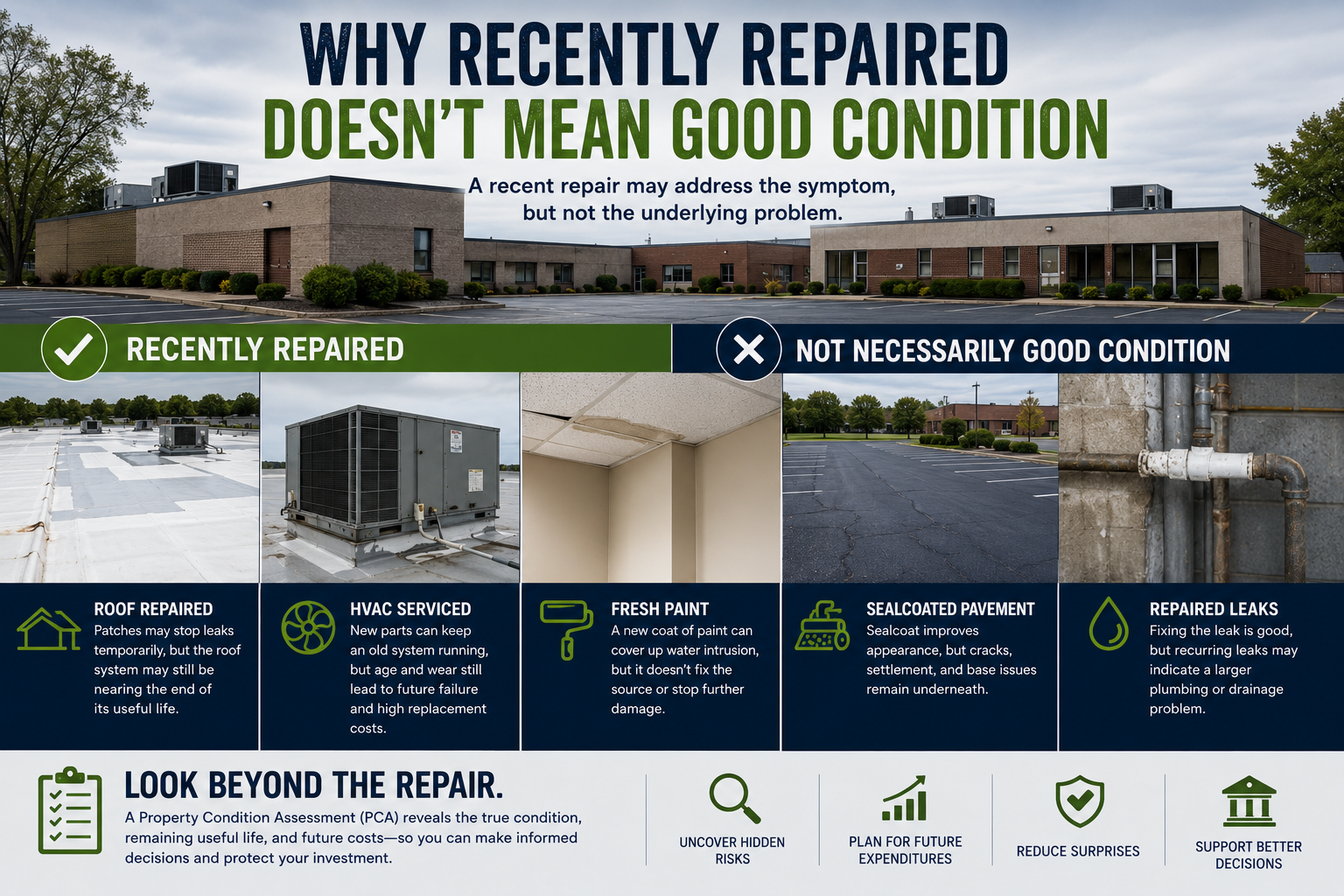
- Temporary or recurring repairs
- Lack of maintenance documentation
- Multiple systems near end-of-life
These trends may signal increased operational risk or ownership challenges.
How PCAs Affect Loan Structure
A PCA can directly influence:
- Loan proceeds
- Interest rates
- Repair escrows or reserves
- Closing timelines
In some cases, unresolved PCA findings can delay or prevent closing altogether. This is why lenders require clear, defensible, and well-documented reports.
ASTM E2018-18: Why the Standard Matters
Most lenders require PCAs to follow ASTM E2018-18 because it provides:
- Consistent methodology
- Defined scope and limitations
- Reliable capital planning assumptions
At Core Building Inspections, our PCAs are prepared in general conformance with ASTM standards, ensuring reports meet lender and credit committee expectations.
Common PCA Issues We See in NJ & PA Properties
Across New Jersey and Pennsylvania, common PCA findings include:
- Aging roof systems near end of service life
- HVAC equipment operating beyond expected useful life
- Deferred parking lot maintenance
- Outdated electrical components
- ADA and life-safety compliance gaps
These issues are especially prevalent in older retail, office, and industrial assets throughout the region.
Choosing the Right PCA Provider
Not all PCAs provide the same level of insight. Lenders benefit most from firms that:
- Understand ASTM standards and lender expectations
- Provide defensible cost estimates
- Clearly differentiate between immediate and long-term risks
- Communicate findings clearly and objectively
At Core Building Inspections, we work regularly with lenders, attorneys, and investors to ensure our reports are decision-ready, not just informational.
Property Condition Assessments in NJ & PA
Core Building Inspections provides PCAs throughout:
- New Jersey (South, Central, and North NJ)
- Pennsylvania, including the Philadelphia Metro area
- Select projects in New York and Delaware
Our experience includes retail centers, warehouses, office buildings, industrial facilities, and mixed-use properties.
Final Thoughts
Understanding property condition assessment: what lenders need to know is essential for managing risk in commercial real estate lending. A well-prepared PCA provides clarity, supports underwriting decisions, and helps protect long-term loan performance.
If you are a lender, investor, or borrower evaluating a commercial property in NJ or PA, a professional PCA is a critical part of the due diligence process.
Core Building Inspections is here to deliver clear, defensible assessments that lenders can rely on.