When evaluating commercial real estate, the biggest risks are often the ones you don’t immediately see. A property may appear well maintained on the surface, but underlying deficiencies can significantly affect value, financing, and long-term operating costs.
At Core Building Inspections, we perform commercial building inspections and Property Condition Assessments (PCAs) throughout New Jersey, Pennsylvania, and the Philadelphia Metro area. Across retail centers, office buildings, warehouses, and mixed-use properties, we consistently encounter the same problem areas.
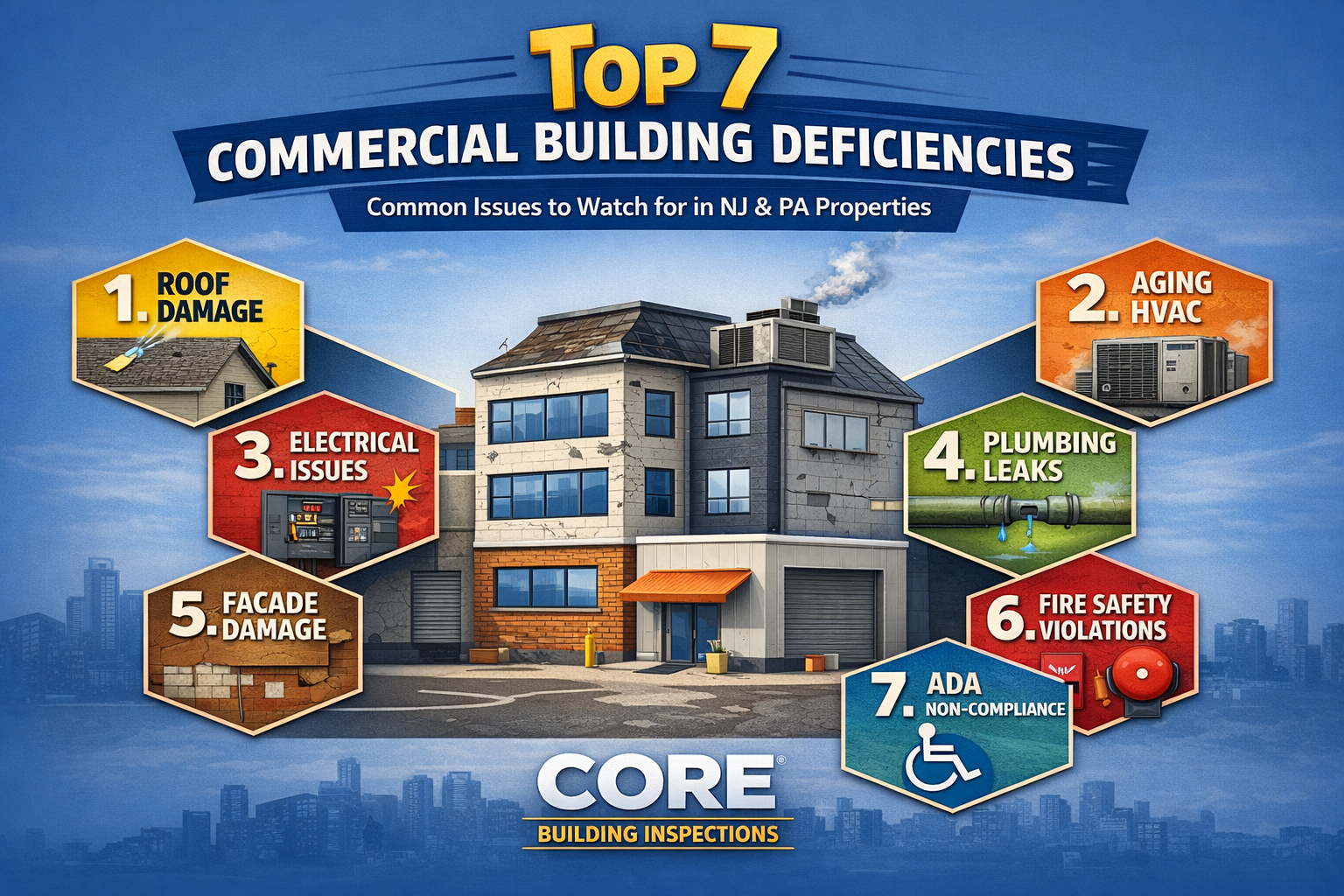
Below are the top 7 commercial building deficiencies we see most often—and why they matter to owners, investors, and lenders.
1. Roofing Failures and Deferred Roof Maintenance
Roofing issues are among the most common and most expensive deficiencies identified during commercial inspections.
Typical problems include:
- Aging or expired roof systems
- Failed flashing at penetrations and parapets
- Ponding water and inadequate drainage
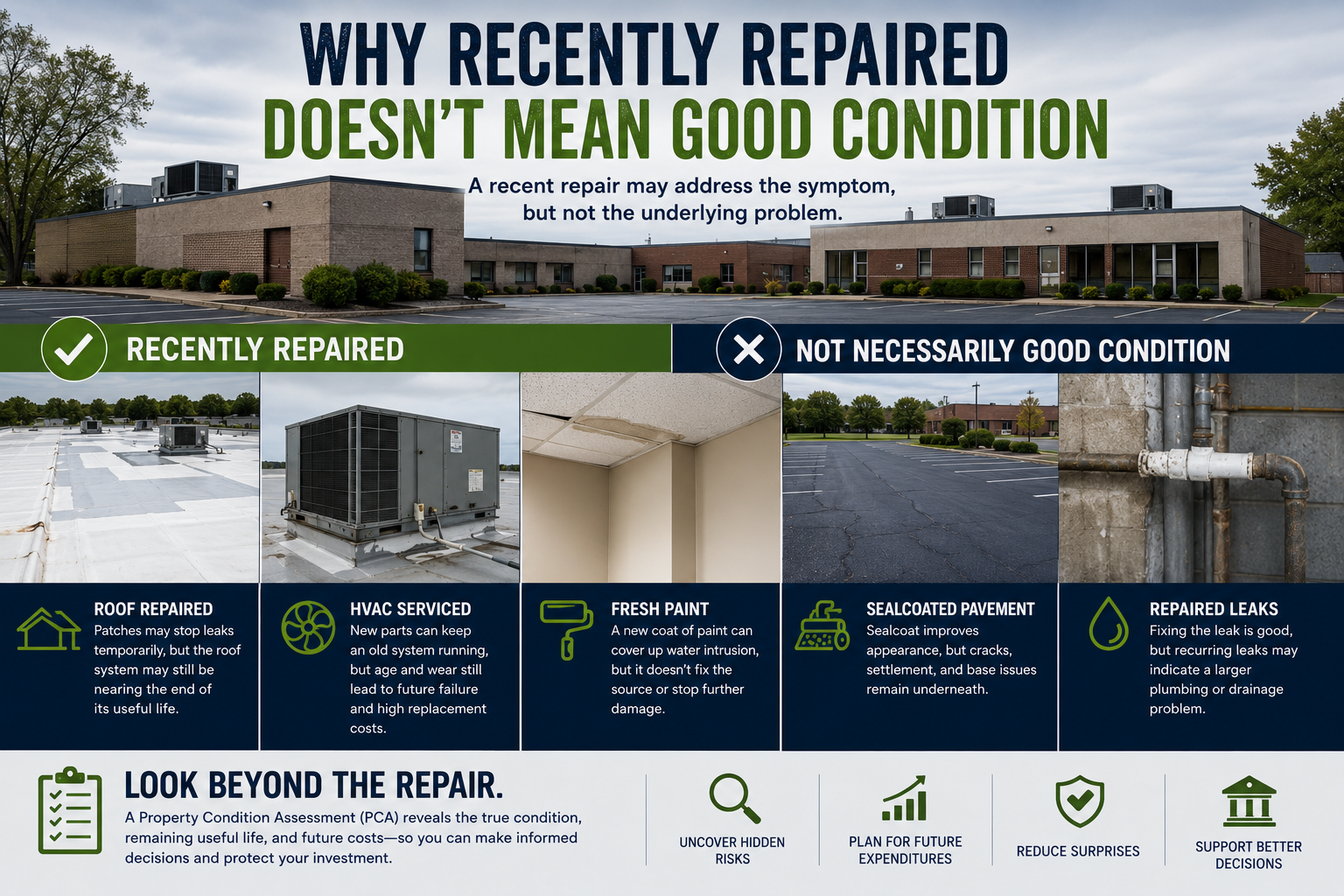
- Temporary or undocumented repairs
Even when active leaks are not visible, roof systems near the end of their service life can trigger capital reserve requirements, escrow holdbacks, or lender concerns.
Why it matters:
Roof replacement is a major capital expense. In NJ and PA markets, unresolved roof issues frequently delay closings or force renegotiation.
2. HVAC Systems Near or Beyond Useful Life
Mechanical systems are another frequent source of concern. Many commercial buildings operate with outdated HVAC equipment that is inefficient, poorly maintained, or nearing the end of its useful life.
Common issues include:
- Units operating beyond expected service life
- Inadequate maintenance documentation
- Improper condensate drainage
- Equipment no longer sized for current use
Why it matters:
HVAC failures impact tenant comfort, operating costs, and reliability. For investors and lenders, aging systems translate directly into near-term replacement risk.
3. Electrical Deficiencies and Obsolete Components
Electrical systems in older commercial properties often contain a mix of updated service equipment and legacy components.
We frequently observe:
- Obsolete panels or breakers
- Abandoned wiring and undocumented modifications
- Insufficient capacity for modern loads
- Open permits or inspection “red tags”
Why it matters:
Electrical deficiencies raise life-safety and fire-risk concerns and can prevent properties from meeting insurance or lender requirements.
4. Plumbing System Deficiencies and Water Damage
Plumbing problems are not always obvious during a casual walkthrough, but they can create serious long-term issues.
Common findings include:
- Leaking or corroded supply and waste piping
- Missing or inoperable fixtures
- Water heaters beyond expected service life
- Evidence of prior water intrusion
Why it matters:
Undetected plumbing leaks contribute to structural damage, mold growth, and interior finish deterioration—often well before visible signs appear.
5. Building Envelope Deterioration
The building envelope—walls, windows, doors, and exterior components—plays a critical role in protecting the structure from moisture intrusion.
Frequent deficiencies include:
- Failed sealants at windows and doors
- Deteriorated masonry or siding
- Improper flashing details
- Water infiltration at transitions
Why it matters:
Envelope failures often lead to hidden moisture damage that can be costly to correct and difficult to trace after acquisition.
6. Life Safety and Fire Protection Issues
Fire and life-safety systems are essential for occupant safety and regulatory compliance. During commercial inspections, we often find:
- Missing or outdated inspection documentation
- Inoperable alarms or emergency lighting
- Incomplete sprinkler coverage
- Obstructed egress paths
Why it matters:
Life-safety deficiencies can expose owners to legal liability, insurance issues, and enforcement actions by local authorities.
7. Accessibility and ADA Compliance Deficiencies
ADA and accessibility issues are frequently overlooked until they become a legal or financial problem.
Typical concerns include:
- Noncompliant parking and access routes
- Improper ramp slopes or handrails
- Inaccessible entrances or restrooms
Why it matters:
Accessibility upgrades can be expensive, and noncompliance increases the risk of complaints, lawsuits, or required retrofits after purchase.
How Commercial Building Inspections Help Mitigate These Risks
A professional commercial building inspection or PCA identifies these deficiencies early, allowing stakeholders to:
- Understand true property condition
- Plan for capital repairs and replacements
- Negotiate pricing or repair credits
- Reduce unexpected post-closing costs
At Core Building Inspections, our reports are prepared in general conformance with ASTM E2018-18, CCPIA, and InterNACHI commercial standards, providing lenders and investors with defensible, decision-ready information.
Commercial Building Inspections in New Jersey & Pennsylvania
We provide commercial inspections throughout:
- New Jersey (South, Central, and North NJ)
- Pennsylvania, including the Philadelphia Metro area
- Select projects in New York and Delaware
Our experience spans retail, office, industrial, warehouse, and mixed-use properties across the region.
Final Thoughts
The most costly commercial building deficiencies are often the ones hidden behind walls, above ceilings, or buried in outdated systems. Identifying these issues before purchase or refinancing is essential to protecting your investment.
If you are considering a commercial property in NJ or PA, a thorough inspection can provide the clarity needed to move forward with confidence.
Core Building Inspections is here to help uncover risks, quantify costs, and support informed real estate decisions.
Read More About Property Condition Assessments to learn more about how Core Building Inspections can help you.