Pennsylvania’s commercial real estate market offers strong fundamentals, but it also presents a set of challenges that buyers, lenders, and owners must understand before closing a deal. Many of the commercial property risks unique to Pennsylvania properties are tied to aging building stock, climate exposure, legacy construction methods, and regulatory nuances that are not always obvious during a casual walkthrough.
This is why thorough due diligence—especially a Property Condition Assessment (PCA)—is critical when acquiring or refinancing commercial assets across Pennsylvania and the greater Philadelphia metro area.
Aging Building Stock Across Pennsylvania
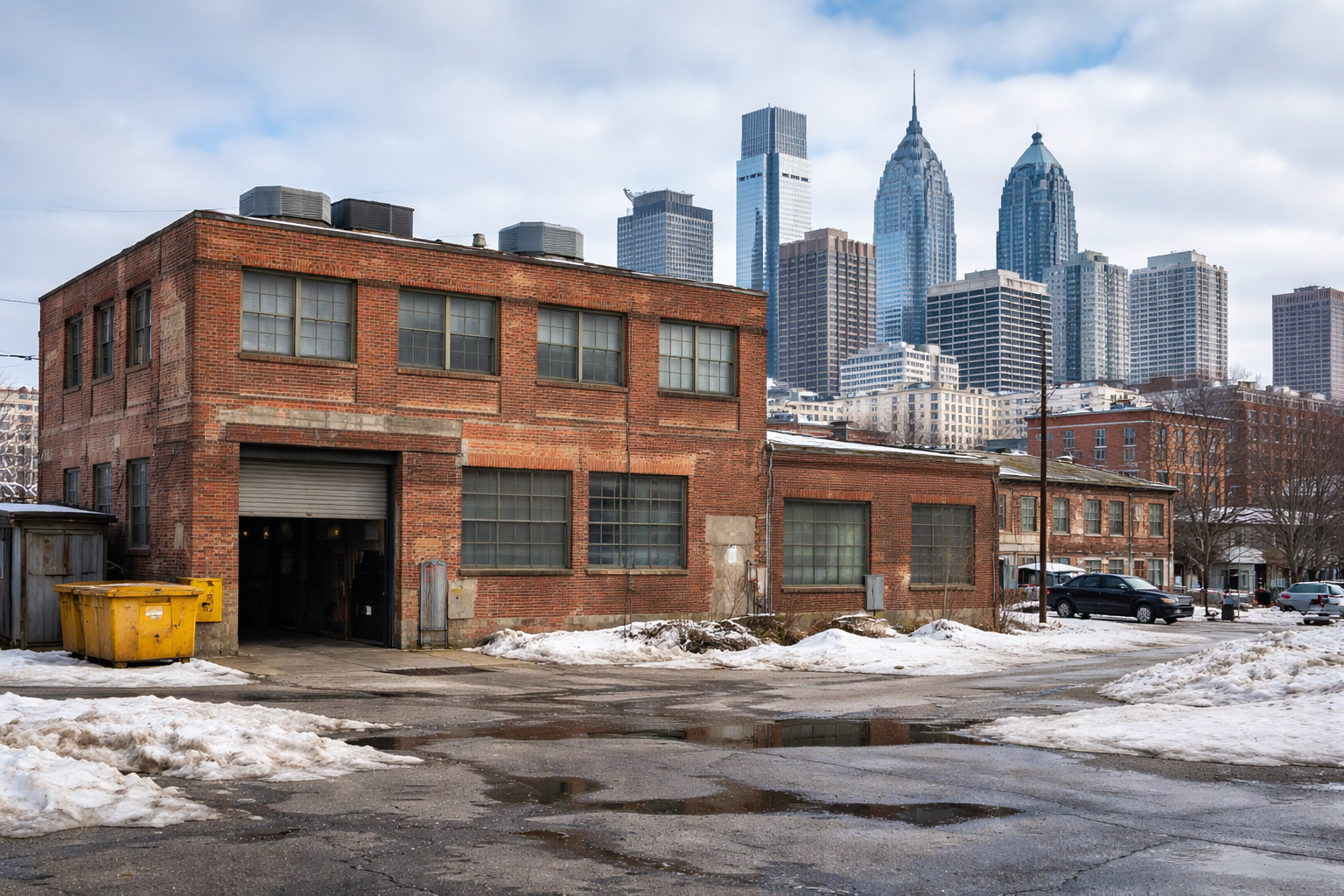
One of the most significant risks in Pennsylvania commercial properties is age. Many industrial, retail, mixed-use, and office buildings were constructed between the 1950s and 1980s, with some properties dating back even further.
During inspections, we frequently encounter:
- Roof systems at or beyond their expected service life
- Obsolete electrical panels and distribution equipment
- Undersized or aging HVAC systems
- Structural elements built to standards no longer in use
Older construction does not automatically mean a bad investment—but it does increase the likelihood of deferred maintenance and capital expenditures that must be properly planned.
Freeze-Thaw Cycles and Building Envelope Damage
Pennsylvania’s climate plays a major role in long-term building performance. Seasonal freeze-thaw cycles accelerate deterioration of exterior materials and moisture-sensitive assemblies.
Common envelope-related risks include:
- Masonry cracking and mortar joint failure
- Water intrusion through aging façades
- Roof membrane fatigue and seam separation
- Deteriorated sealants around windows and penetrations
These issues often develop gradually and may not be immediately visible, yet they can lead to costly interior damage if left unaddressed.
Roof Systems and Snow Load Concerns
Roof performance is one of the most critical components evaluated during a PCA, particularly in Pennsylvania where snow accumulation is common.
Risks we frequently identify include:
- Flat or low-slope roofs not designed for current snow load expectations
- Chronic ponding water that accelerates membrane failure
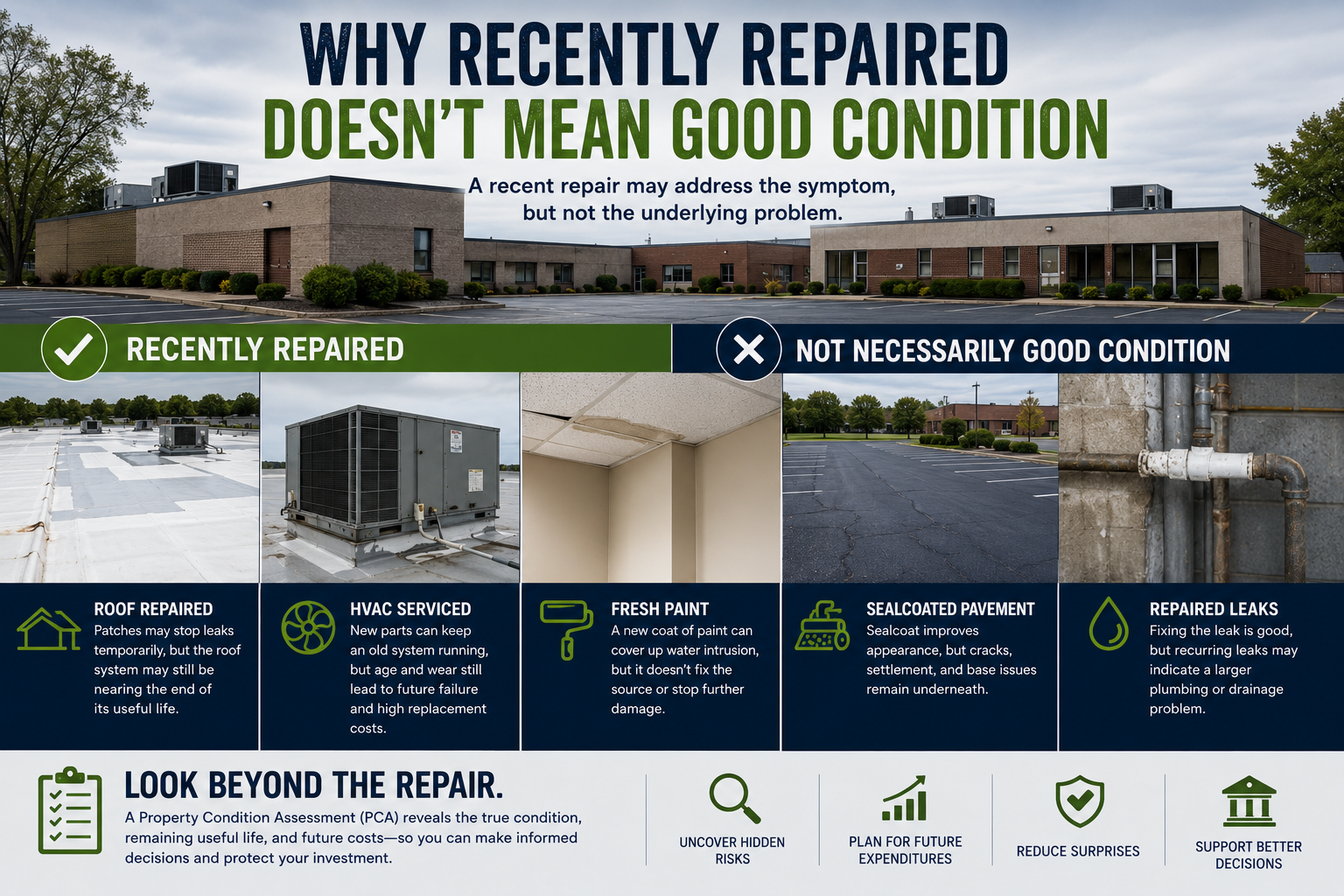
- Temporary patch repairs masking end-of-life conditions
- Structural framing stressed by long-term loading
Roof deficiencies are a leading cause of unexpected capital expenditures and are closely scrutinized by lenders during underwriting.
Legacy Mechanical and Electrical Systems
Many Pennsylvania commercial buildings still rely on original or heavily modified mechanical and electrical systems. These systems may function at the time of inspection but still represent financial and operational risk.
Typical concerns include:
- Aging rooftop units nearing the end of their useful life
- Inefficient heating systems common in older Northeast buildings
- Electrical components that no longer meet current safety expectations
- Limited capacity for modern tenant demands
These risks directly affect reserve planning and often influence lender-required holdbacks or escrows.
Industrial History and Environmental Considerations
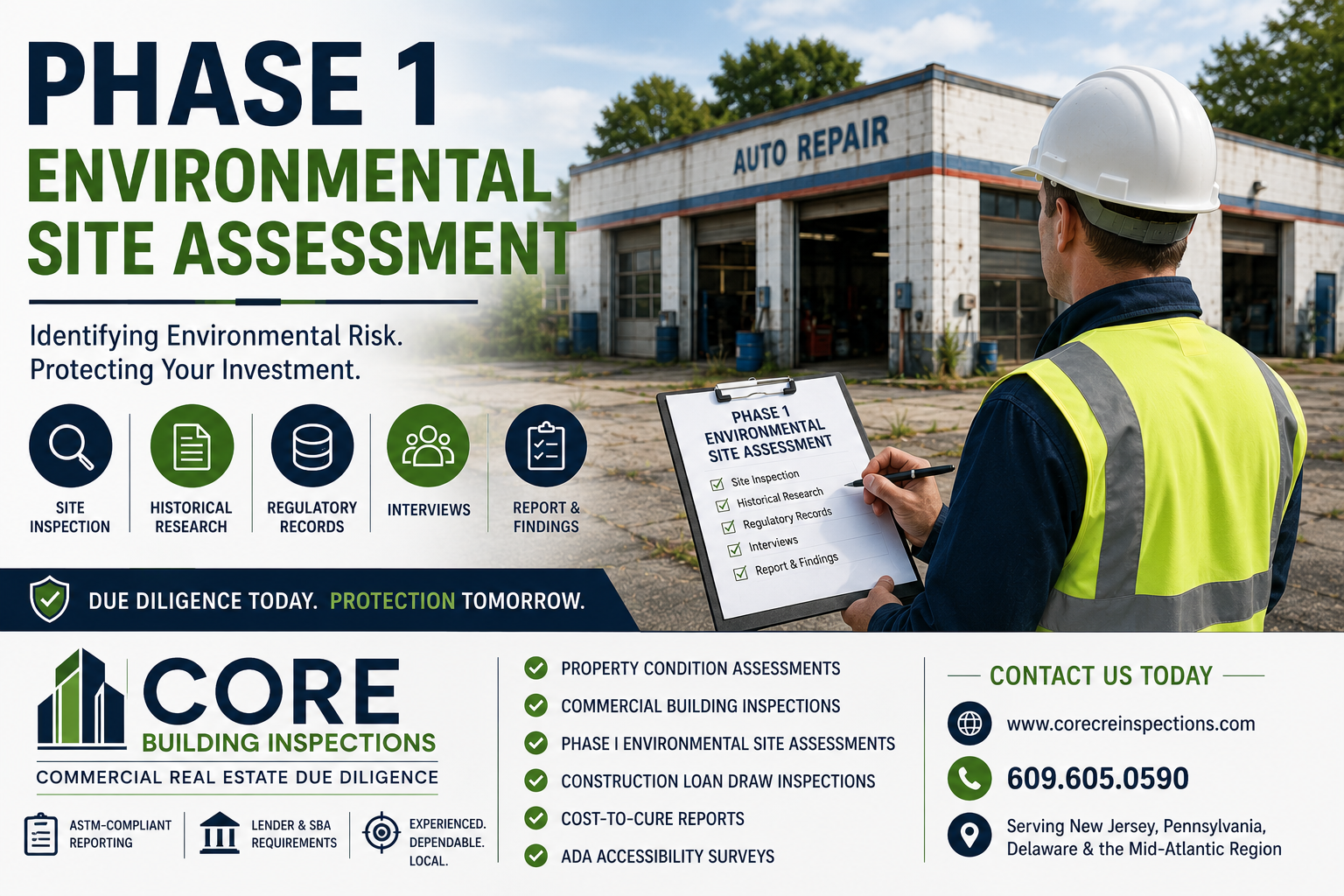
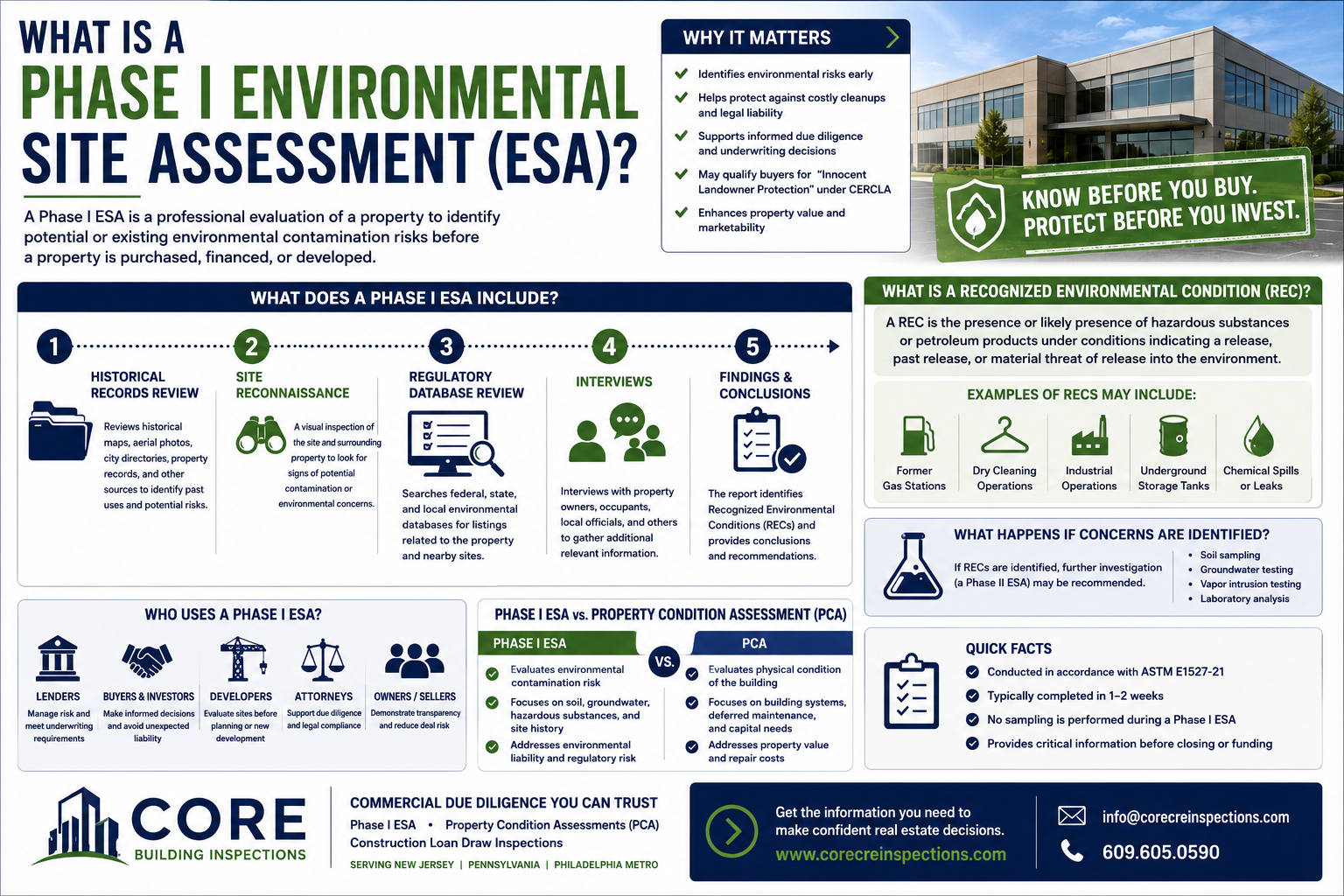
Pennsylvania’s long industrial history introduces another layer of risk. Former manufacturing, warehouse, and rail-adjacent sites may carry environmental considerations that overlap with physical condition concerns.
While environmental issues are addressed through a Phase I Environmental Site Assessment, building conditions such as:
- Subsurface drainage problems
- Improper handling of historic materials
- Site grading issues impacting runoff
can complicate environmental findings and remediation strategies.
ADA and Accessibility Challenges in Older Buildings
Accessibility compliance is another area where commercial property risks unique to Pennsylvania properties frequently emerge. Many older commercial buildings were constructed well before modern accessibility standards.
Common challenges include:
- Non-compliant entry routes and door clearances
- Improper ramp slopes and handrails
- Inadequate accessible parking layouts
- Restroom configurations that cannot be easily retrofitted
An ADA Accessibility Survey coordinated alongside a PCA helps identify compliance gaps early in the transaction process.
Why These Risks Matter to Buyers and Lenders
From a financial perspective, Pennsylvania-specific risks often translate into:
- Higher near-term capital expenditures
- Increased reserve requirements
- Negotiation leverage during acquisition
- Potential delays in closing or refinancing
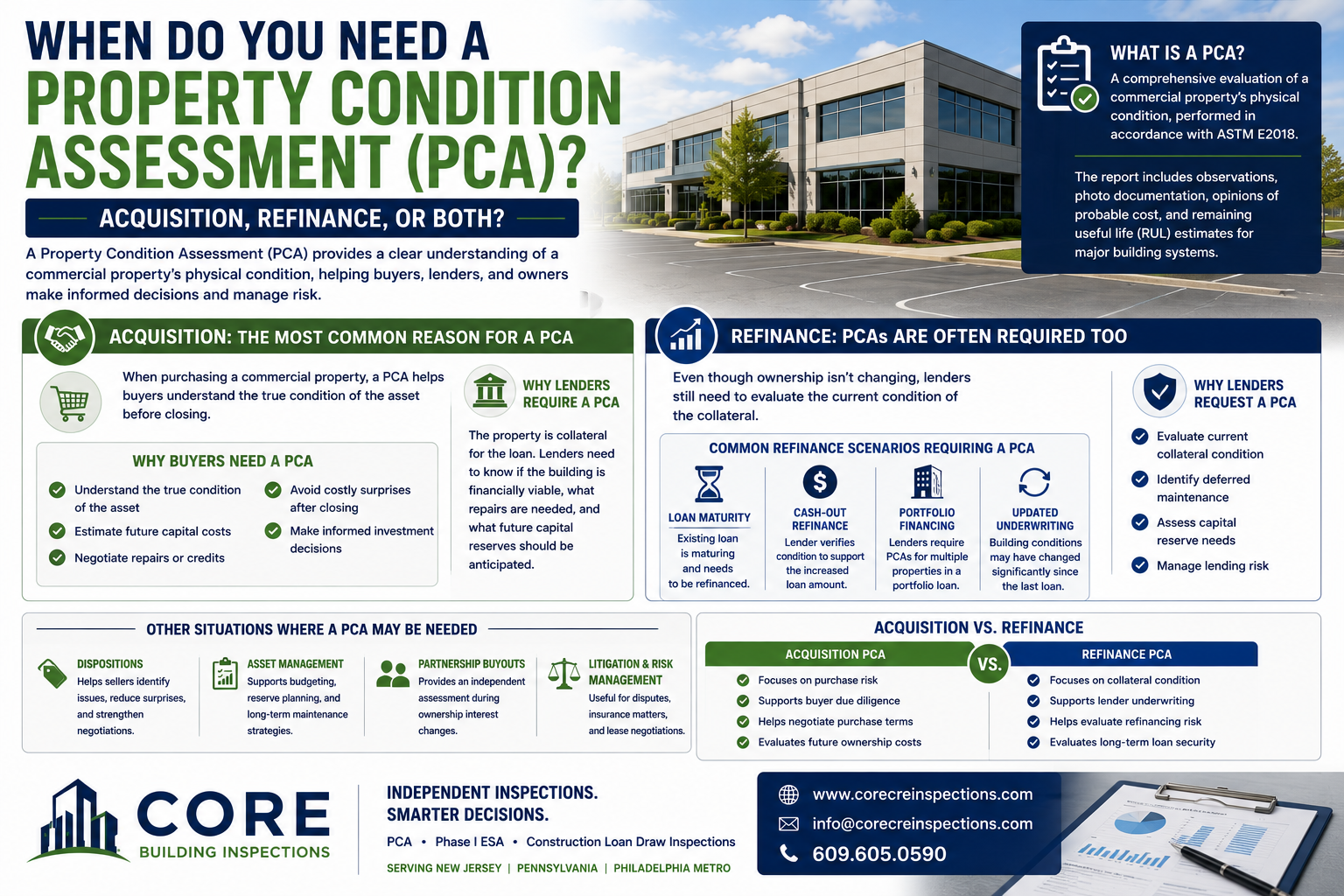
Lenders rely on PCA findings to assess risk exposure, confirm capital planning assumptions, and determine whether a property meets underwriting criteria.
How a Property Condition Assessment Mitigates Risk
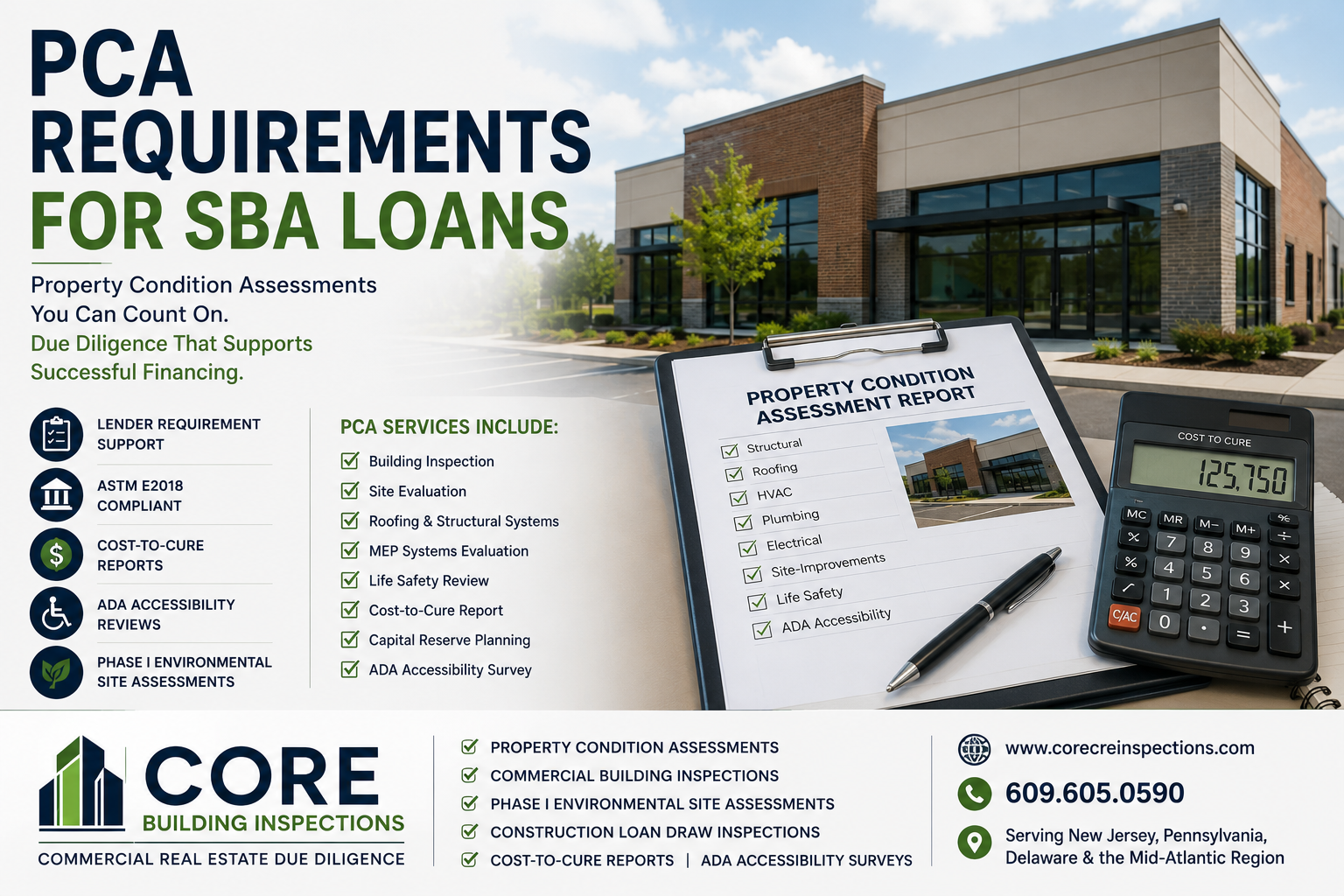
A properly performed Property Condition Assessment, conducted in accordance with ASTM E2018 standards, helps identify and quantify these risks before they become surprises.
A PCA provides:
- Clear documentation of building deficiencies
- Remaining useful life estimates for major systems
- Short-term and long-term capital planning forecasts
- Support for informed purchase and lending decisions
This level of analysis is essential when evaluating Pennsylvania commercial properties.
Final Thoughts
Pennsylvania offers tremendous opportunities for commercial real estate investment—but only for those who understand the risks. Many of the commercial property risks unique to Pennsylvania properties are manageable when identified early and properly accounted for in due diligence.
The key is not avoiding older or complex buildings, but entering transactions with clear expectations and defensible data.