The Philadelphia metro area offers a diverse and active commercial real estate market—but it also presents a unique set of risks that can complicate acquisitions, refinances, and underwriting decisions. Understanding the commercial due diligence challenges in the Philadelphia metro area is critical for buyers, lenders, and investors looking to avoid costly surprises after closing.
From aging building stock and legacy infrastructure to dense urban conditions and regional climate exposure, Philadelphia-area properties often require a deeper level of investigation than what a standard walkthrough can reveal.
Aging Building Stock and Legacy Construction
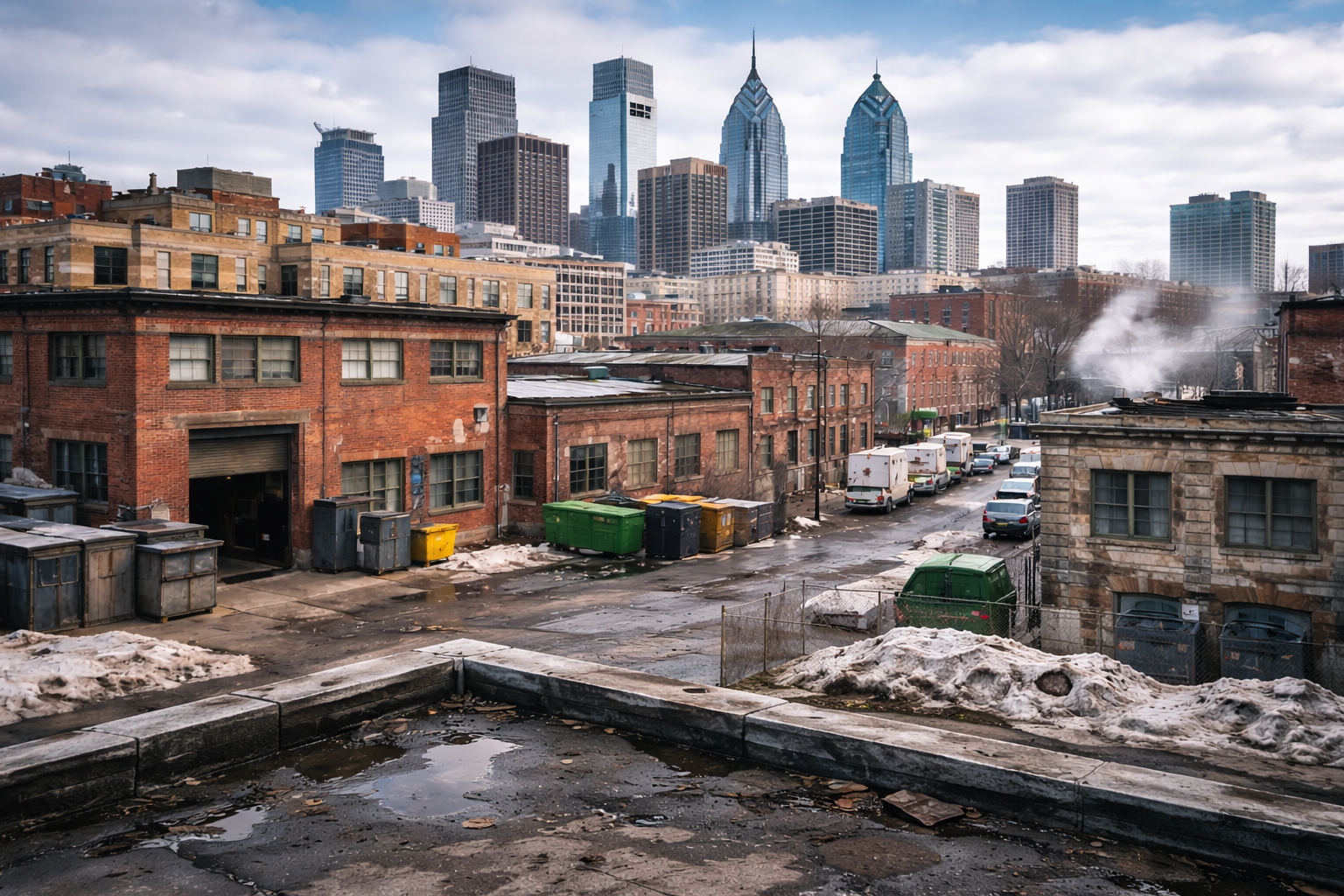
One of the most significant due diligence challenges in the Philadelphia metro area is the age of the buildings themselves. Many commercial properties across Philadelphia, Bucks, Montgomery, Delaware, and Chester Counties were constructed decades ago—often between the early 1900s and the 1980s.
Common issues associated with older buildings include:
- Roof systems that have exceeded their intended service life
- Outdated electrical infrastructure
- Inefficient or end-of-life HVAC systems
- Structural components built to older standards
While older buildings can still perform well, they typically carry higher capital expenditure risk that must be identified and planned for during due diligence.
Dense Urban Conditions and Access Limitations
Philadelphia’s dense urban layout introduces inspection challenges that are less common in suburban or newly developed markets.
During property condition assessments, we frequently encounter:
- Limited access to rooftops or mechanical rooms
- Shared walls and party structures that complicate evaluation
- Obstructed electrical or life-safety components
- Adjacent buildings impacting drainage and envelope performance
Restricted access can limit visibility into critical building systems, increasing uncertainty if not properly documented in the due diligence process.
Roof Systems and Drainage Issues
Roof condition is one of the most closely scrutinized components during due diligence in the Philadelphia metro area. Flat and low-slope roofs are common, particularly on older commercial and mixed-use buildings.
Typical roof-related challenges include:
- Chronic ponding water due to poor slope or drainage design
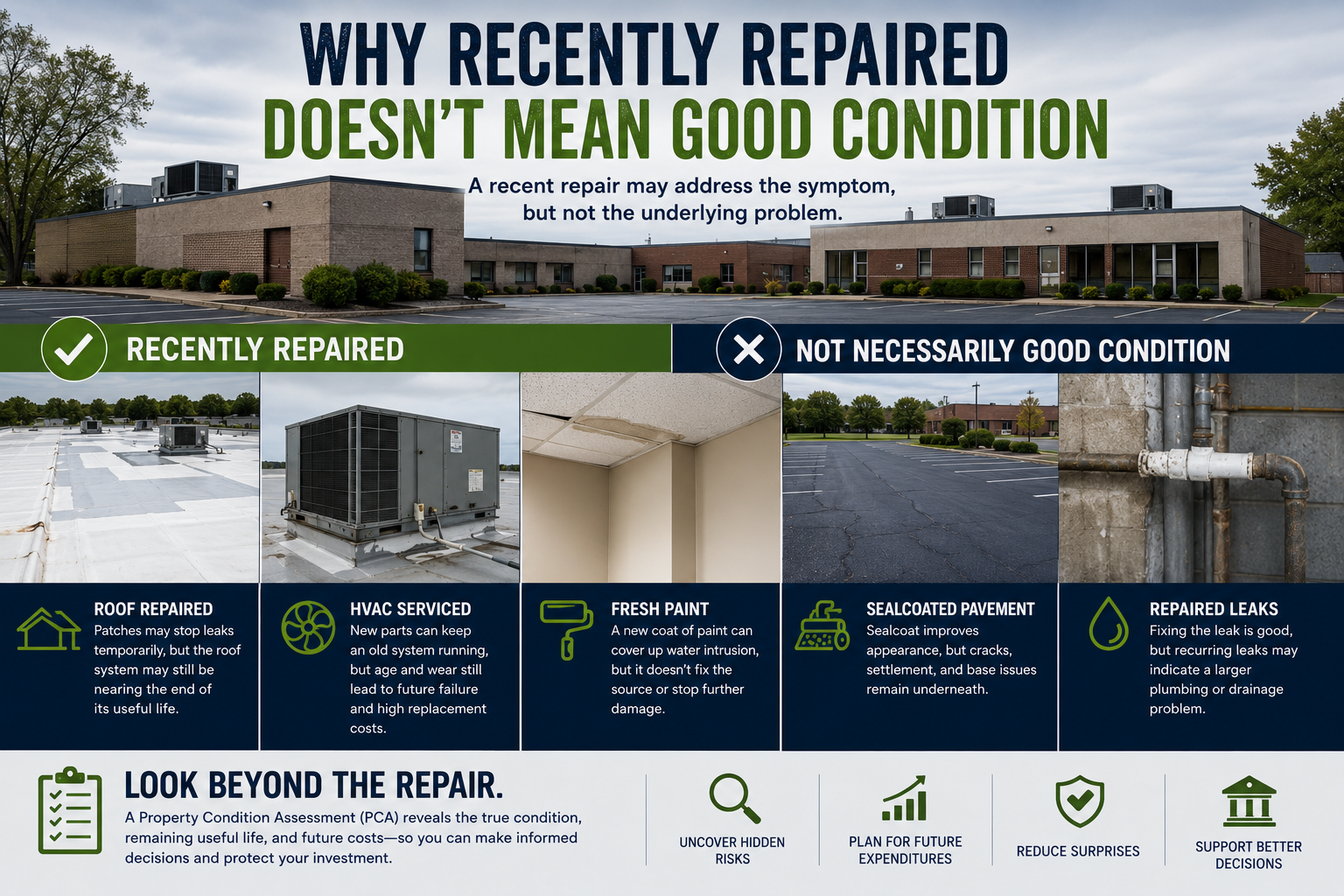
- Multiple generations of patch repairs masking deterioration
- Snow and ice loading during winter months
- Aging membranes and flashing failures
Roof deficiencies are frequently one of the largest contributors to short-term capital reserve requirements identified in a Property Condition Assessment (PCA).
Climate Impacts and Freeze-Thaw Cycles
The Northeast climate plays a significant role in long-term building performance. In the Philadelphia region, freeze-thaw cycles accelerate deterioration of building materials and assemblies.
Common climate-related issues include:
- Masonry cracking and mortar joint failure
- Water intrusion through aging façades
- Sealant breakdown around windows and penetrations
- Expansion-related damage to exterior finishes
These issues often develop gradually and may not be immediately visible without a comprehensive inspection.
Legacy Mechanical, Electrical, and Plumbing Systems
Many Philadelphia-area commercial buildings still rely on original or heavily modified MEP systems. While systems may be operational at the time of inspection, their remaining useful life is often limited.
Typical concerns include:
- Aging rooftop units or boiler systems
- Electrical panels and distribution equipment nearing obsolescence
- Inadequate system capacity for modern tenant use
- Deferred maintenance impacting performance and efficiency
These systems play a major role in capital planning and are closely evaluated by lenders during underwriting.
ADA Accessibility Challenges
Accessibility compliance is another frequent due diligence hurdle in the Philadelphia metro area, particularly in older buildings that predate modern accessibility standards.
Common deficiencies include:
- Non-compliant entry routes and door clearances
- Improper ramp slopes or missing handrails
- Inadequate accessible parking configurations
- Restrooms that cannot be easily retrofitted
Coordinating an ADA Accessibility Survey alongside a PCA helps identify compliance gaps early, before they affect deal timelines or budgets.
Environmental and Historical Use Considerations
Philadelphia’s industrial past adds another layer of complexity to commercial due diligence. Former manufacturing, warehouse, and transportation-related properties may present environmental considerations that intersect with physical condition issues.
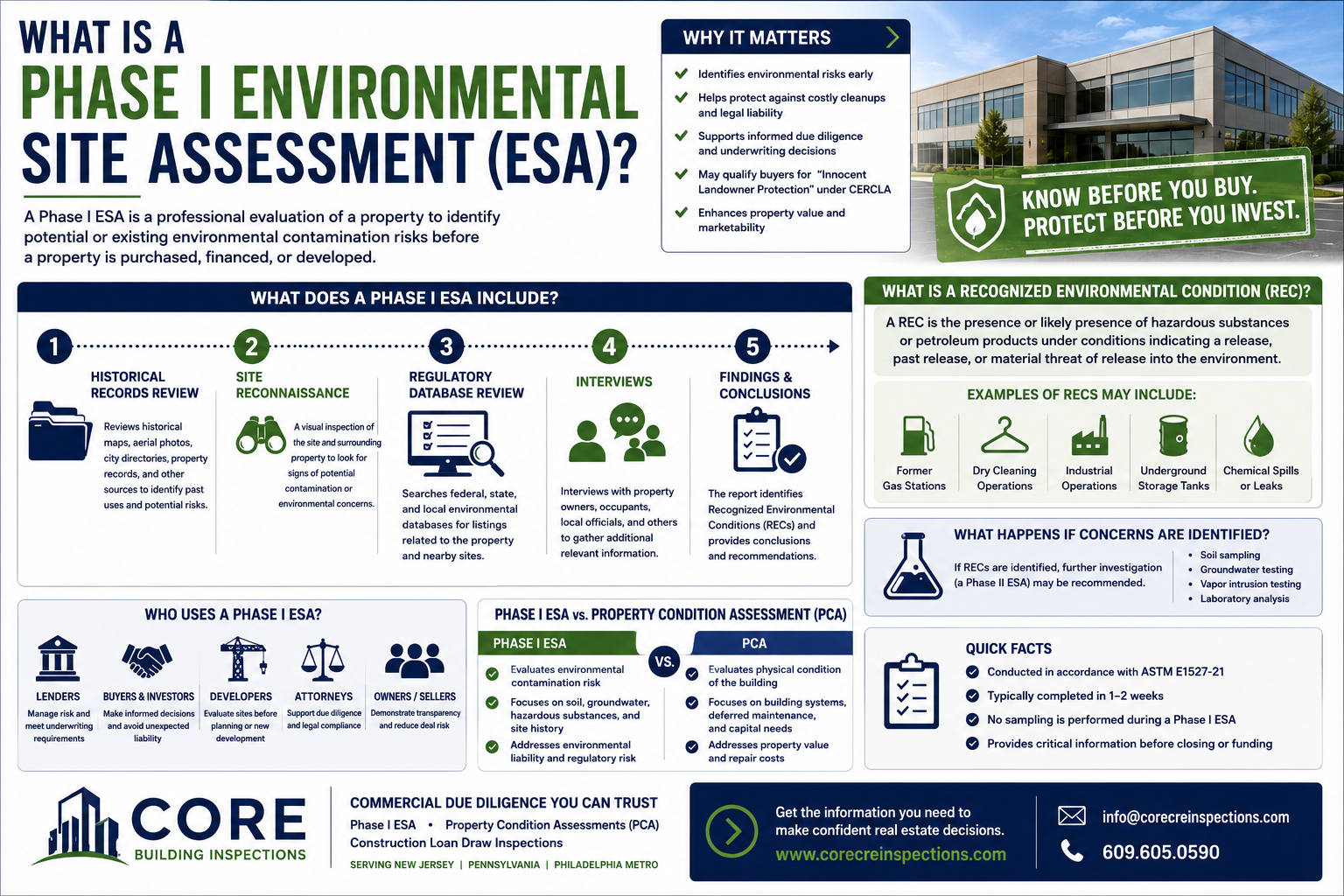
While environmental risks are addressed through a Phase I Environmental Site Assessment, building-related concerns such as drainage, site grading, and historical alterations can influence environmental findings and mitigation strategies.
Why These Challenges Matter to Buyers and Lenders
The cumulative effect of these issues often results in:
- Higher near-term capital expenditures
- Increased reserve requirements
- Lender holdbacks or escrow conditions
- Renegotiated purchase pricing
- Delays in closing or refinancing
Lenders rely heavily on PCA findings to understand these risks and determine whether a property meets underwriting standards.
How a Property Condition Assessment Mitigates Risk
A properly executed Property Condition Assessment conducted in accordance with ASTM E2018 standards helps address the commercial due diligence challenges in the Philadelphia metro area by providing:
- Clear documentation of deficiencies
- Remaining useful life estimates for major systems
- Short-term and long-term capital planning projections
- Defensible data for buyers, lenders, and investors
This information allows stakeholders to move forward with confidence and realistic expectations.
Final Thoughts
Philadelphia remains a strong commercial real estate market—but success depends on understanding the risks unique to the region. Many of the commercial due diligence challenges in the Philadelphia metro area are manageable when identified early and incorporated into proper planning.
Comprehensive inspections are not just a formality—they are a critical risk-management tool.
If you are acquiring, refinancing, or underwriting a commercial property in the Philadelphia metro area, schedule a commercial building inspection or request a Property Condition Assessment with Core Building Inspections. We help buyers and lenders uncover risks before they become liabilities.