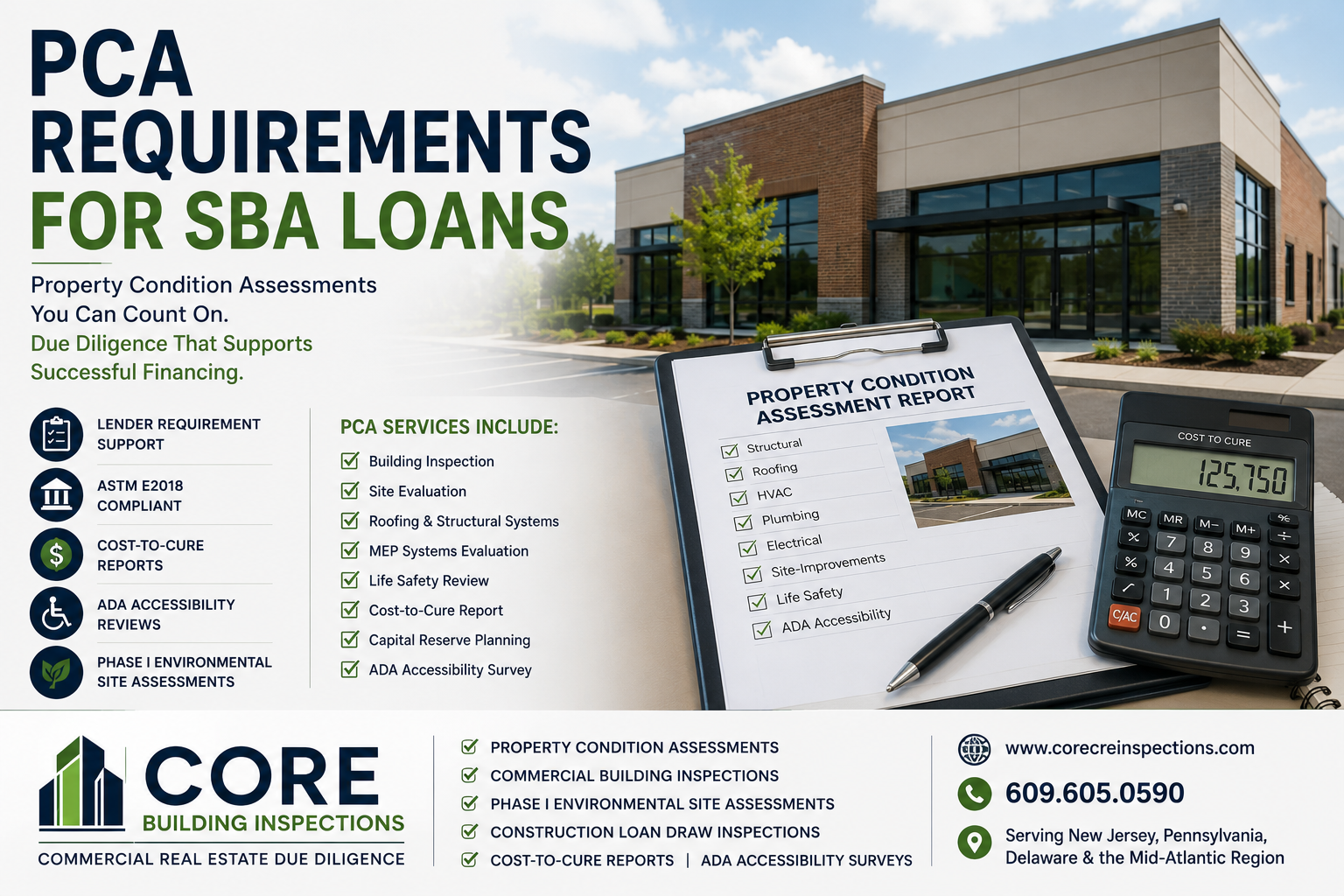
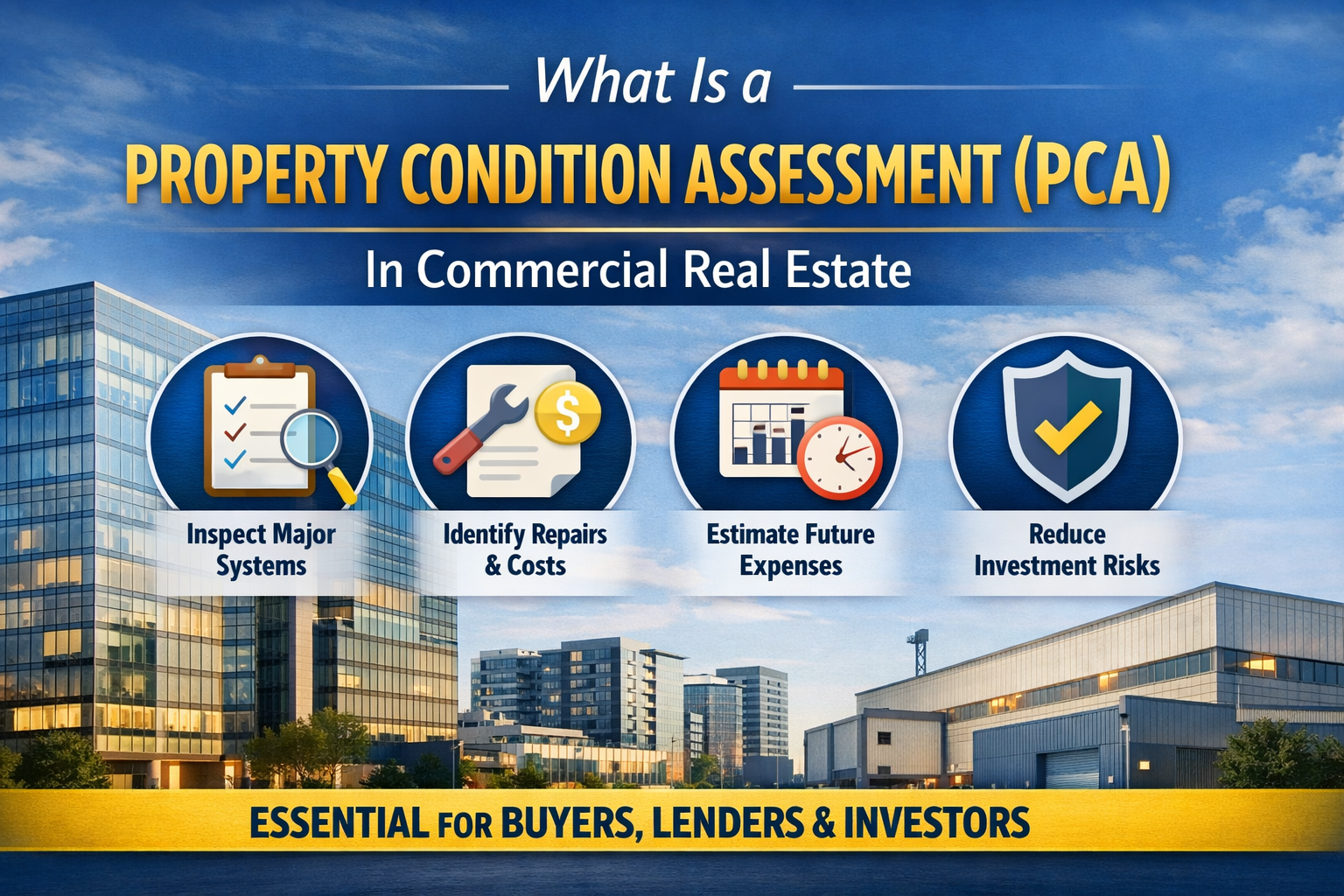
When purchasing or financing a commercial property, understanding the building’s true condition is critical. A property condition assessment (PCA) provides a detailed evaluation of a building’s physical condition and helps identify potential risks, deferred maintenance, and future capital expenses. For investors, lenders, and brokers, a PCA is one of the most important tools used during commercial real estate due diligence.
In markets like New Jersey and the Philadelphia metro area, where many commercial properties are older and subject to harsh seasonal conditions, a PCA plays a key role in protecting investments and supporting informed decision-making.
What Is a Property Condition Assessment (PCA)?
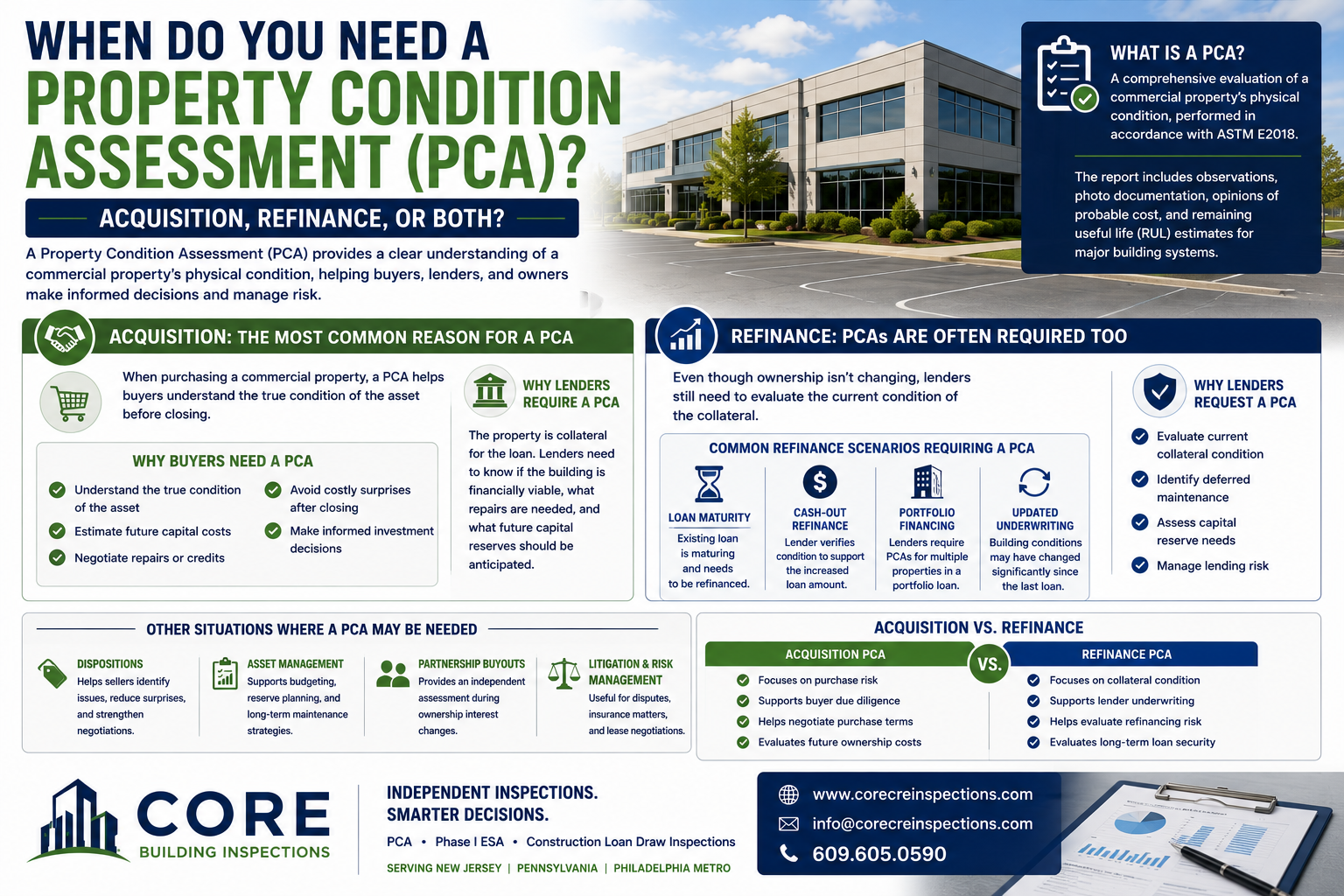
A property condition assessment (PCA) is a comprehensive evaluation of a commercial building’s major systems and components. It is typically performed in accordance with ASTM E2018, which establishes the standard scope and methodology used across the industry.
A PCA is designed to:
- Identify physical deficiencies
- Evaluate overall building condition
- Estimate remaining useful life (RUL) of systems
- Provide capital reserve projections
Unlike a basic inspection, a PCA focuses on both current condition and future financial implications.
What Does a PCA Include?
A properly executed PCA evaluates all major building systems, including:
- Roof systems
- Structural components
- Exterior walls and façade
- HVAC systems
- Electrical systems
- Plumbing systems
- Fire and life safety systems
- Site improvements (parking lots, drainage, sidewalks)
The report typically includes:
- Detailed narratives
- Photographic documentation
- Deficiency summaries
- Opinions of probable cost
- Capital reserve tables
This level of detail allows stakeholders to understand both immediate and long-term risks.
Why PCAs Matter in Commercial Real Estate
A property condition assessment (PCA) is not just an inspection—it is a risk management tool that directly impacts financial decisions.
1. Protects Buyers from Hidden Costs
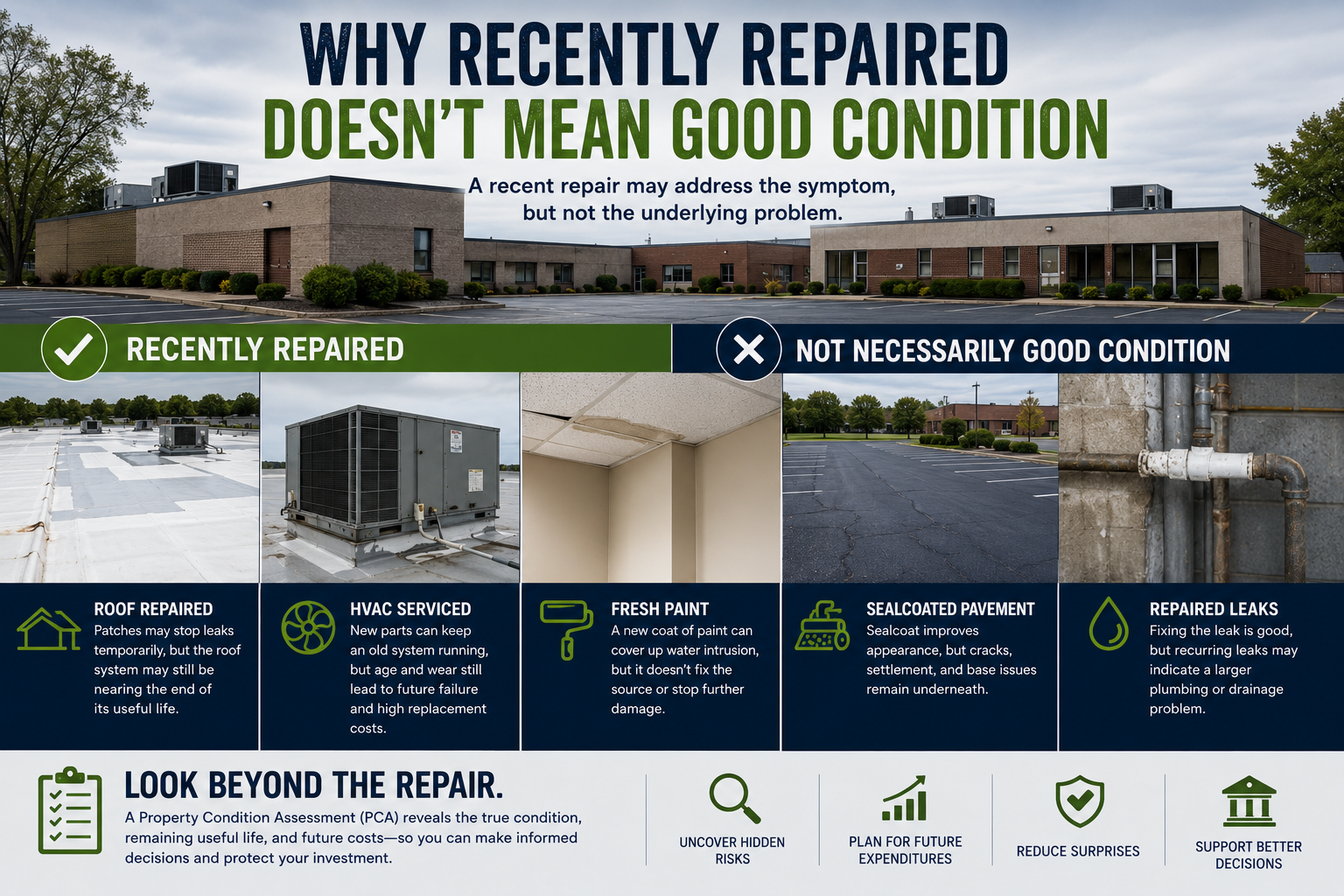
A PCA helps identify deferred maintenance and upcoming capital expenses before closing. Without this information, buyers may inherit costly repairs that were not accounted for in the purchase price.
2. Supports Lender Underwriting
Lenders rely heavily on PCAs to evaluate the physical condition of the asset securing the loan. The findings can influence:
- Loan approval
- Reserve requirements
- Repair escrows
- Risk assessment
3. Strengthens Negotiation Position
PCA findings often become the basis for:
- Price reductions
- Repair credits
- Seller concessions
This ensures that buyers are not overpaying for a property with significant capital needs.
4. Improves Capital Planning
By providing estimates for future repairs and replacements, a PCA allows investors to plan for:
- Roof replacement
- HVAC upgrades
- Parking lot resurfacing
- Building envelope repairs
This supports long-term asset management and budgeting.
When Is a Property Condition Assessment Needed?
PCAs are commonly used in:
- Property acquisitions
- Commercial refinancing
- Portfolio evaluations
- Asset management planning
In the NJ and Philadelphia markets, lenders frequently require a PCA as part of the due diligence process, particularly for stabilized commercial assets.
PCA vs. Commercial Building Inspection
While often confused, a PCA and a commercial building inspection serve different purposes.
A commercial building inspection typically focuses on identifying visible defects at the time of inspection.
A property condition assessment (PCA) goes further by:
- Evaluating long-term performance
- Estimating remaining useful life
- Quantifying future capital expenditures
For commercial real estate transactions, a PCA provides a much deeper level of analysis.
Regional Considerations in NJ & PA
In New Jersey and Pennsylvania, several regional factors make PCAs especially important:
- Aging building stock
- Freeze–thaw cycles affecting roofs and façades
- Flat roof systems prone to drainage issues
- Older HVAC systems nearing end of life
A PCA helps identify how these conditions impact building performance and future costs.
Final Thoughts
Understanding what a property condition assessment (PCA) is and why it matters in commercial real estate is essential for anyone involved in a transaction. A PCA provides the clarity needed to evaluate risk, plan for capital expenditures, and make informed investment decisions.
Whether you are a buyer, lender, or broker, a well-prepared PCA can be the difference between a successful investment and an unexpected financial burden.
If you are purchasing, refinancing, or evaluating a commercial property in New Jersey or the Philadelphia metro area, request a Property Condition Assessment from Core Building Inspections. Our ASTM-compliant PCA reports provide the detailed analysis needed to support confident decision-making.