When evaluating a commercial property, understanding both the physical condition of the building and the environmental risks associated with the site is critical. This is where two key due diligence tools come into play: the property condition assessment (PCA) and the Phase I Environmental Site Assessment (ESA).
Understanding how property condition assessments work with Phase I ESAs allows buyers, lenders, and investors to gain a complete picture of risk before closing on a commercial real estate transaction.
What Is a Property Condition Assessment (PCA)?
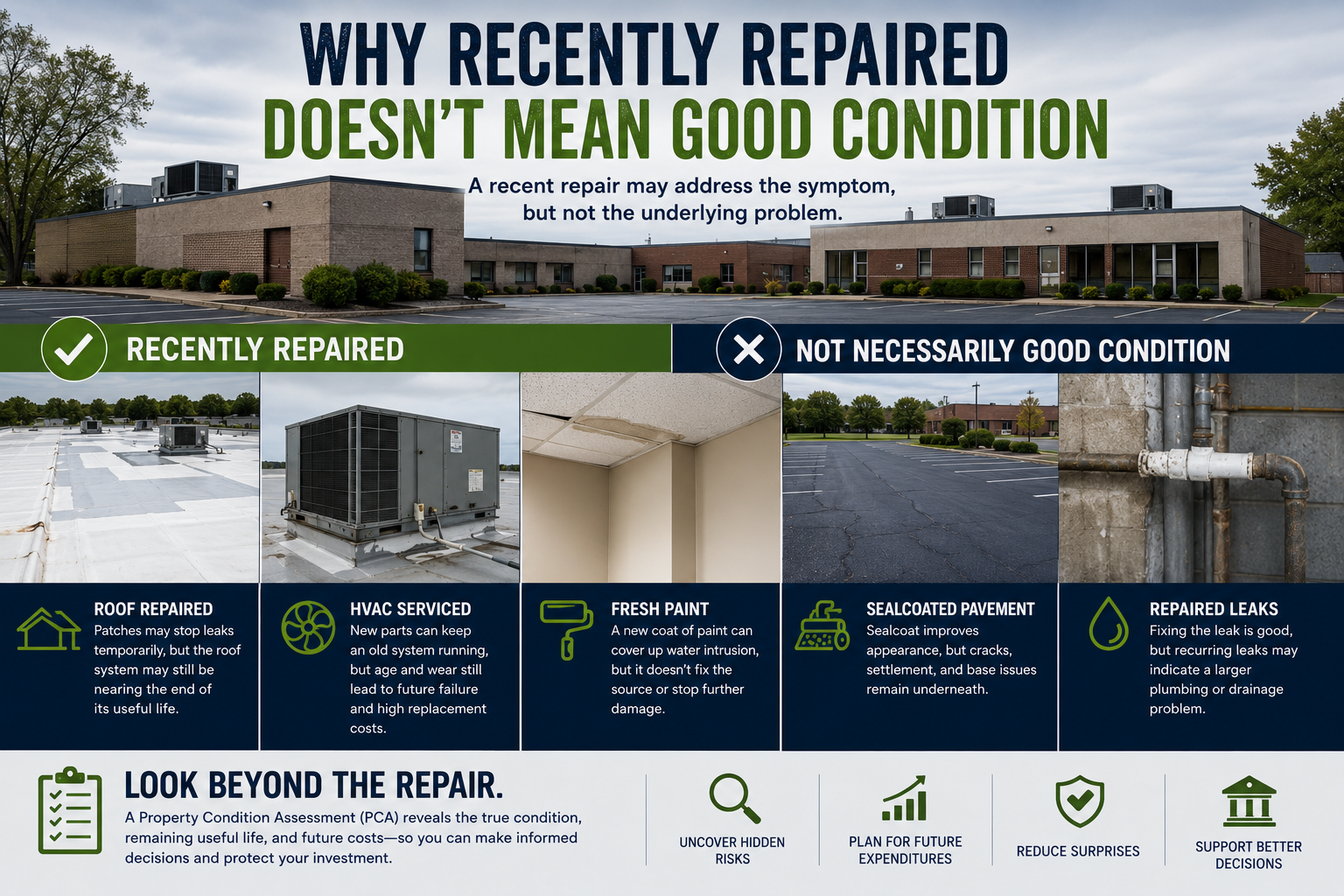
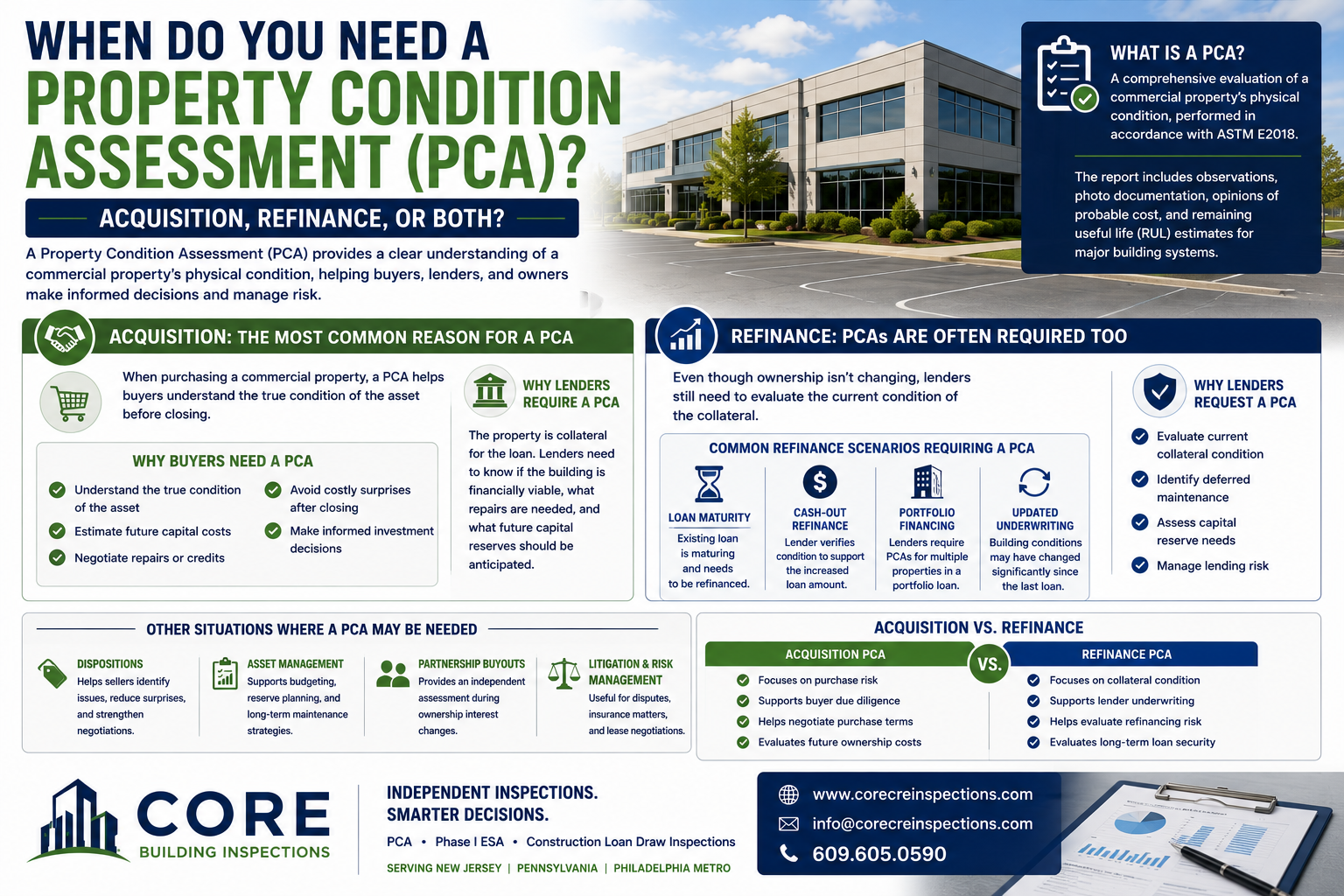
A property condition assessment (PCA) is a detailed evaluation of a building’s physical condition, typically performed in accordance with ASTM E2018.
A PCA focuses on:
- Building systems (roof, structure, HVAC, electrical, plumbing)
- Site improvements (parking lots, drainage, walkways)
- Deferred maintenance
- Remaining useful life (RUL)
- Capital reserve planning
The goal is to identify physical deficiencies and future capital expenditures.
What Is a Phase I Environmental Site Assessment (ESA)?
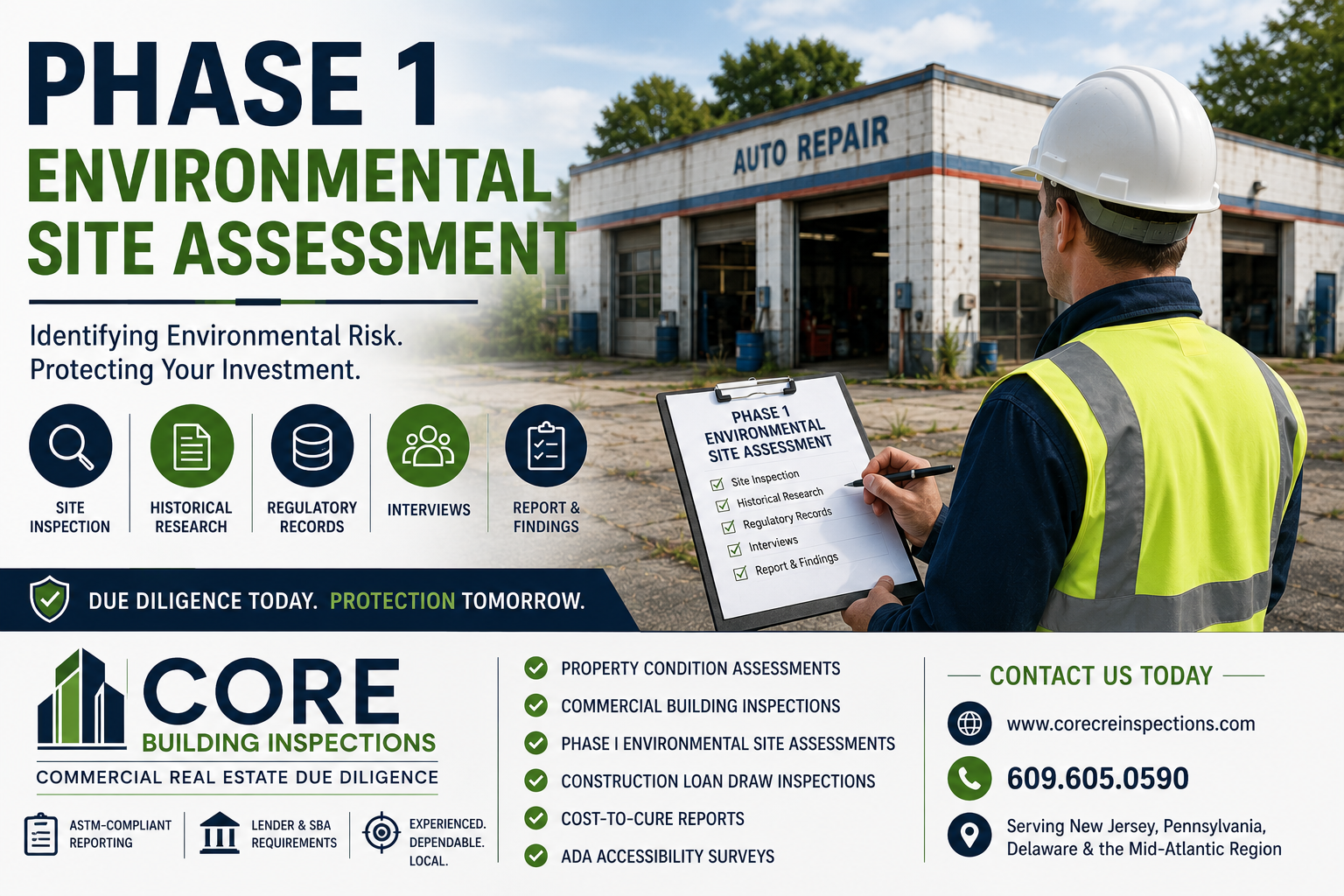
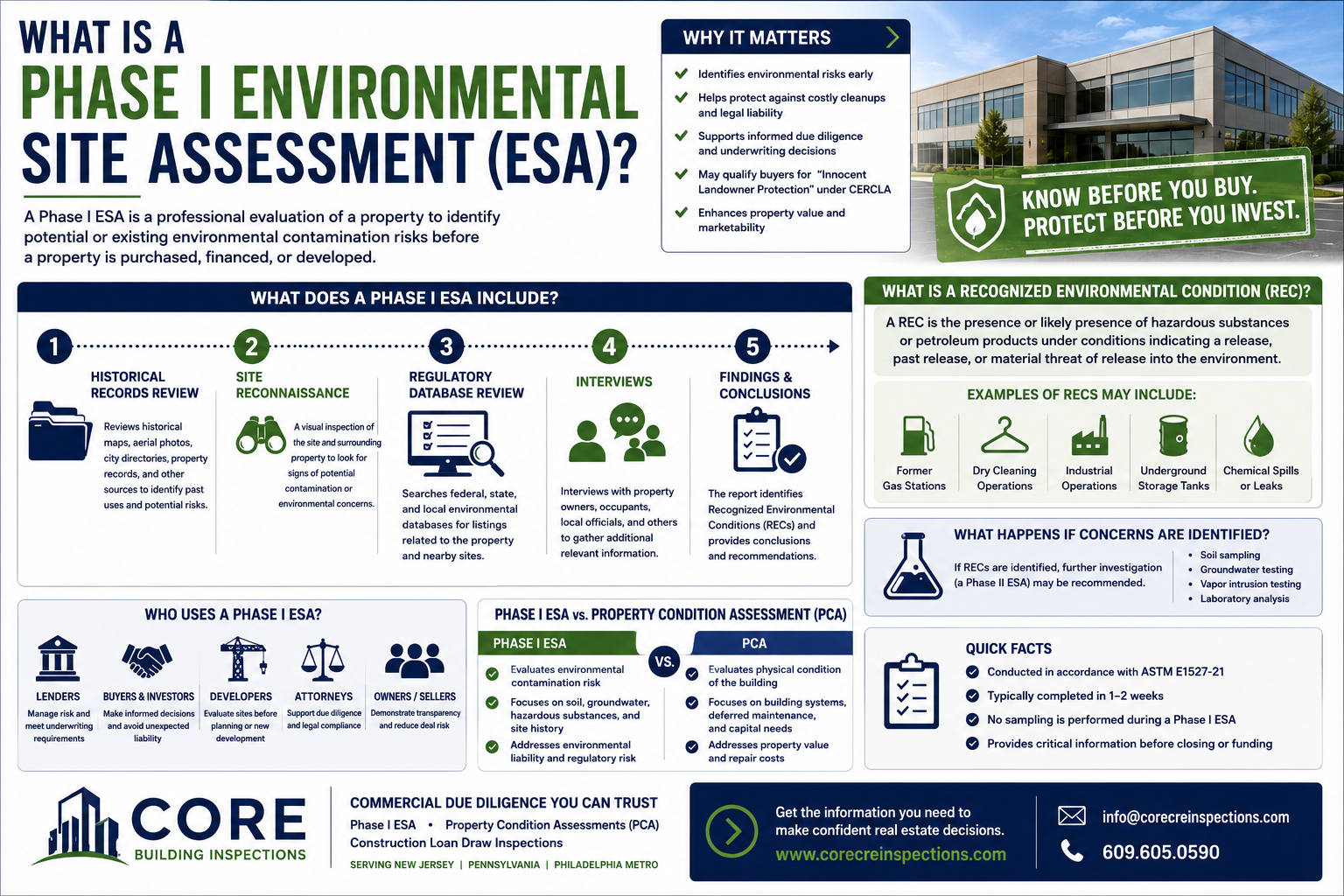
A Phase I Environmental Site Assessment (ESA) is conducted in accordance with ASTM E1527 and evaluates potential environmental contamination risks associated with a property.
A Phase I ESA includes:
- Historical research (aerials, fire insurance maps, records)
- Site reconnaissance
- Interviews with owners or occupants
- Regulatory database review
The objective is to identify Recognized Environmental Conditions (RECs) that could indicate contamination.
Why Both Are Needed in Commercial Due Diligence
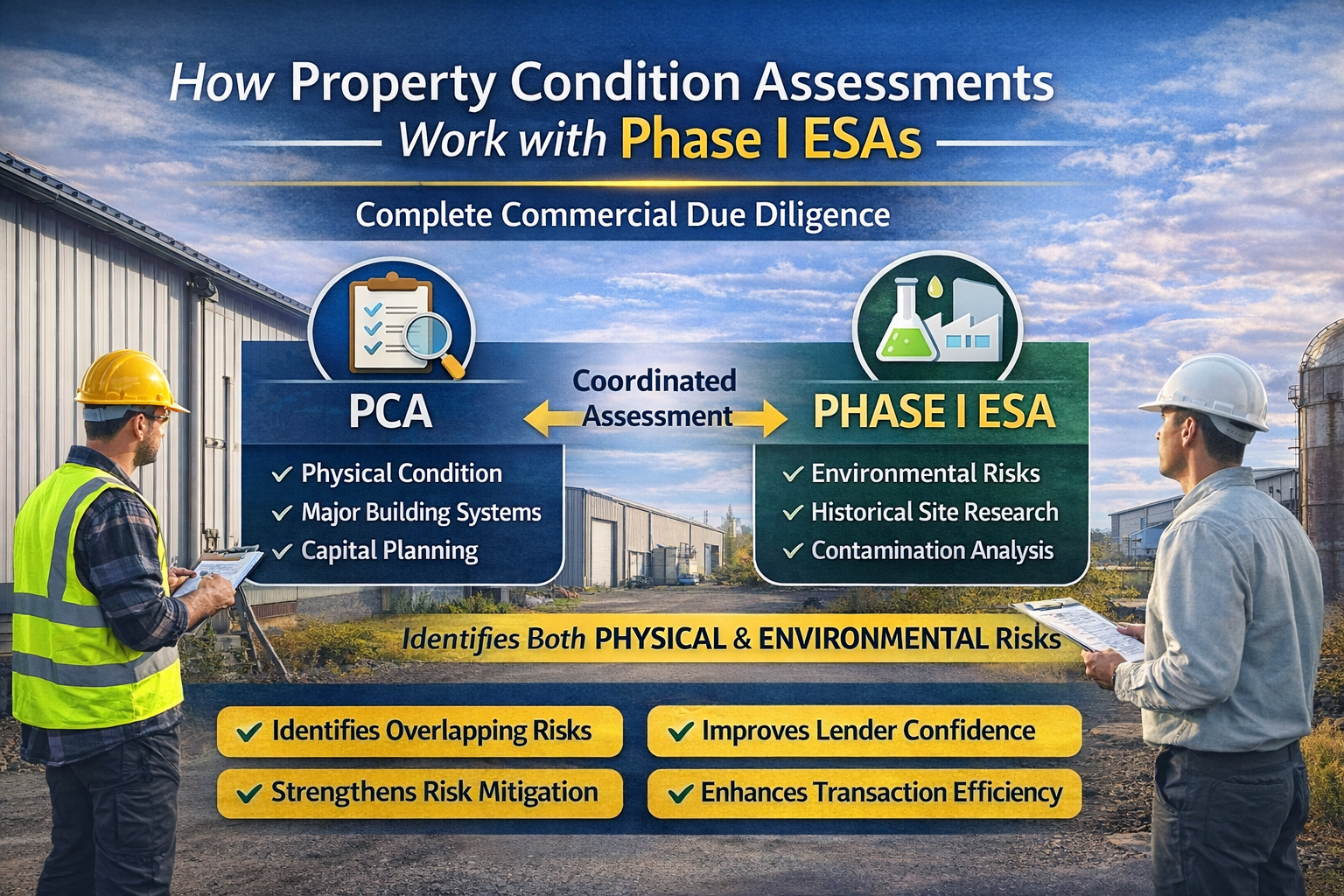
A PCA and Phase I ESA serve different—but complementary—purposes.
- PCA = Physical risk (building systems and capital costs)
- Phase I ESA = Environmental risk (contamination liability)
In markets like New Jersey and Pennsylvania, where properties may have long operational histories, both assessments are often required by lenders to fully evaluate risk.
How PCAs and Phase I ESAs Work Together
1. Identifying Overlapping Risk Indicators
During the PCA, inspectors may observe conditions that raise environmental concerns, such as:
- Stained soils near mechanical equipment
- Improper chemical storage
- Evidence of underground storage tanks
- Floor drains in industrial spaces
These observations can support or reinforce findings in the Phase I ESA.
2. Coordinating Site Observations
Both assessments include a site walk, but with different focuses.
- PCA: evaluates building systems and physical condition
- Phase I ESA: evaluates environmental indicators and historical use
When coordinated properly, both professionals can share observations, improving efficiency and consistency in reporting.
3. Supporting Lender Requirements
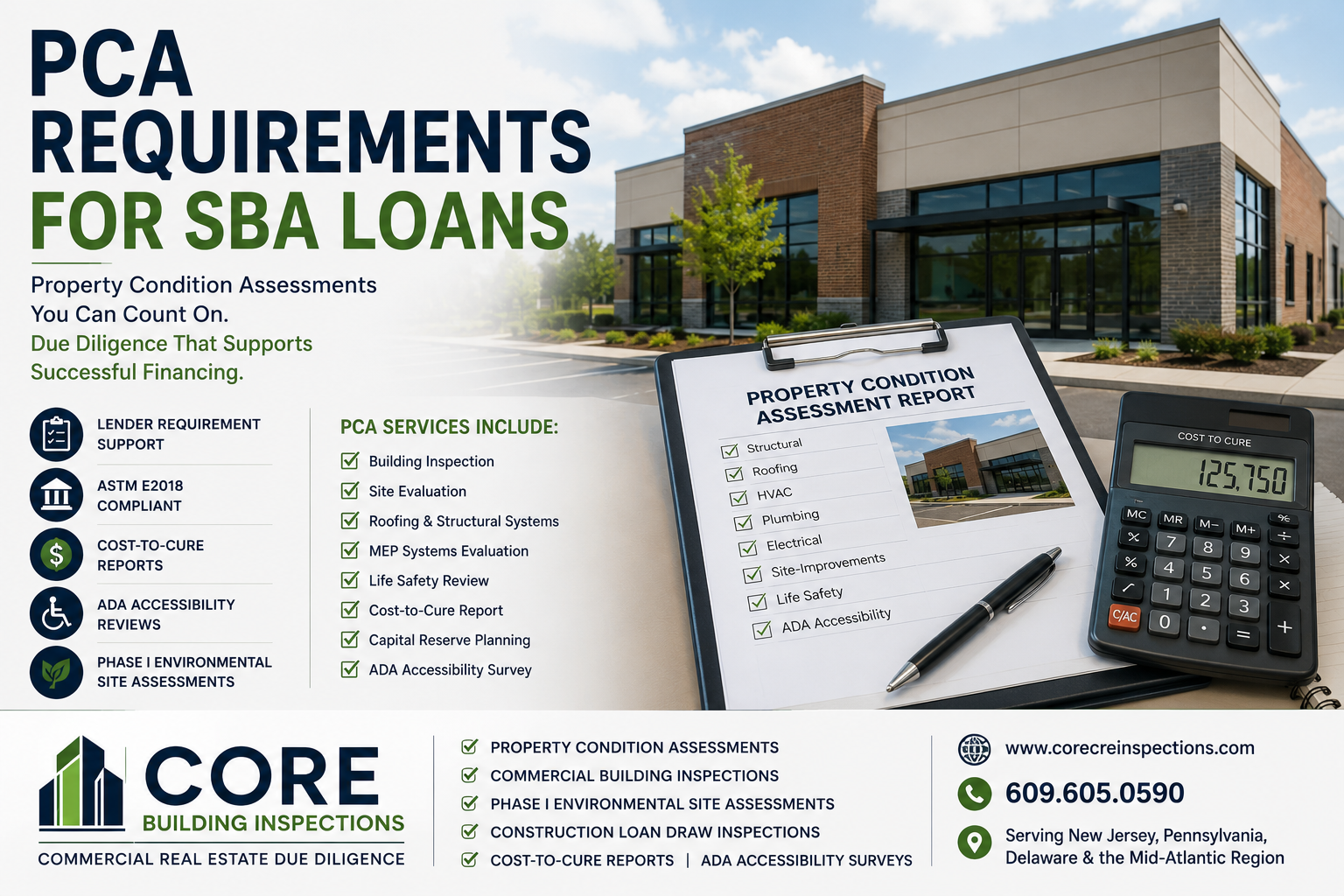
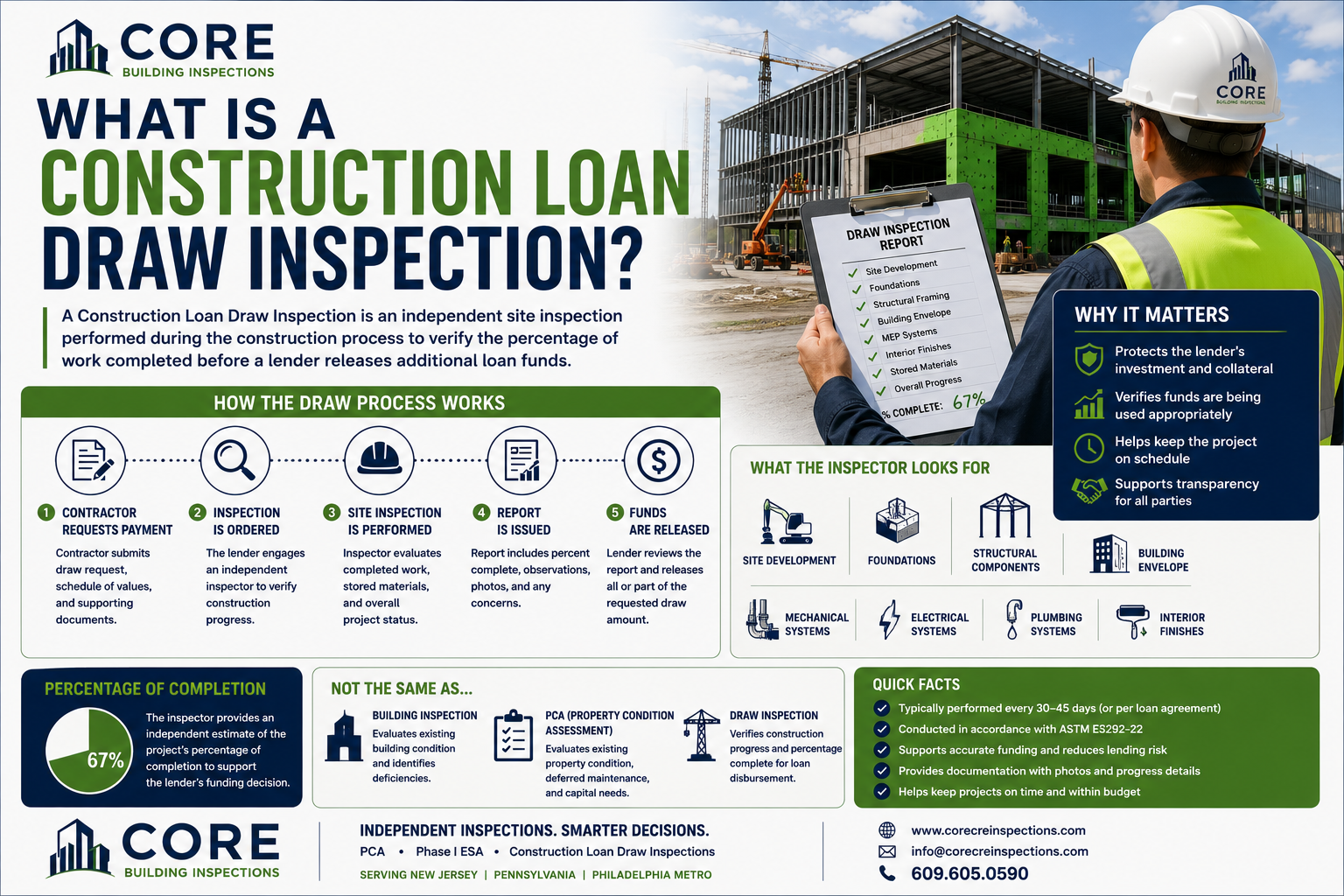
Most lenders require both a PCA and a Phase I ESA for:
- Commercial acquisitions
- Refinancing transactions
- Portfolio evaluations
Together, these reports provide lenders with:
- Physical risk analysis
- Environmental liability assessment
- Capital planning insight
This combination helps lenders make informed underwriting decisions.
4. Strengthening Risk Mitigation Strategies
When both reports are reviewed together, they provide a more complete understanding of risk.
For example:
- A PCA may identify aging fuel systems or abandoned equipment
- A Phase I ESA may identify potential contamination related to those systems
This allows buyers to:
- Negotiate environmental testing (Phase II ESA if needed)
- Plan for remediation costs
- Adjust purchase price or terms
5. Improving Transaction Efficiency
Coordinating both assessments can:
- Reduce duplication of effort
- Streamline site access logistics
- Align reporting timelines
This is especially important in tight due diligence periods.
Regional Considerations in NJ & PA
In New Jersey and the Philadelphia metro area, environmental and physical risks often overlap due to:
- Older industrial and commercial properties
- Historic use of heating oil tanks
- Legacy manufacturing or automotive uses
- Dense urban development patterns
A coordinated PCA and Phase I ESA approach helps identify these risks early.
What Happens If Issues Are Found?
If either assessment identifies concerns:
- PCA may recommend repairs or capital reserves
- Phase I ESA may identify RECs requiring further investigation
This can lead to:
- Additional testing (Phase II ESA)
- Repair escrows
- Price renegotiation
- Risk-based decision making
Final Thoughts
Understanding how property condition assessments work with Phase I ESAs is essential for effective commercial real estate due diligence. While each assessment serves a different purpose, together they provide a comprehensive view of both physical condition and environmental risk.
For buyers and lenders, this combined approach helps reduce uncertainty and supports more confident investment decisions.
If you are acquiring or refinancing a commercial property in New Jersey or the Philadelphia metro area, coordinate your Property Condition Assessment and Phase I ESA with experienced professionals. Core Building Inspections provides ASTM-compliant PCA services and works closely with environmental consultants to support a seamless due diligence process.