When conducting due diligence on a commercial property, investors are often presented with reports that reference ASTM standards. While these standards are widely used across the industry, many investors are not fully aware of what they mean or why they matter.
Understanding ASTM standards for commercial real estate is essential for evaluating risk, ensuring consistency in reporting, and making informed investment decisions.
What Are ASTM Standards?
ASTM International is a globally recognized organization that develops technical standards across a wide range of industries, including construction, engineering, and environmental assessment.
In commercial real estate, ASTM standards establish guidelines and best practices for how inspections and assessments should be conducted. These standards ensure that reports are:
- Consistent
- Defensible
- Reliable
- Widely accepted by lenders and investors
Why ASTM Standards Matter in Commercial Real Estate
ASTM standards play a critical role in due diligence by creating a uniform framework for evaluating properties.
For investors, this means:
- Reports follow a recognized methodology
- Findings are based on industry best practices
- Risk is evaluated consistently across properties
- Lenders can rely on the information provided
Without ASTM standards, due diligence reports could vary significantly in quality and scope.
Key ASTM Standards Used in Commercial Real Estate
Several ASTM standards are commonly used during commercial real estate transactions.
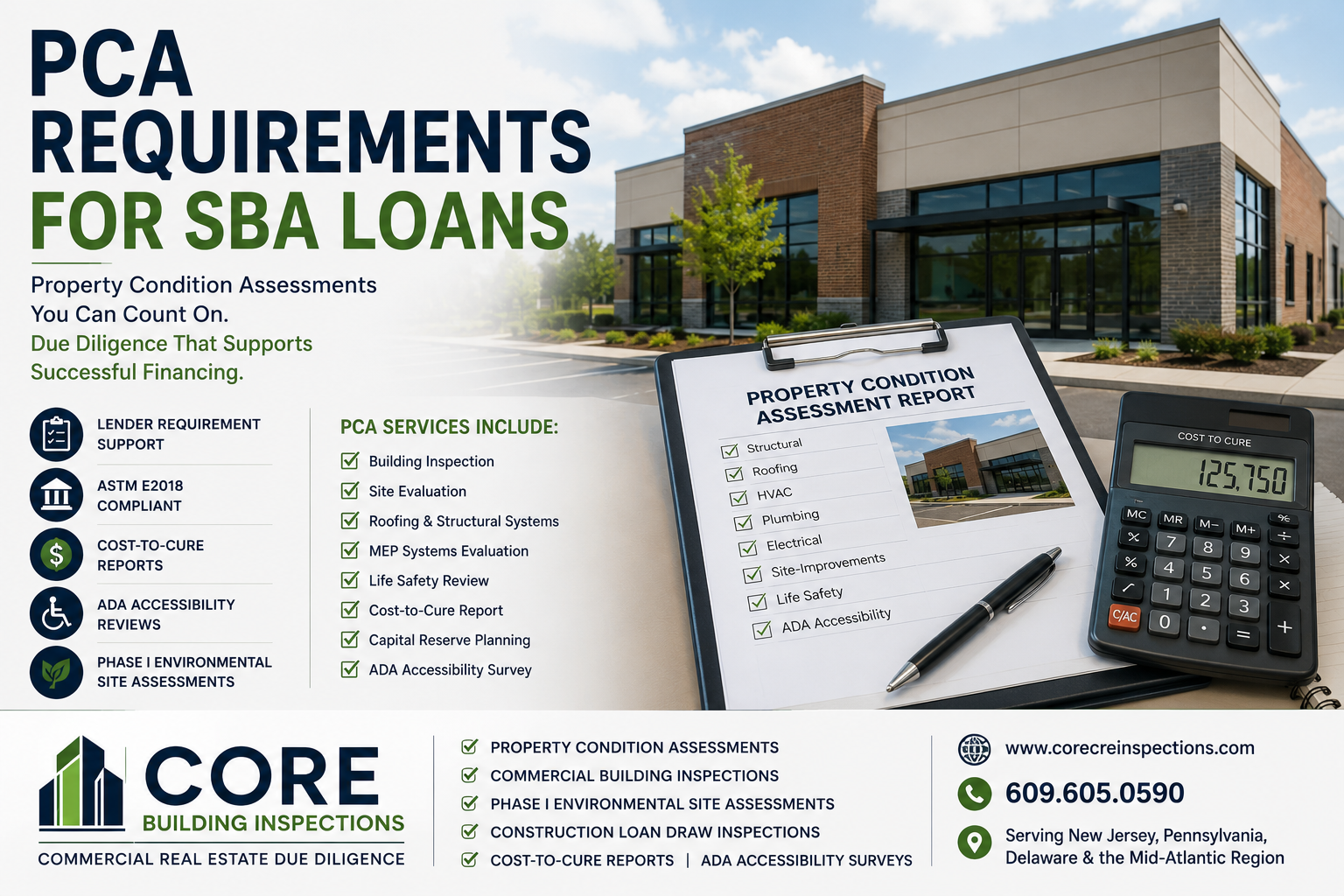
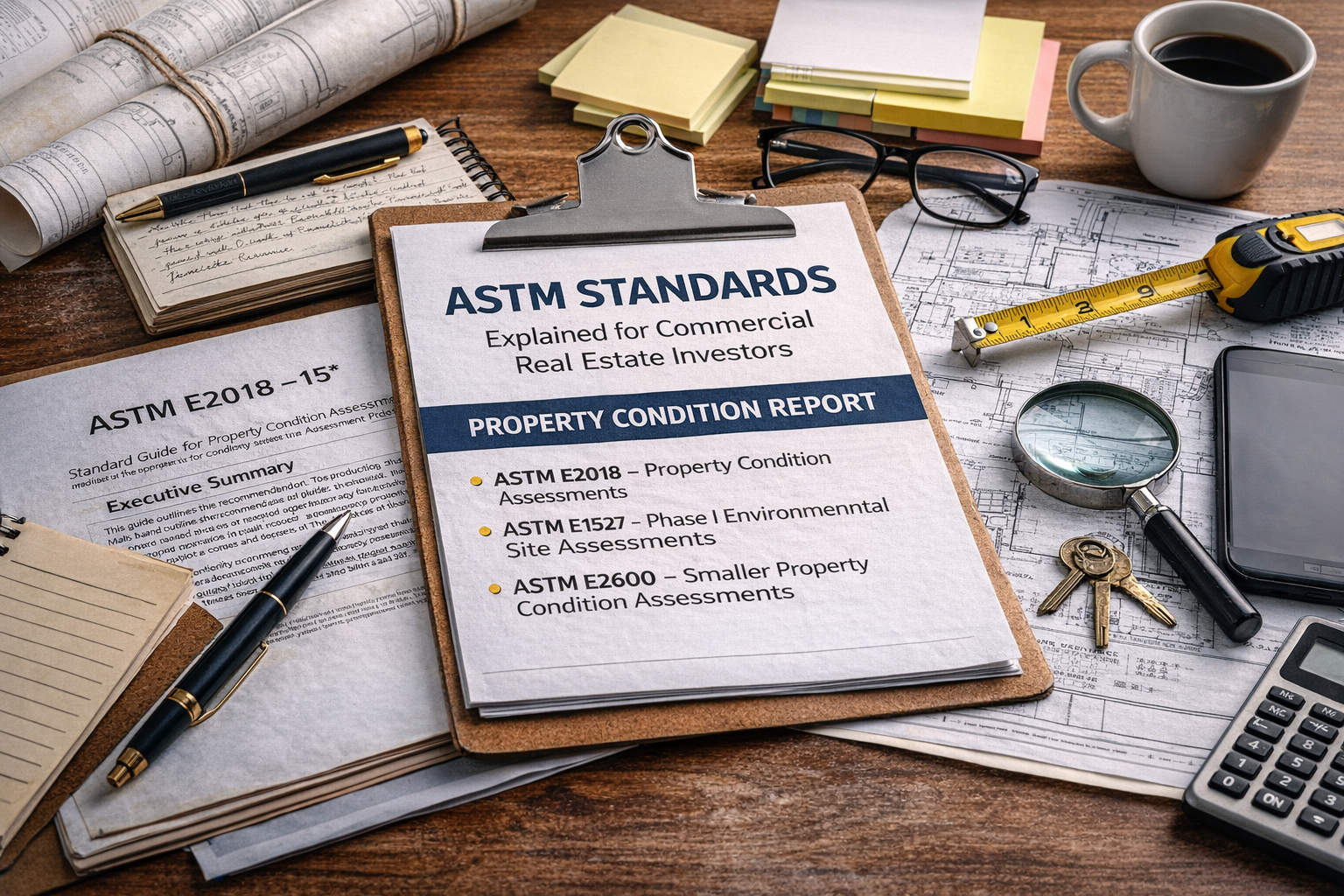
ASTM E2018 – Property Condition Assessments
ASTM E2018 governs how Property Condition Assessments (PCAs) are performed.
This standard outlines:
- Scope of inspection
- Systems to be evaluated
- Reporting requirements
- Limitations of the assessment
For investors, this ensures that the PCA provides a consistent evaluation of a building’s physical condition and capital needs.
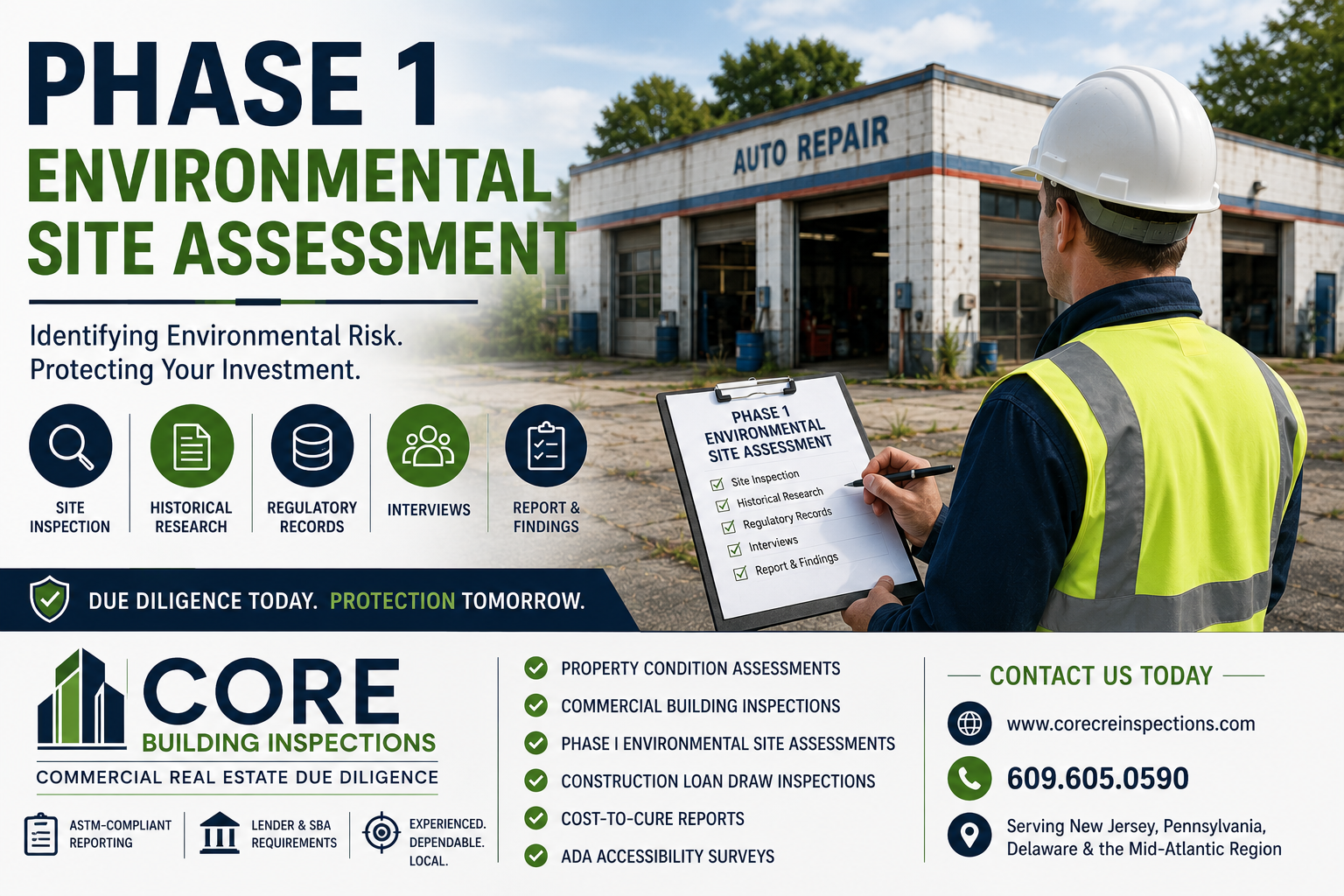
ASTM E1527 – Phase I Environmental Site Assessments
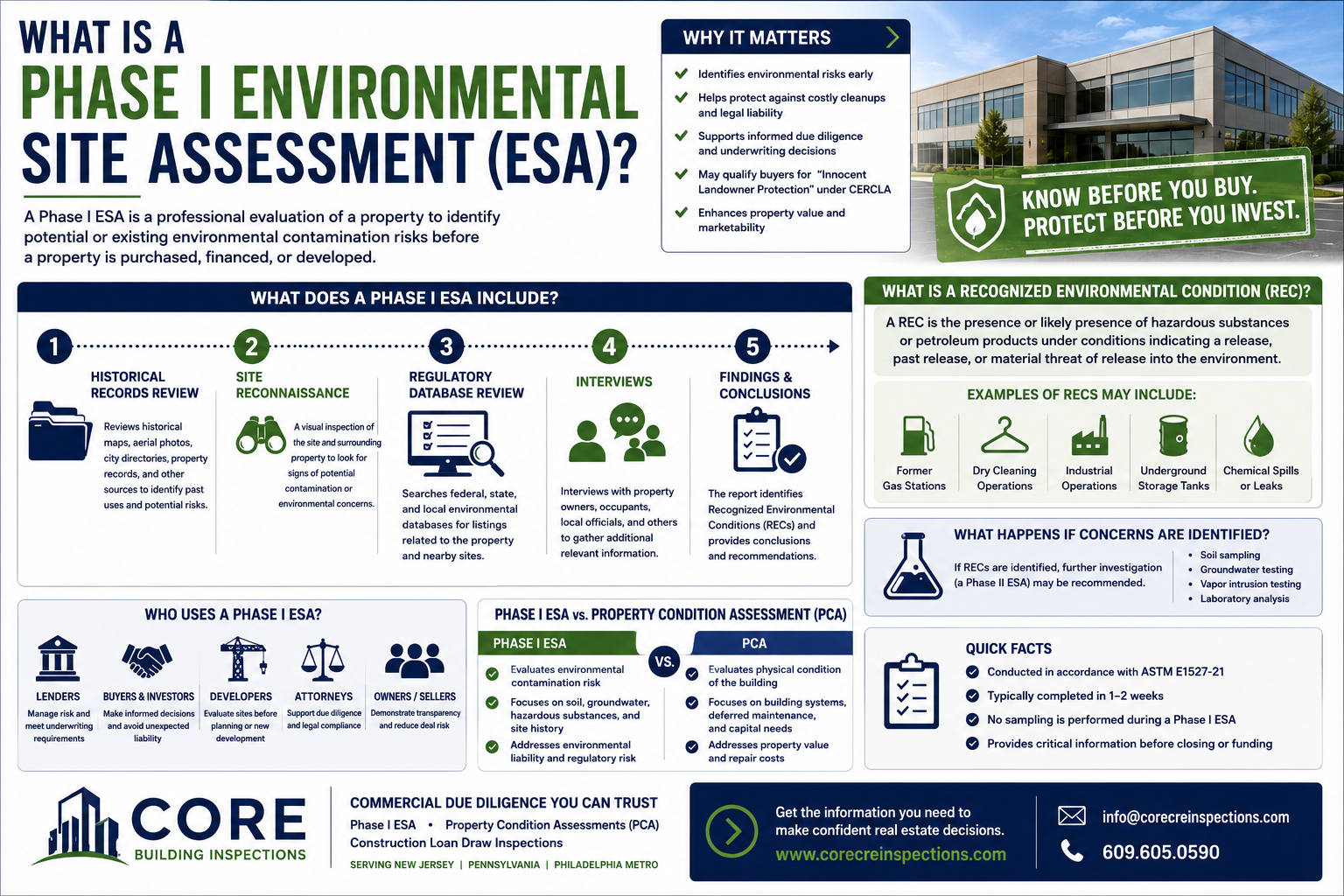
ASTM E1527 governs Phase I Environmental Site Assessments (ESAs).
This standard defines:
- Historical research requirements
- Site reconnaissance procedures
- Identification of Recognized Environmental Conditions (RECs)
Phase I ESAs are critical for identifying potential environmental liabilities associated with a property.
ASTM E2600 – Property Condition Assessments for Smaller Buildings
ASTM E2600 provides guidance for baseline property condition assessments, often used for smaller or less complex properties.
This standard offers a streamlined approach while still maintaining consistency and reliability.
How ASTM Standards Protect Investors
ASTM standards are designed to reduce uncertainty and improve transparency during due diligence.
1. Establish Clear Expectations
Investors know exactly what is included—and not included—in a report based on the applicable ASTM standard.
2. Improve Risk Identification
By following a structured methodology, inspectors are more likely to identify:
- Physical deficiencies
- Environmental concerns
- Deferred maintenance
- Capital expenditure needs
3. Support Lending and Financing
Most lenders require ASTM-compliant reports as part of their underwriting process. These standards provide confidence that the evaluation meets industry expectations.
4. Provide Legal and Professional Defensibility
ASTM standards create a documented framework that can be relied upon in the event of disputes or legal challenges.
Limitations of ASTM-Based Assessments
While ASTM standards provide structure and consistency, it is important to understand their limitations.
For example:
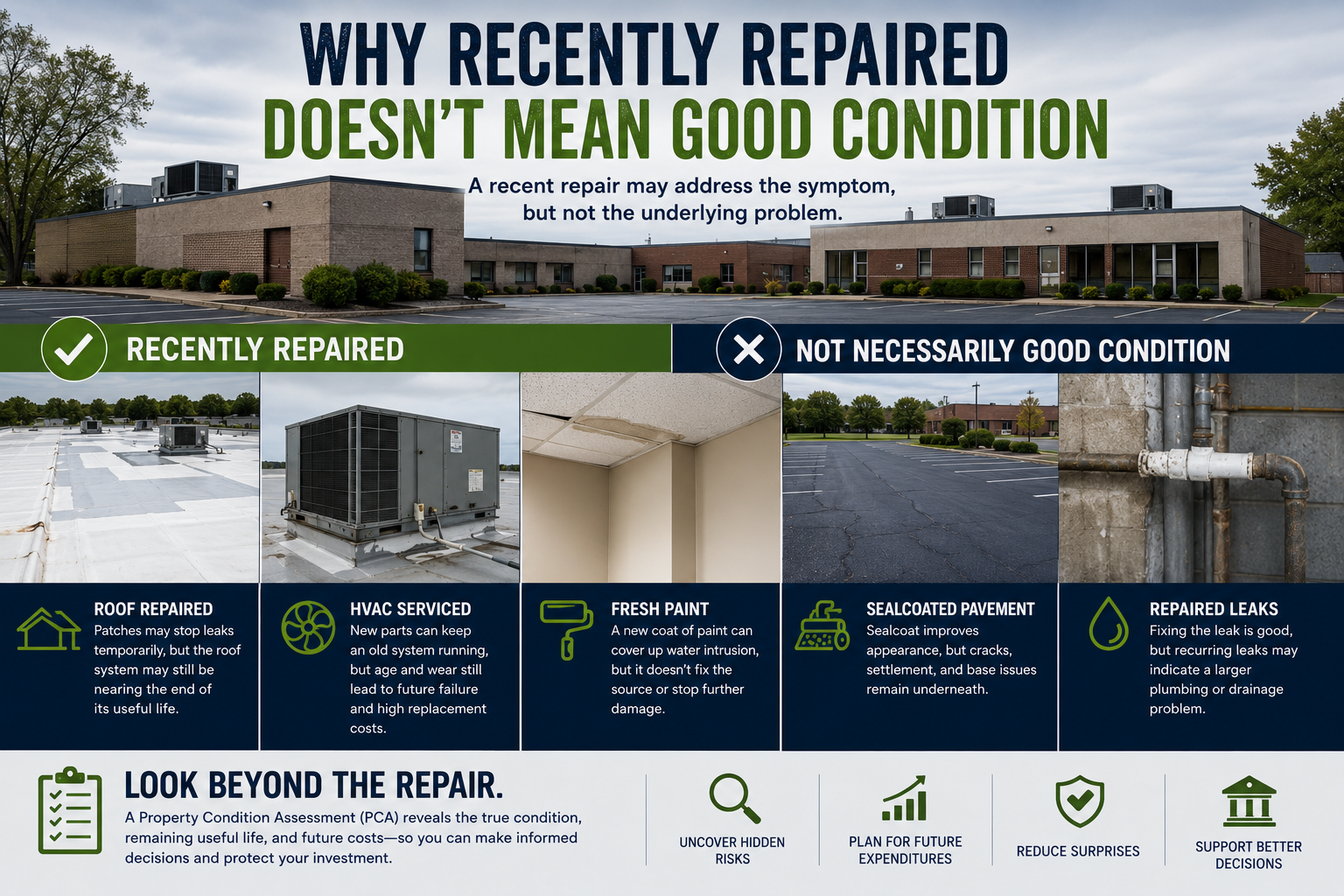
- PCAs are non-invasive visual inspections
- Inspectors do not open walls or dismantle systems
- Reports are based on observations at the time of inspection
Understanding these limitations helps investors interpret findings appropriately.
ASTM Standards in NJ & PA Commercial Markets
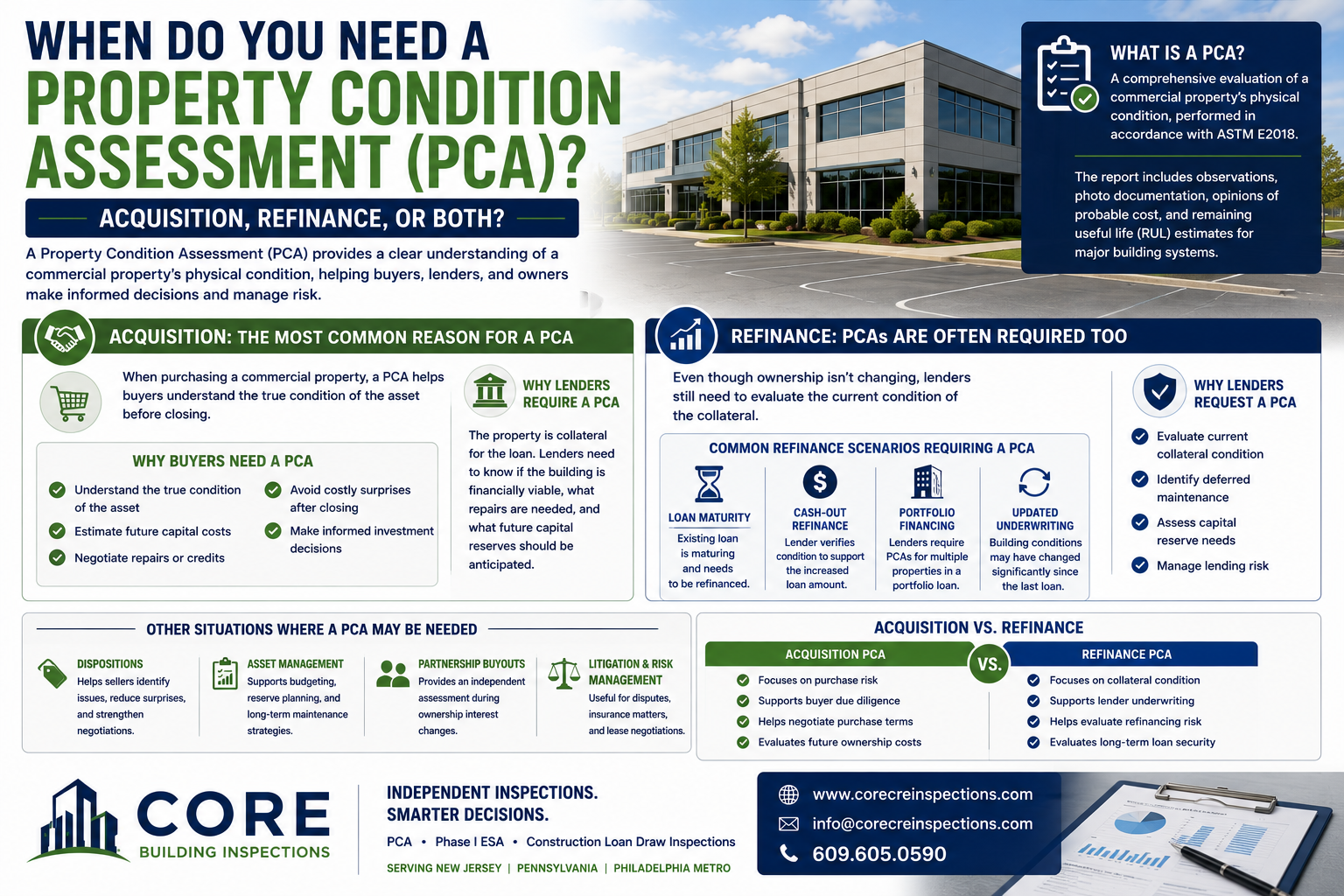
In New Jersey and the Philadelphia metro area, ASTM standards are widely used for:
- Commercial acquisitions
- Refinancing transactions
- Portfolio evaluations
- Lender due diligence
Given the age and diversity of commercial properties in these regions, ASTM-compliant assessments provide a consistent approach to evaluating risk.
Final Thoughts
Understanding ASTM standards explained for commercial real estate investors is essential for navigating the due diligence process. These standards provide the structure, consistency, and reliability needed to evaluate both physical and environmental risks.
For investors, ASTM-compliant reports are not just technical documents—they are critical tools for making informed financial decisions.
If you are purchasing or refinancing a commercial property in New Jersey or the Philadelphia metro area, work with professionals who follow ASTM standards. Core Building Inspections provides ASTM-compliant Property Condition Assessments designed to support lenders, investors, and brokers.