Older commercial properties throughout New Jersey present unique challenges for buyers, lenders, and investors. Many of these buildings were constructed decades ago and have experienced years of use, deferred maintenance, and exposure to harsh seasonal conditions. Understanding the common issues found in old New Jersey commercial buildings is essential during due diligence to avoid unexpected costs and investment risks.
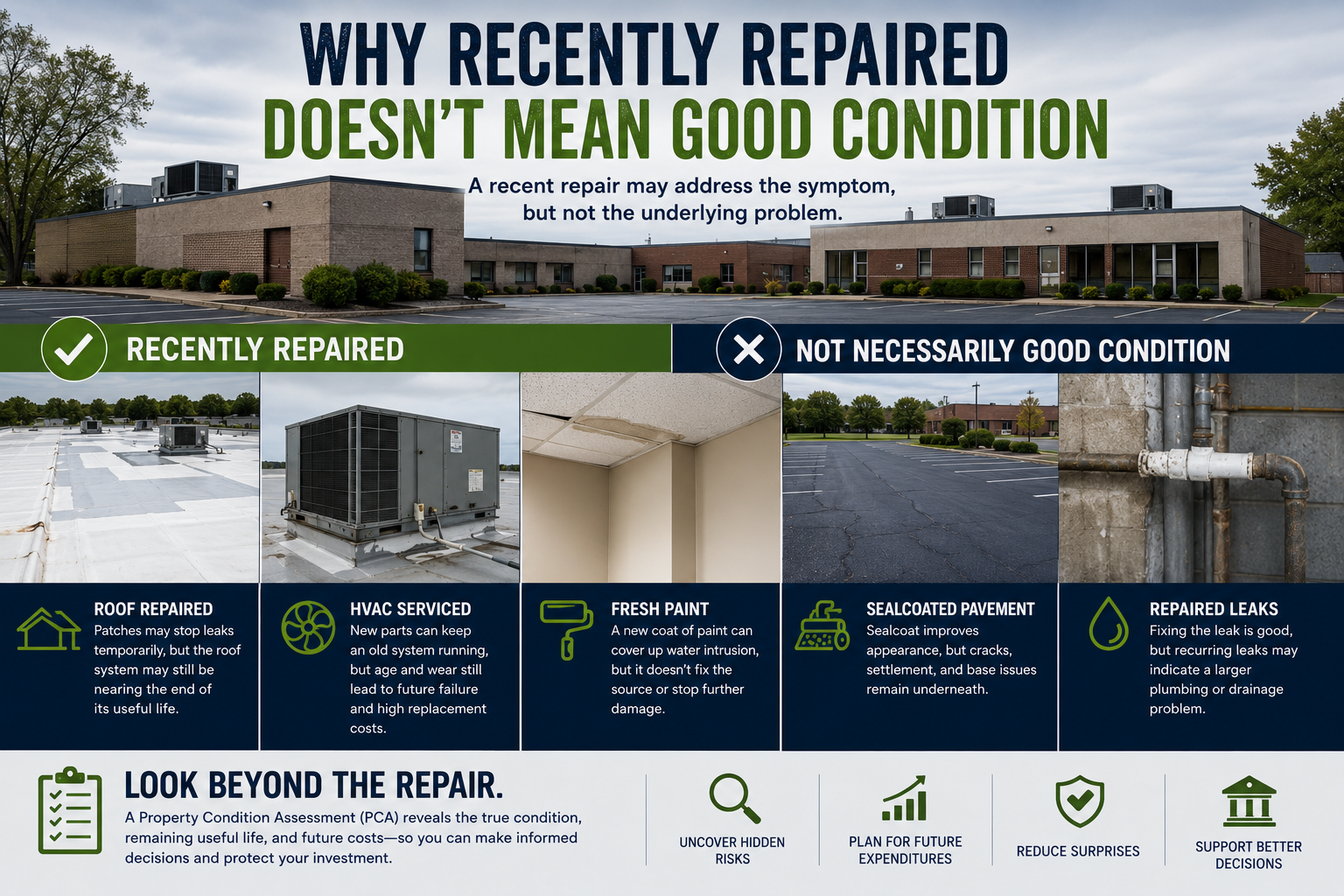
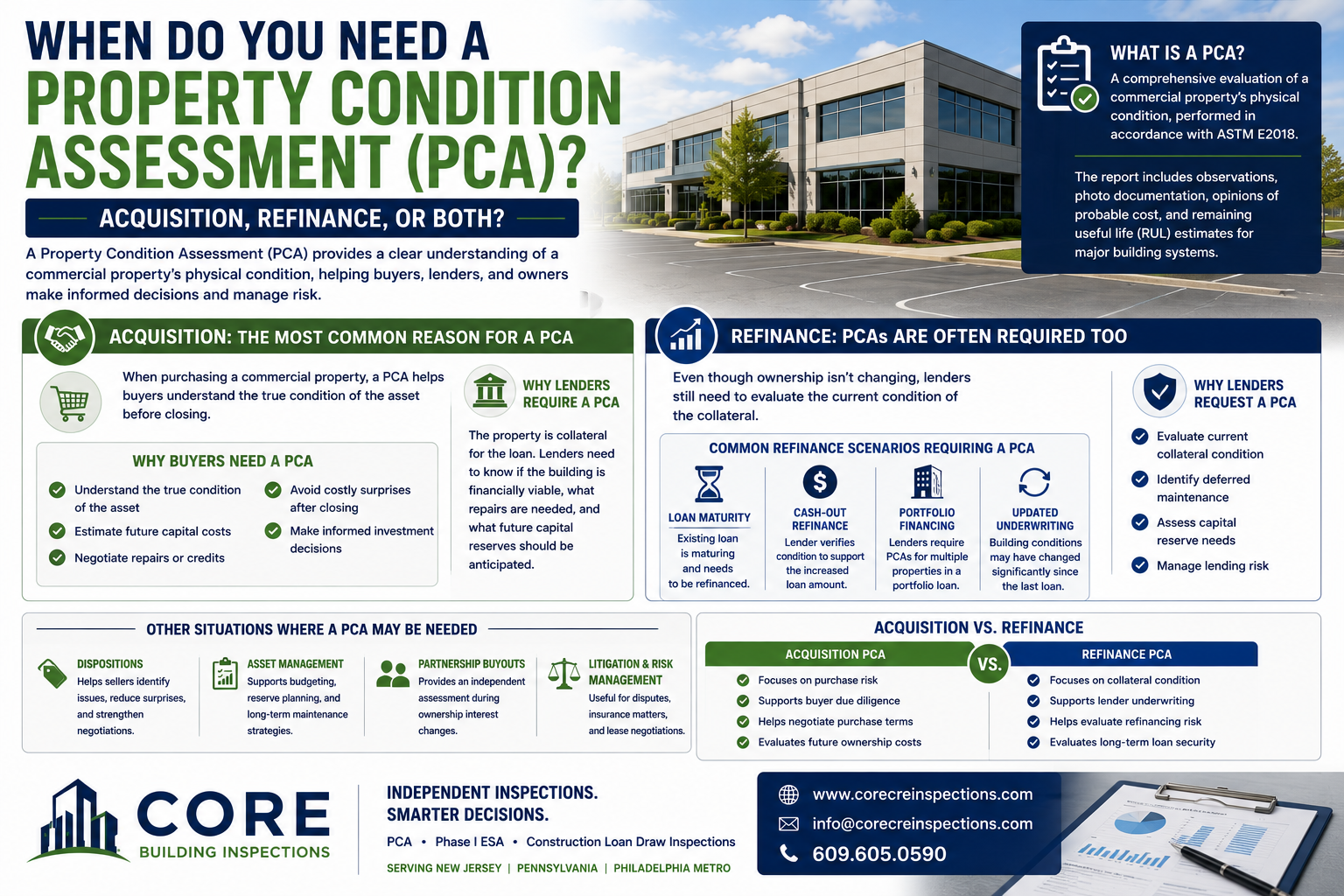
A thorough inspection or Property Condition Assessment (PCA) can uncover these issues early and provide the insight needed to make informed decisions.
Why Older New Jersey Commercial Buildings Require Careful Evaluation
New Jersey has a large inventory of aging commercial buildings, including retail centers, warehouses, office buildings, and mixed-use properties. These buildings are often affected by:
- Freeze–thaw cycles
- High humidity and precipitation
- Coastal exposure in certain regions
- Long-term deferred maintenance
These environmental and operational factors contribute to the deterioration of key building systems over time.
1. Roof Deterioration and Drainage Issues
Roof systems are one of the most common sources of deficiencies in older commercial properties.
Typical issues include:
- Ponding water on flat roofs
- Deteriorated membrane systems
- Failing flashing and parapet coping
- Improper drainage or clogged roof drains
In New Jersey’s climate, freeze–thaw cycles can accelerate roof deterioration, leading to leaks and costly repairs.
2. Deferred HVAC Maintenance and Aging Systems
Many older commercial buildings still rely on outdated HVAC systems that are near or beyond their expected useful life.
Common HVAC issues:
- Inefficient or obsolete rooftop units
- Lack of maintenance records
- Improper repairs or modifications
- Inadequate heating and cooling performance
These systems often represent significant capital expenditures that must be planned for shortly after acquisition.
3. Electrical System Limitations
Older electrical systems may not meet the demands of modern commercial tenants.
Common deficiencies include:
- Insufficient electrical capacity
- Outdated panels and wiring
- Lack of grounding or bonding
- Code compliance issues
Upgrading electrical systems can be costly but is often necessary to support current usage requirements.
4. Structural Movement and Settlement
Over time, older buildings may exhibit signs of structural movement.
These may include:
- Cracking in masonry or foundation walls
- Sloping floors
- Settlement-related movement
- Deteriorated framing components
While not all movement is structural in nature, these conditions should be evaluated to determine their significance.
5. Building Envelope and Moisture Intrusion
The building envelope—including walls, windows, and doors—often shows signs of deterioration in older properties.
Common issues:
- Water intrusion through masonry or stucco
- Failed sealants around windows and penetrations
- Deteriorated brick or mortar joints
- Poor insulation performance
Moisture intrusion can lead to long-term damage if not properly addressed.
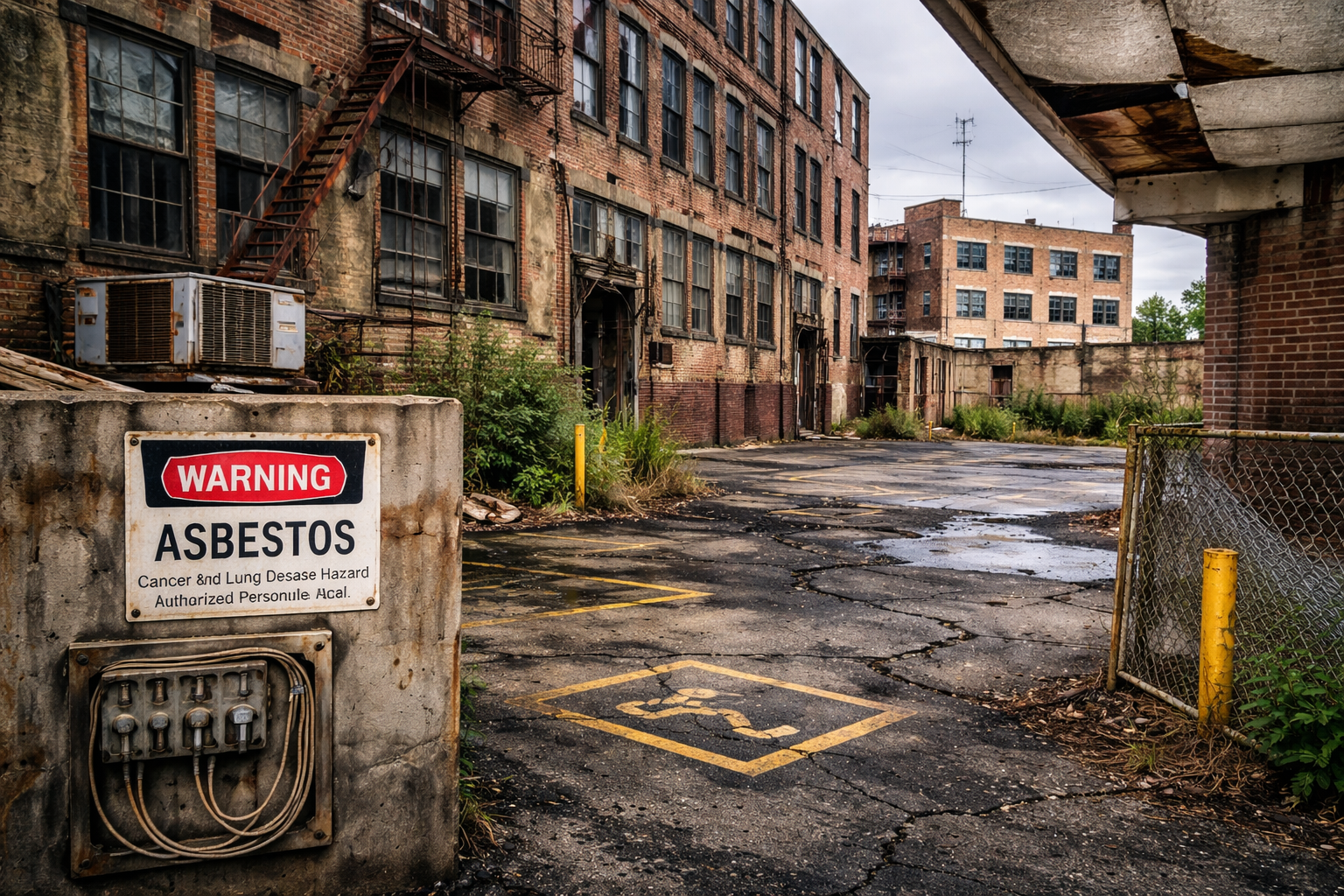
6. Parking Lot and Site Deterioration
Site improvements are frequently overlooked but can represent major capital expenses.
Typical issues include:
- Cracked and deteriorated asphalt
- Trip hazards from uneven sidewalks
- Poor drainage leading to ponding water
- Faded striping and ADA compliance concerns
These issues can impact both safety and property value.
7. Environmental Concerns
Older commercial buildings in New Jersey may have environmental risks due to historical use.
Potential concerns include:
- Underground storage tanks (USTs)
- Asbestos-containing materials
- Lead-based paint
- Soil or groundwater contamination
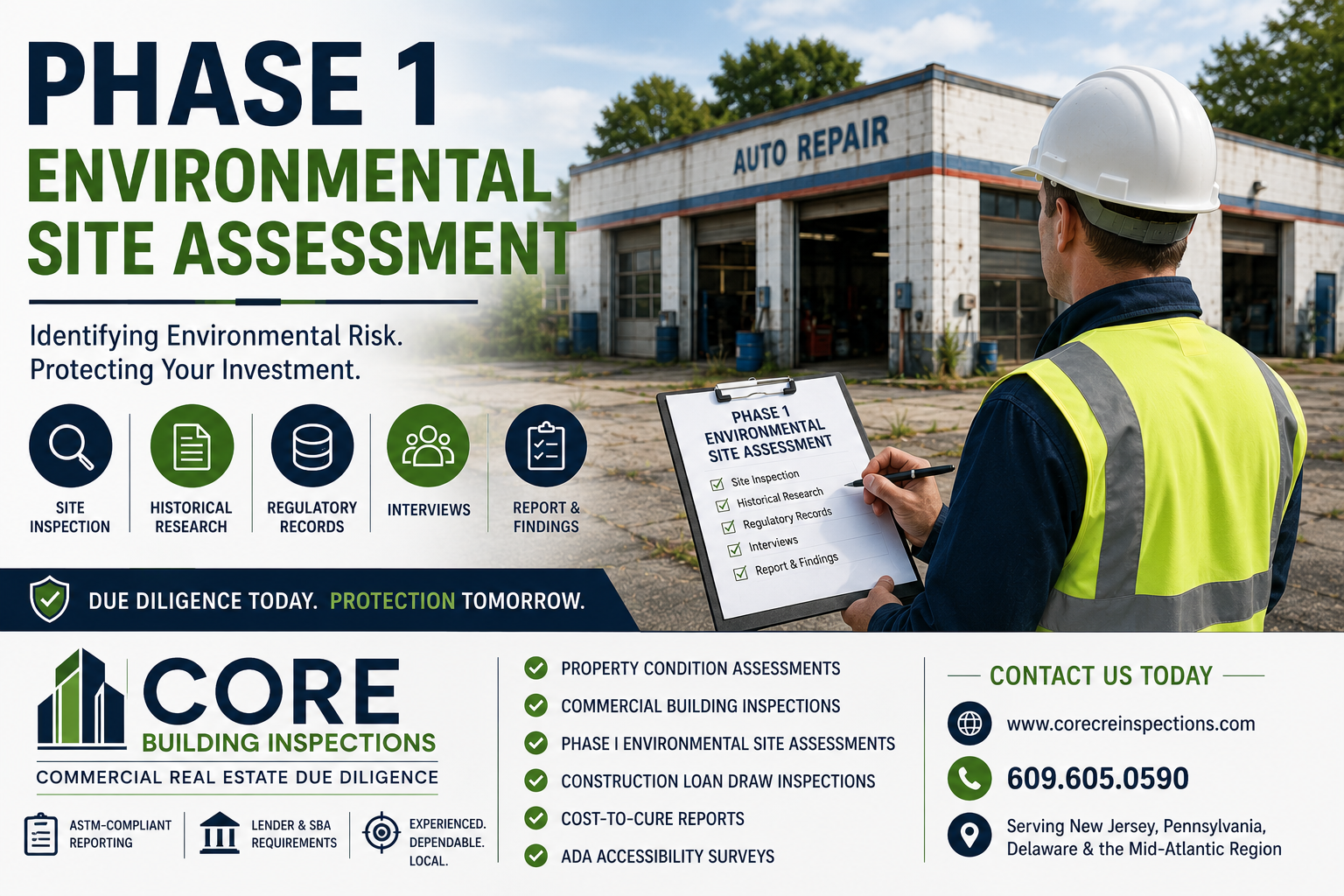
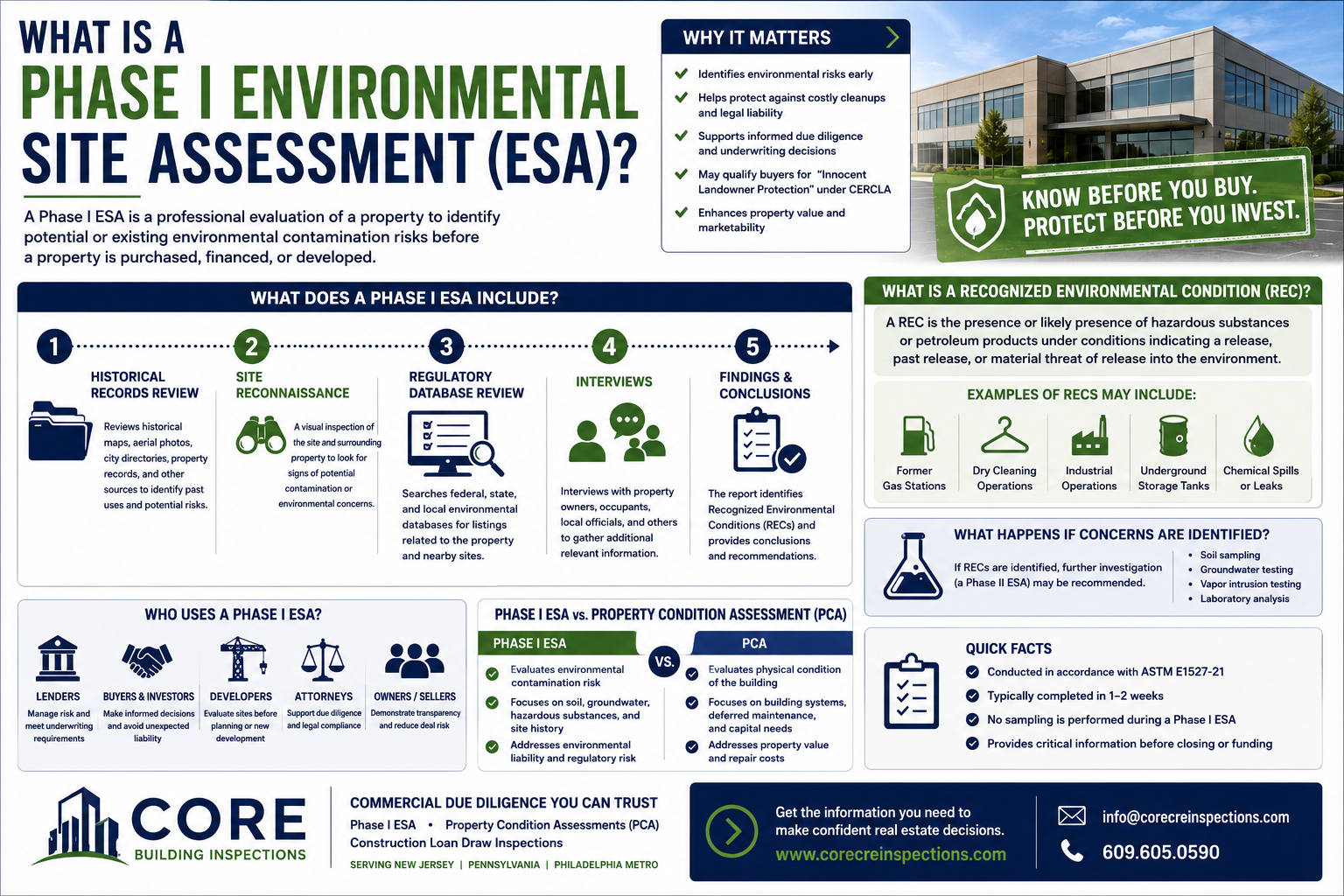
These risks are typically evaluated further through a Phase I Environmental Site Assessment.
8. Fire and Life Safety Deficiencies
Older buildings may not meet current fire and life safety standards.
Common deficiencies:
- Outdated fire alarm systems
- Lack of sprinkler systems
- Non-compliant egress conditions
- Missing or outdated emergency lighting
Upgrades in this category can be required to meet code and ensure occupant safety.
Why These Issues Matter for Buyers and Lenders
Identifying the common issues found in old New Jersey commercial buildings is critical because these conditions directly impact:
- Purchase price
- Loan approval and underwriting
- Capital reserve planning
- Long-term investment performance
A PCA helps translate these issues into real financial implications, allowing stakeholders to make informed decisions.
Final Thoughts
Older commercial buildings can present excellent investment opportunities—but only when the risks are properly understood. Recognizing the common issues found in old New Jersey commercial buildings allows buyers, lenders, and investors to approach due diligence with clarity and confidence.
A comprehensive Property Condition Assessment is one of the most effective ways to uncover these issues and plan for future capital needs.
If you are evaluating an older commercial property in New Jersey or the Philadelphia metro area, schedule a Property Condition Assessment with Core Building Inspections. Our ASTM-compliant PCA reports identify key risks and provide the detailed insights needed to support smart investment decisions.