In commercial real estate transactions, due diligence is essential for protecting both buyers and lenders from unexpected financial risk. One of the most important tools used during this process is a Property Condition Assessment (PCA). Despite their widespread use, there are still many common misconceptions about property condition assessments that can create confusion for investors, brokers, and property owners.
Understanding what a PCA actually does—and what it does not do—helps ensure that buyers make informed decisions and that transactions proceed smoothly.
Misconception #1: A PCA Is the Same as a Commercial Building Inspection
One of the most common misunderstandings is that a PCA is simply a standard building inspection.
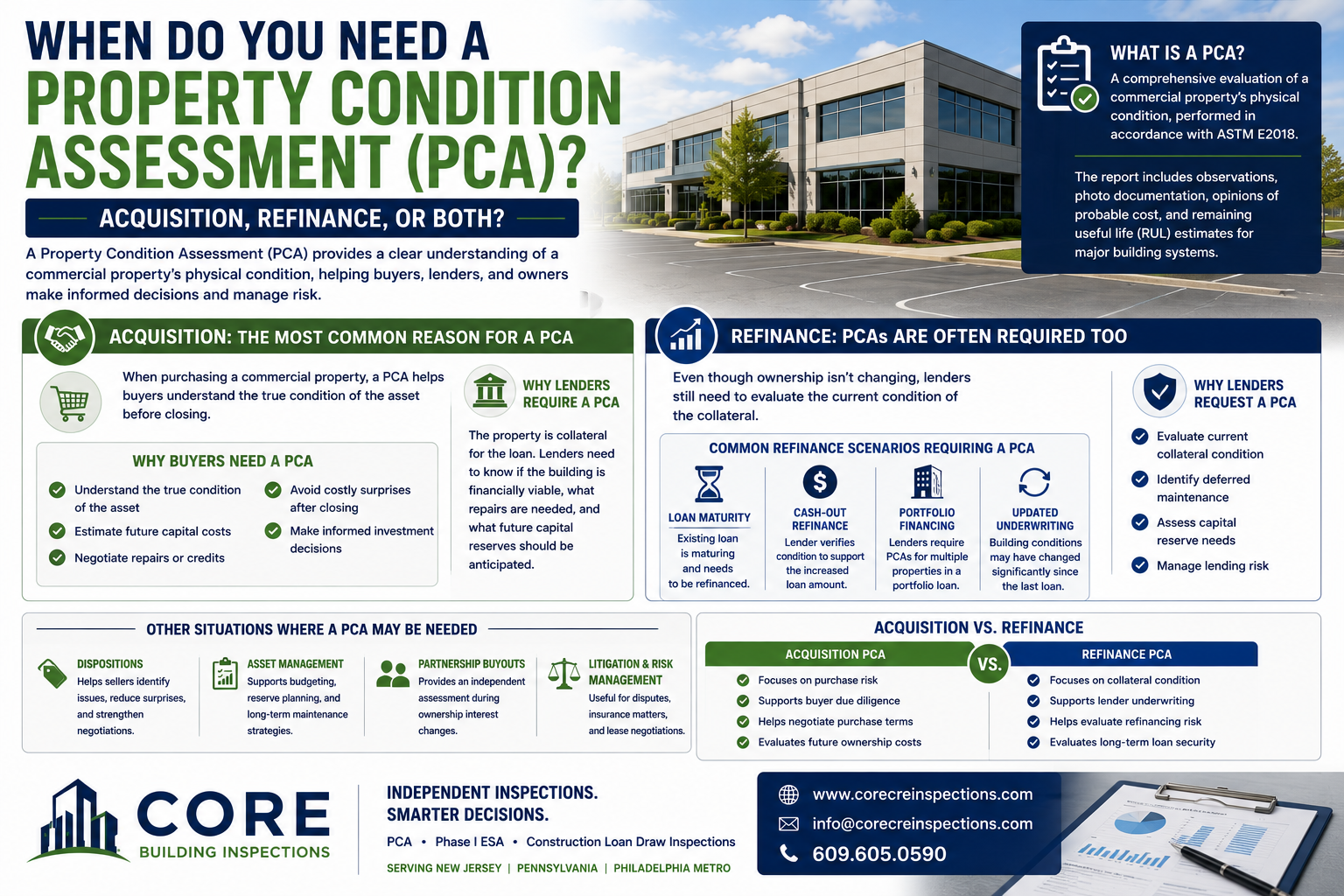
While both involve evaluating the physical condition of a property, a Property Condition Assessment follows the framework of the ASTM E2018 and is designed specifically for commercial real estate transactions.
A PCA typically includes:
- A detailed inspection of major building systems
- Remaining Useful Life (RUL) estimates
- Capital reserve projections
- Documentation of physical deficiencies
In contrast, a general building inspection is usually focused on identifying visible defects without long-term financial analysis.
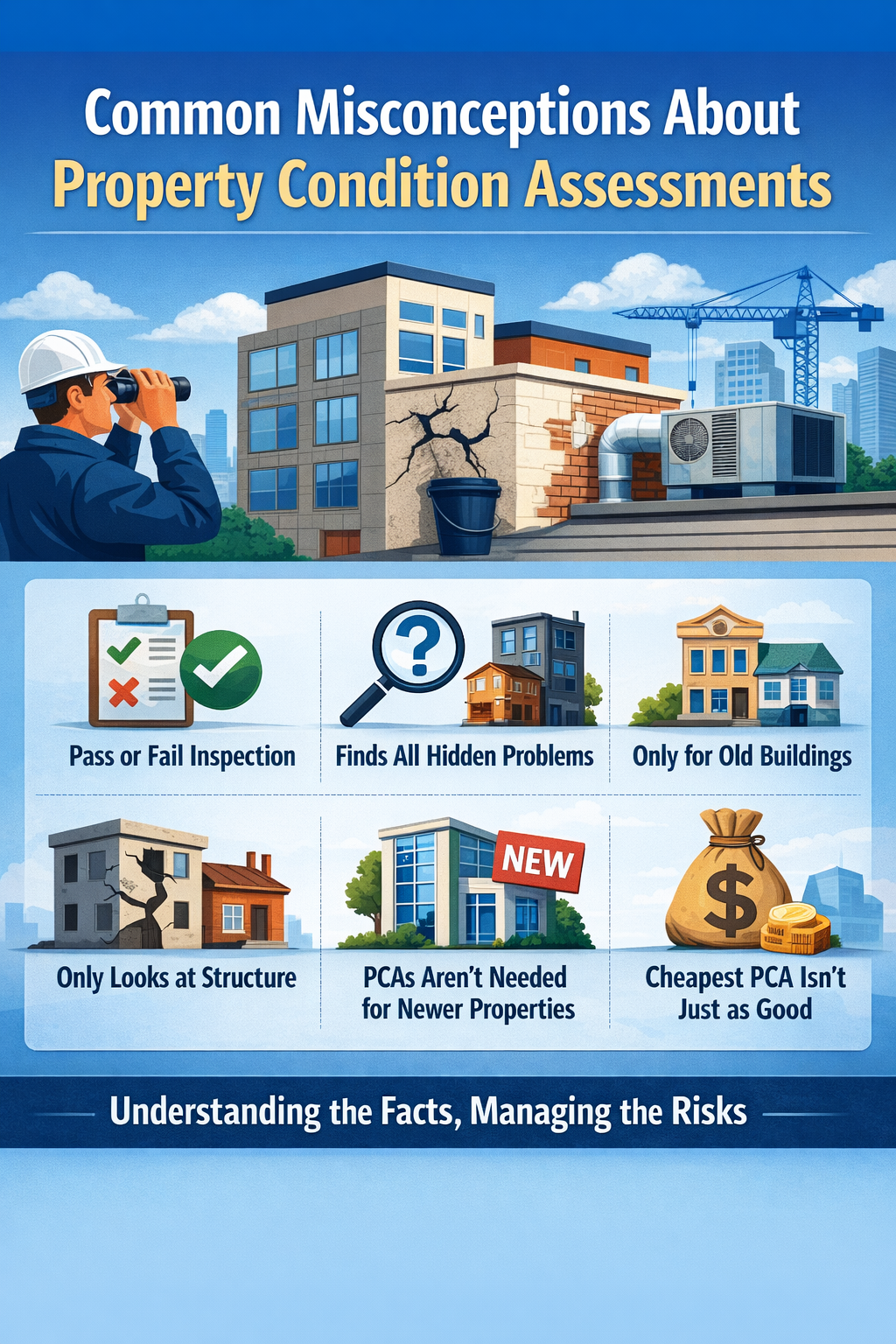
Misconception #2: A PCA Determines Whether a Property “Passes” or “Fails”
Many buyers assume that a PCA acts as a pass/fail inspection. In reality, that is not its purpose.
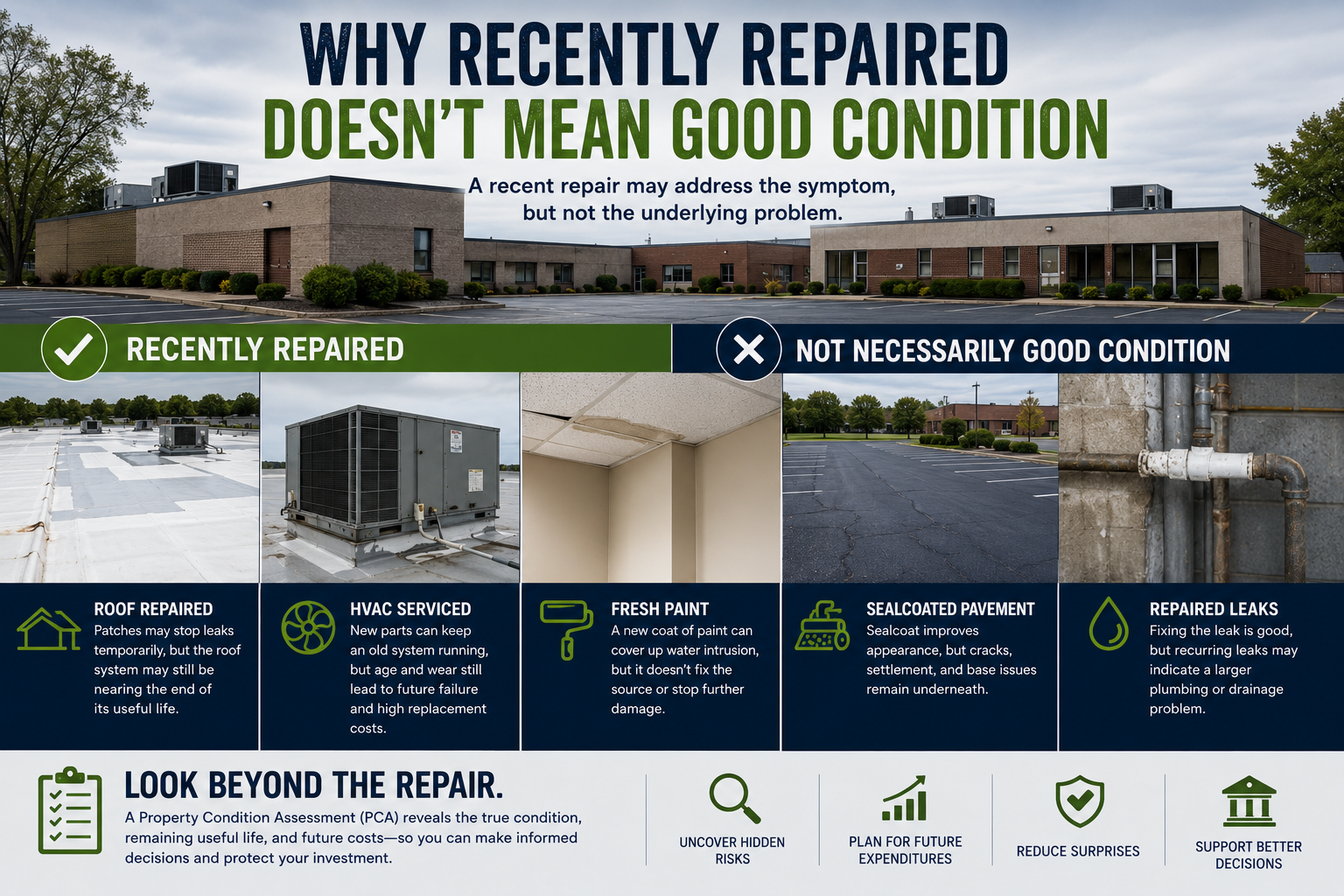
A PCA is designed to identify risk and quantify potential capital expenditures. The goal is not to determine whether a building is “good” or “bad,” but to provide data that helps stakeholders understand the condition of the asset and plan accordingly.
Even properties with significant deficiencies can still be viable investments if the costs are properly understood and incorporated into the transaction.
Misconception #3: A PCA Guarantees There Are No Hidden Problems
Another misconception is that a PCA eliminates all potential risk.
Property Condition Assessments are non-invasive visual evaluations. Inspectors do not open walls, remove finishes, or dismantle building systems.
Instead, they rely on:
- Visual observations
- available documentation
- discussions with property representatives
- professional judgment
While PCAs are extremely valuable, they cannot guarantee that every hidden issue will be discovered.
Misconception #4: PCAs Are Only Needed for Older Buildings
Some investors assume PCAs are only necessary for older properties.
In reality, even relatively new buildings can benefit from a Property Condition Assessment. Issues such as construction defects, improper installation, or poor maintenance practices can appear early in a building’s lifecycle.
A PCA can help identify:
- Premature roof deterioration
- Improper drainage conditions
- HVAC installation deficiencies
- Building envelope problems
These issues are not limited to older properties.
Misconception #5: Lenders Don’t Really Rely on PCAs
Another common misconception is that lenders request PCAs only as a formality.
In reality, lenders use PCA reports as an important part of their risk management process. The information contained in the report often influences:
- Loan approval decisions
- capital reserve requirements
- repair escrows
- underwriting assumptions
A well-prepared PCA provides lenders with confidence that the physical condition of the property aligns with the financial structure of the deal.
Misconception #6: PCAs Only Focus on Major Structural Problems
While structural conditions are certainly important, a PCA evaluates all major building systems.
Typical systems reviewed include:
- Roof systems
- HVAC equipment
- electrical infrastructure
- plumbing systems
- exterior walls and façades
- parking areas and site improvements
Even smaller components can have a major financial impact when they require replacement.
Misconception #7: The Cheapest PCA Is Just as Good as Any Other
Not all PCAs are created equal.
A poorly prepared PCA may:
- overlook critical deficiencies
- provide unrealistic cost estimates
- fail to meet lender expectations
Experienced inspectors who regularly work with lenders and commercial real estate investors understand how to evaluate building systems and present findings in a way that supports underwriting and investment decisions.
Why Understanding PCAs Matters
Misunderstanding the purpose of a Property Condition Assessment can lead to unrealistic expectations during due diligence.
A properly executed PCA helps buyers:
- identify deferred maintenance
- understand future capital needs
- negotiate purchase price adjustments
- avoid unexpected expenses after closing
For lenders, it provides confidence that the physical asset supports the financial risk associated with the loan.
Final Thoughts
Understanding the common misconceptions about property condition assessments helps investors, brokers, and property owners approach due diligence with realistic expectations. A PCA is not a guarantee or a pass/fail inspection—it is a risk analysis tool that provides objective information about the physical condition of a commercial property.
When used properly, a PCA becomes one of the most valuable resources in the commercial real estate decision-making process.
If you are purchasing, refinancing, or underwriting a commercial property in New Jersey or the Philadelphia metro area, request a Phttps://corecreinspections.com/services/property-condition-assessments-pca/roperty Condition Assessment from Core Building Inspections. Our ASTM-compliant PCAs provide the detailed analysis lenders and investors need to make confident decisions.