When evaluating a commercial property, the roof system is one of the most critical—and expensive—components to assess. Understanding flat roofs vs metal roofs: inspection risks and cost impacts is essential for buyers, lenders, and investors performing due diligence.
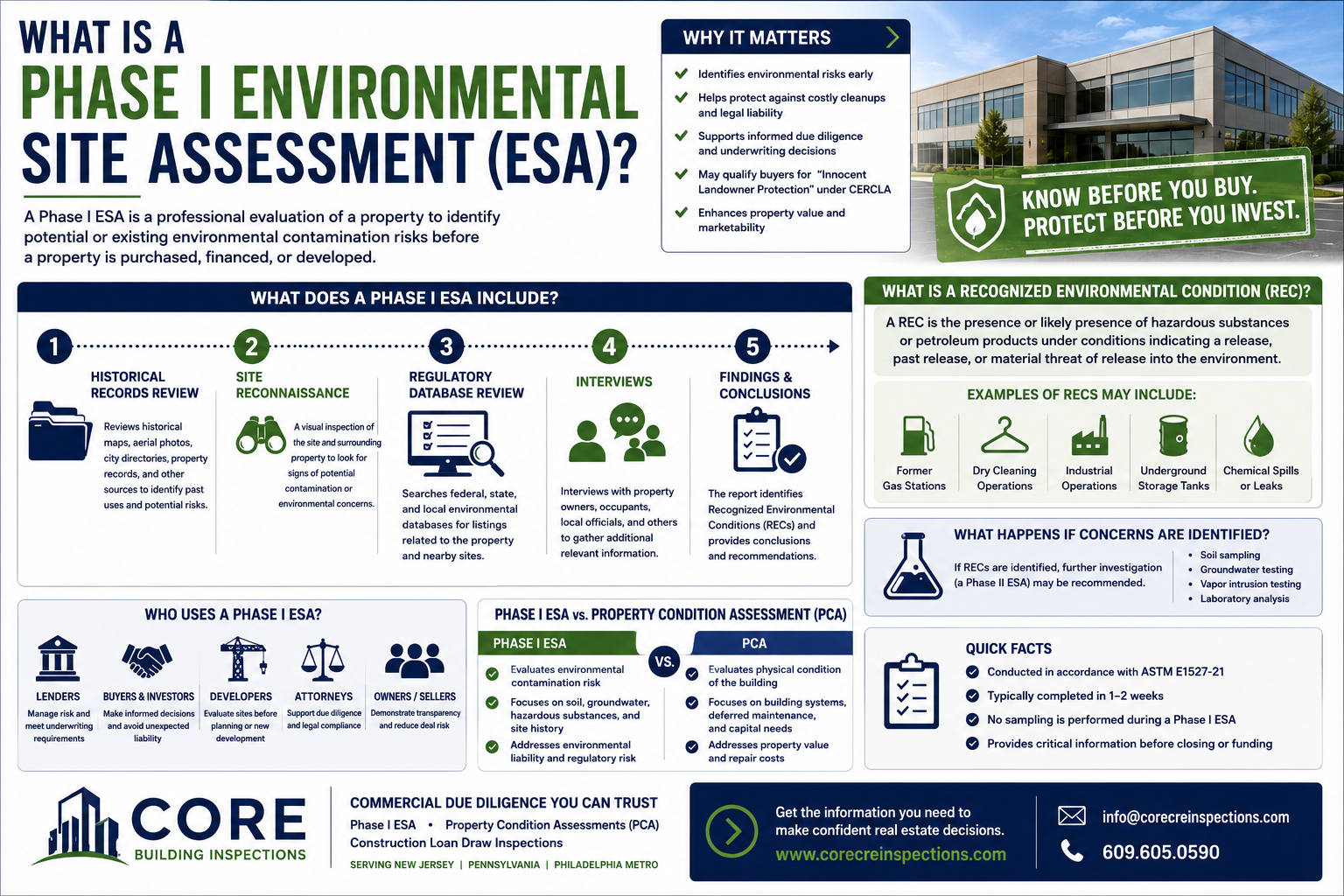
In markets like New Jersey and the Philadelphia metro area, both flat and metal roofing systems are common, each with unique risks, maintenance requirements, and capital planning considerations.
Why Roof Type Matters in Commercial Real Estate
Roof systems directly impact:
- Immediate repair costs
- Long-term capital expenditures
- Building performance and tenant satisfaction
- Loan underwriting and reserve requirements
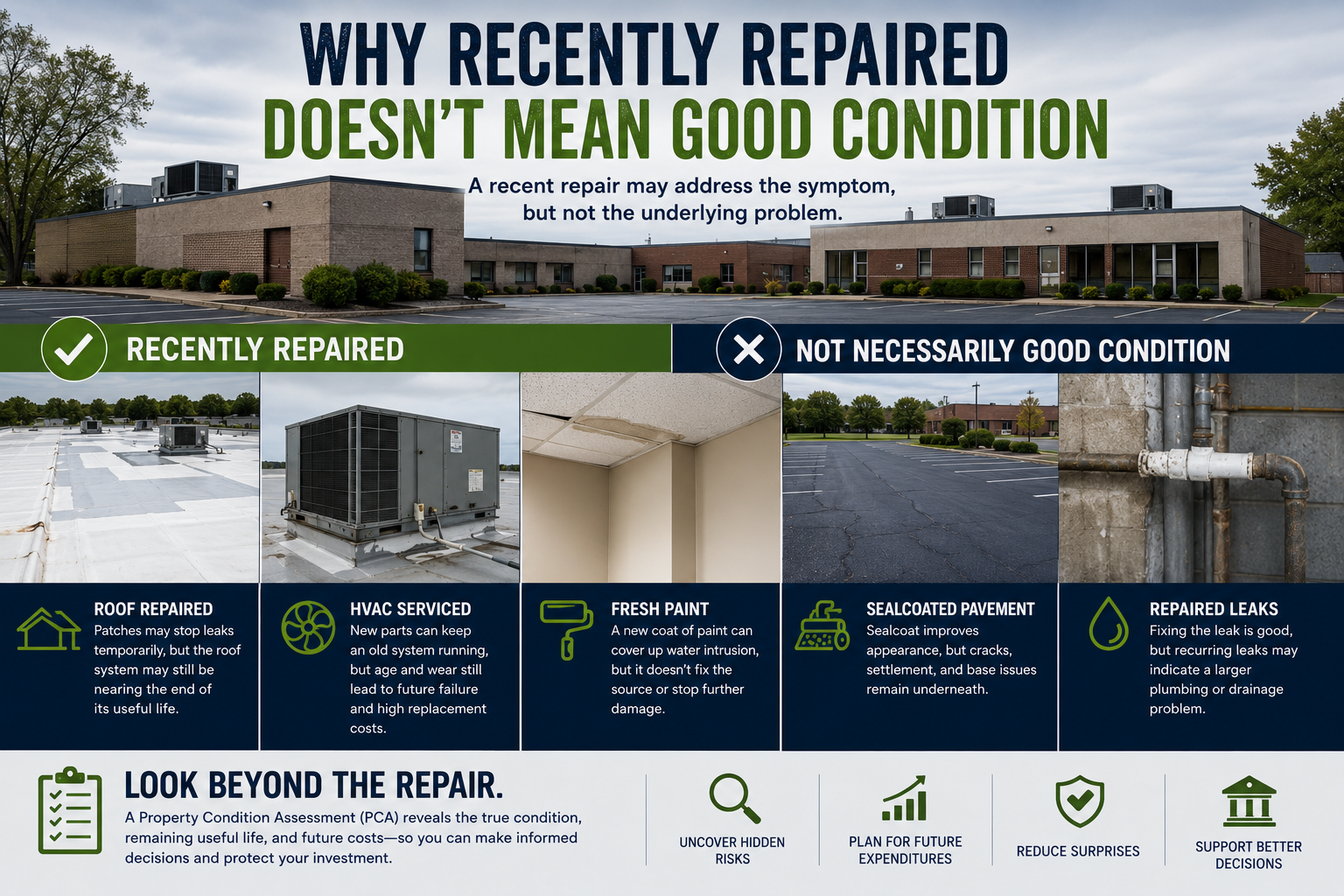
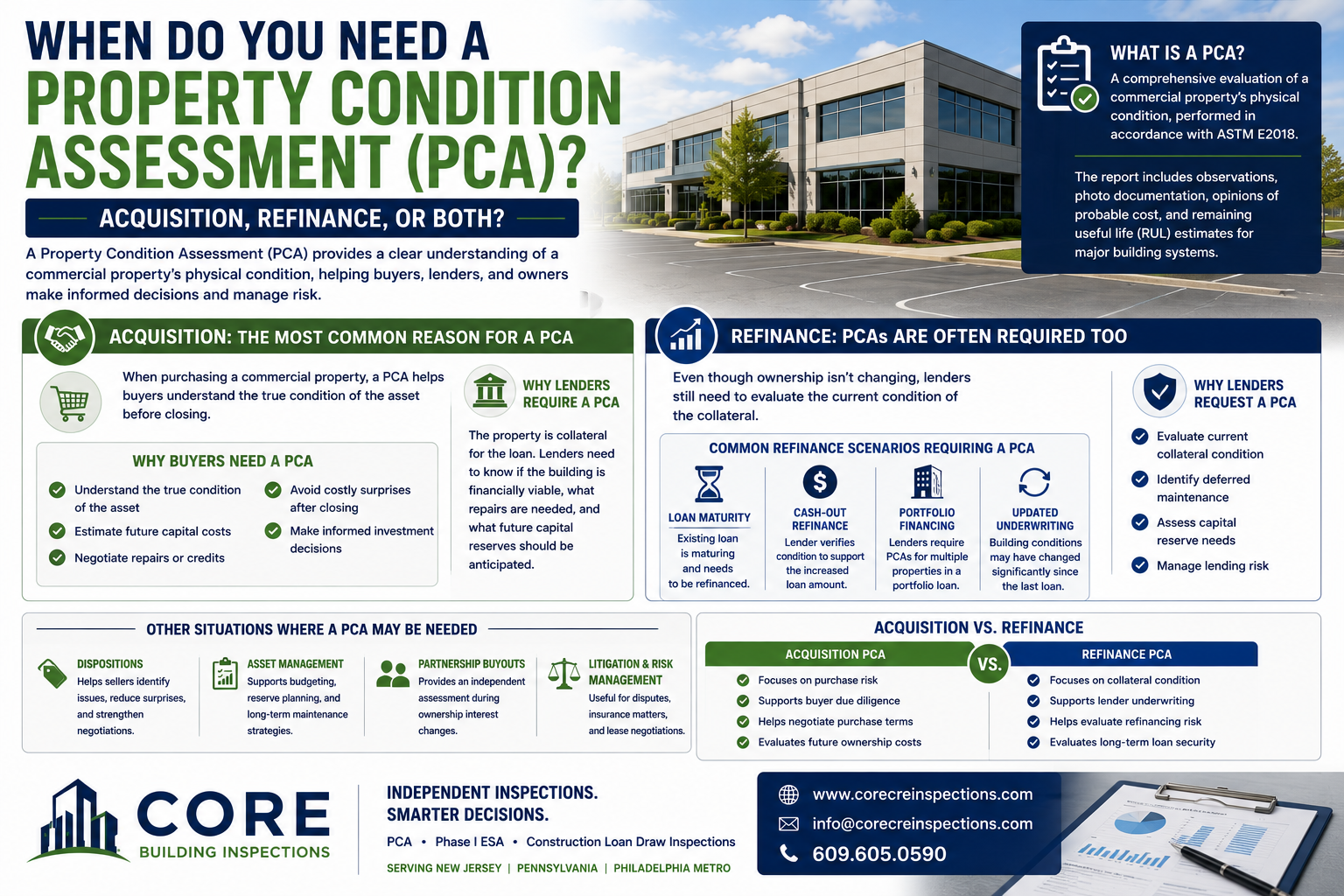
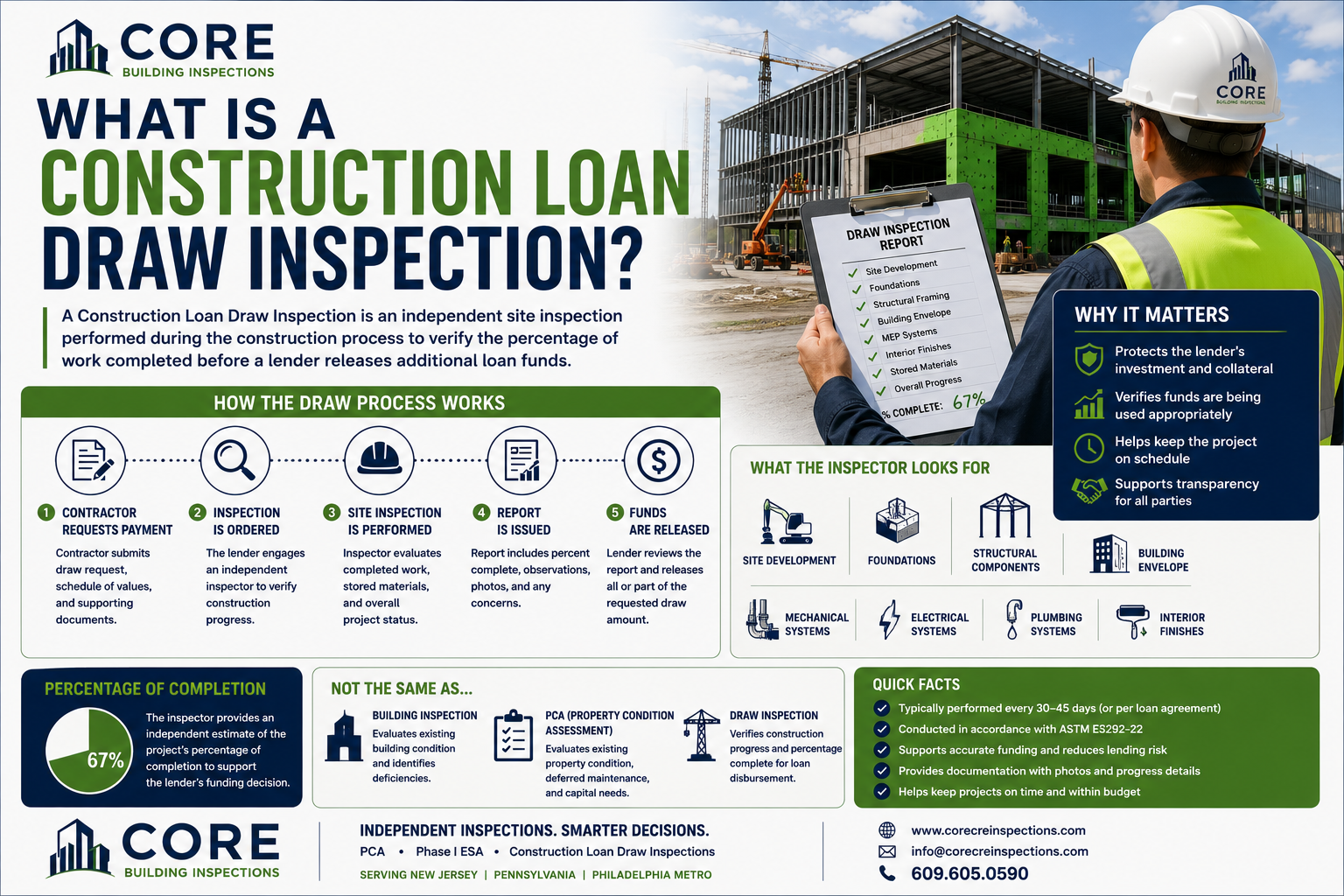
A Property Condition Assessment (PCA) evaluates these factors to determine the true condition and financial implications of the roof.
Flat Roof Systems: Common Risks and Inspection Considerations
Flat roofs are widely used in commercial buildings, particularly in retail centers, warehouses, and office buildings.
Common Flat Roof Types
- Modified bitumen
- EPDM (rubber membrane)
- TPO and PVC systems
Inspection Risks
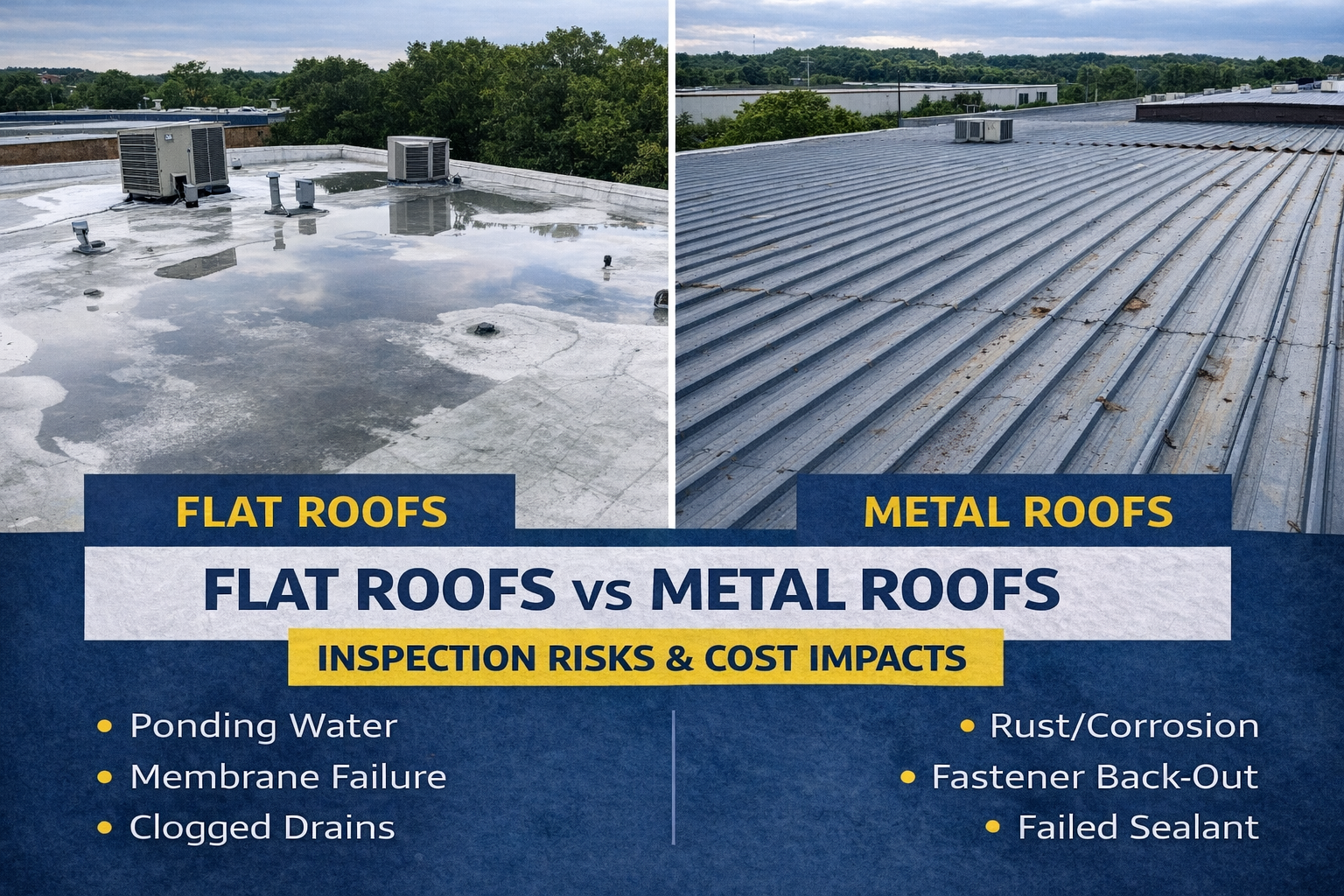
Flat roofs are more prone to water-related issues.
Typical deficiencies include:
- Ponding water due to poor drainage
- Membrane deterioration or blistering
- Open seams and flashing failures
- Clogged or improperly installed roof drains
In New Jersey’s freeze–thaw climate, standing water can accelerate deterioration and increase the likelihood of leaks.
Cost Impacts of Flat Roofs
Flat roof systems often have:
- Shorter lifespan (15–25 years depending on material)
- Higher maintenance requirements
- Frequent localized repairs
Typical replacement costs:
- $5 – $10 per square foot (depending on system and complexity)
While initial costs may be lower than some alternatives, long-term maintenance can increase total lifecycle cost.
Metal Roof Systems: Common Risks and Inspection Considerations
Metal roofs are commonly found on industrial buildings, warehouses, and pre-engineered metal buildings (PEMBs).
Common Metal Roof Types
- Standing seam metal roofs
- Corrugated metal panels
Inspection Risks
Metal roofs behave differently than flat systems and have their own set of concerns:
- Fastener back-out and loosening
- Panel corrosion and rust
- Failed sealant at seams and penetrations
- Thermal movement causing expansion and contraction issues
Improper repairs—such as excessive sealant use—can indicate underlying problems.
Cost Impacts of Metal Roofs
Metal roofing systems typically offer:
- Longer lifespan (30–50 years)
- Lower frequency of full replacement
- Higher upfront cost
Typical costs:
- $8 – $14 per square foot installed
However, repairs can be complex, especially if panels must be removed or replaced.
Key Differences: Flat Roofs vs Metal Roofs
| Category | Flat Roofs | Metal Roofs |
|---|---|---|
| Drainage | Requires active drainage systems | Naturally sheds water |
| Lifespan | 15–25 years | 30–50 years |
| Maintenance | Frequent | Moderate |
| Leak Risk | Higher (ponding water) | Moderate (penetrations/seams) |
| Replacement Cost | Lower upfront | Higher upfront |
| Repair Complexity | Easier localized repairs | More complex repairs |
What Inspectors Look for During a PCA
During a Property Condition Assessment, inspectors evaluate:
- Overall roof condition
- Evidence of active leaks
- Remaining useful life (RUL)
- Quality of prior repairs
- Drainage performance
- Flashing and penetration details
These findings are used to estimate capital costs and future replacement timelines.
Regional Considerations in NJ & PA
In New Jersey and Pennsylvania, roof performance is heavily influenced by:
- Snow loads and ice formation
- Freeze–thaw cycles
- Heavy rainfall events
- Temperature fluctuations
Flat roofs are particularly vulnerable to drainage issues, while metal roofs are more affected by thermal movement and fastener performance.
Why This Matters for Buyers and Lenders
Understanding flat roofs vs metal roofs: inspection risks and cost impacts allows stakeholders to:
- Anticipate capital expenditures
- Evaluate risk during underwriting
- Negotiate pricing based on roof condition
- Plan long-term maintenance strategies
Roof systems are often one of the largest capital expenses identified in a PCA.
Final Thoughts
Both flat and metal roof systems have advantages and risks. The key is not which system is “better,” but how well the system has been installed, maintained, and managed over time.
A thorough Property Condition Assessment provides the insight needed to evaluate roof condition, estimate future costs, and make informed commercial real estate decisions.
If you are evaluating a commercial property in New Jersey or the Philadelphia metro area, schedule a Property Condition Assessment with Core Building Inspections. Our ASTM-compliant PCA reports provide detailed roof evaluations and capital planning insights to support your investment.