Deferred maintenance is one of the most common—and costly—issues we encounter during commercial building inspections. While postponing repairs may appear to save money in the short term, the hidden costs of deferred maintenance often far exceed the initial expense of timely repairs.
At Core Building Inspections, we perform commercial building inspections and Property Condition Assessments (PCAs) throughout New Jersey, Pennsylvania, and the Philadelphia Metro area. In these markets, deferred maintenance routinely impacts property value, financing, and long-term operating costs. Understanding where these hidden costs arise is critical for owners, investors, and lenders.
What Is Deferred Maintenance?
Deferred maintenance occurs when necessary repairs or replacements are postponed, often due to budget constraints or ownership transitions. Over time, minor deficiencies can evolve into major system failures, creating compounding financial risk.
In commercial properties, deferred maintenance typically affects:
- Roofing systems
- HVAC and mechanical equipment
- Electrical infrastructure
- Plumbing systems
- Building envelope components
- Life-safety and accessibility features
While some of these issues may not be immediately visible, their financial impact is often revealed during due diligence or underwriting.
The Hidden Costs of Deferred Maintenance
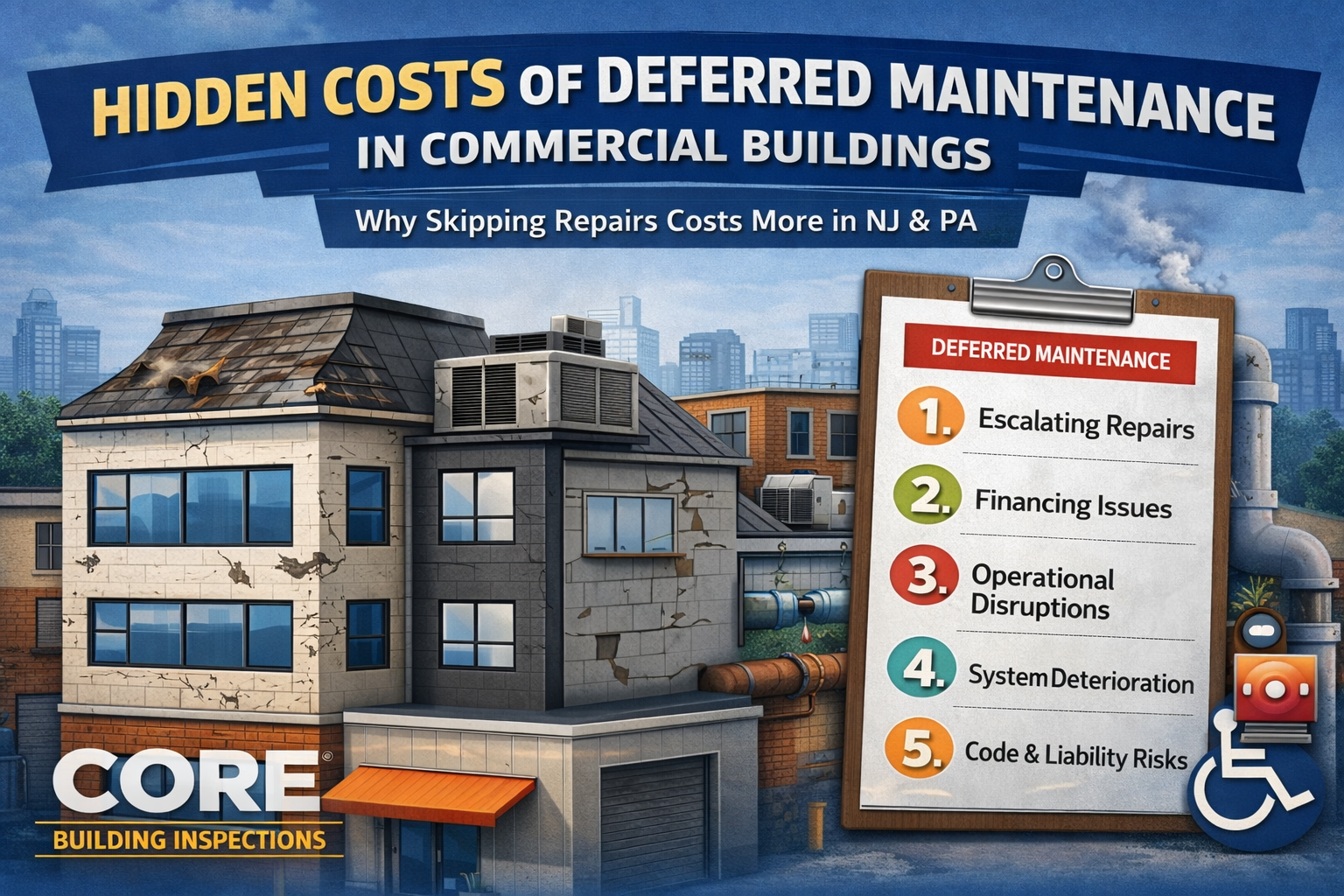
1. Escalating Repair and Replacement Costs
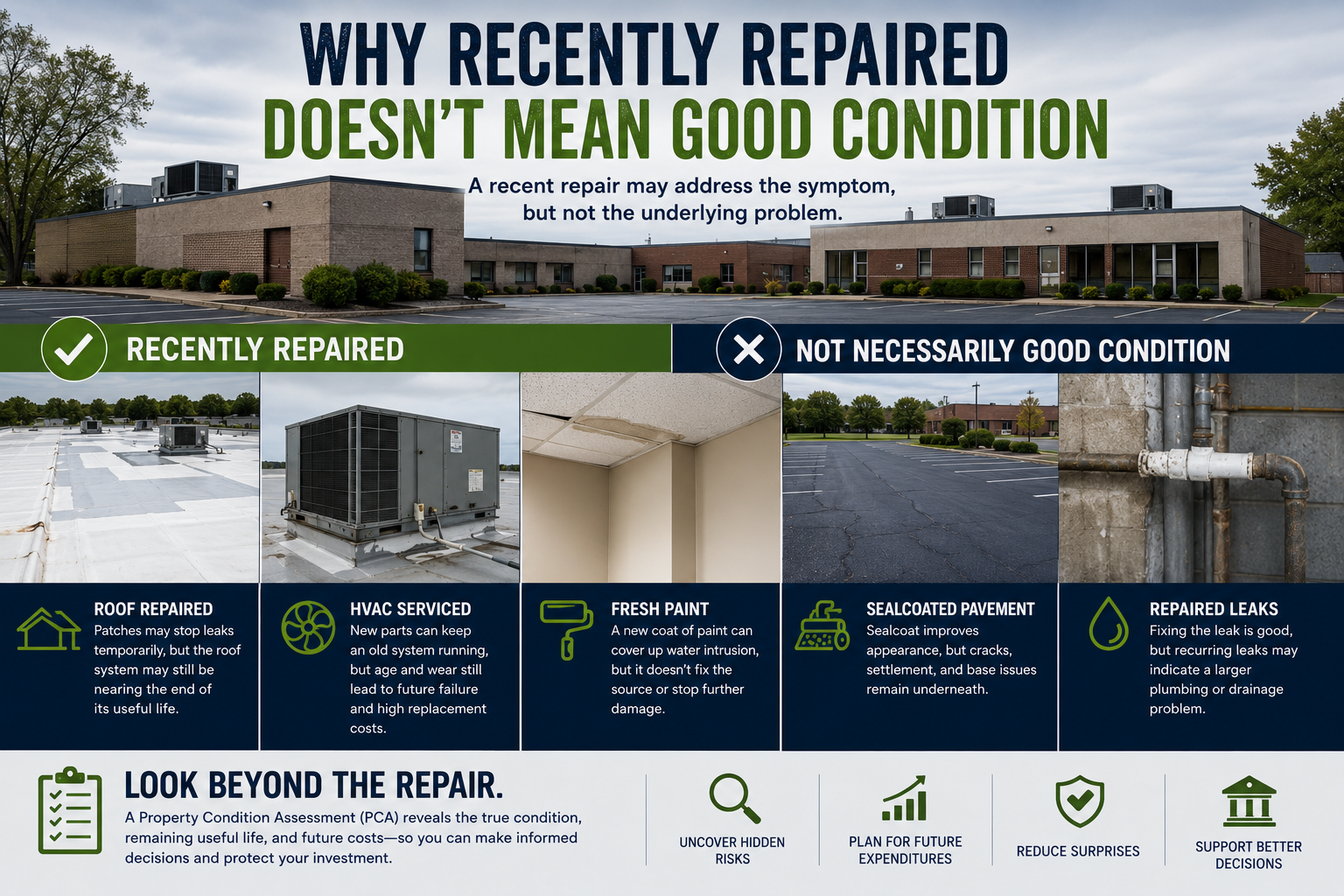
One of the most significant hidden costs of deferred maintenance is cost escalation. A repair that could have been addressed for a modest expense often becomes a full replacement when deterioration progresses.
For example:
- Minor roof flashing failures evolve into widespread water intrusion
- Neglected HVAC maintenance leads to compressor or heat exchanger failure
- Small plumbing leaks result in structural damage or mold remediation
In NJ and PA commercial properties, deferred maintenance frequently turns manageable repairs into six-figure capital expenditures.
2. Financing and Lender Impacts
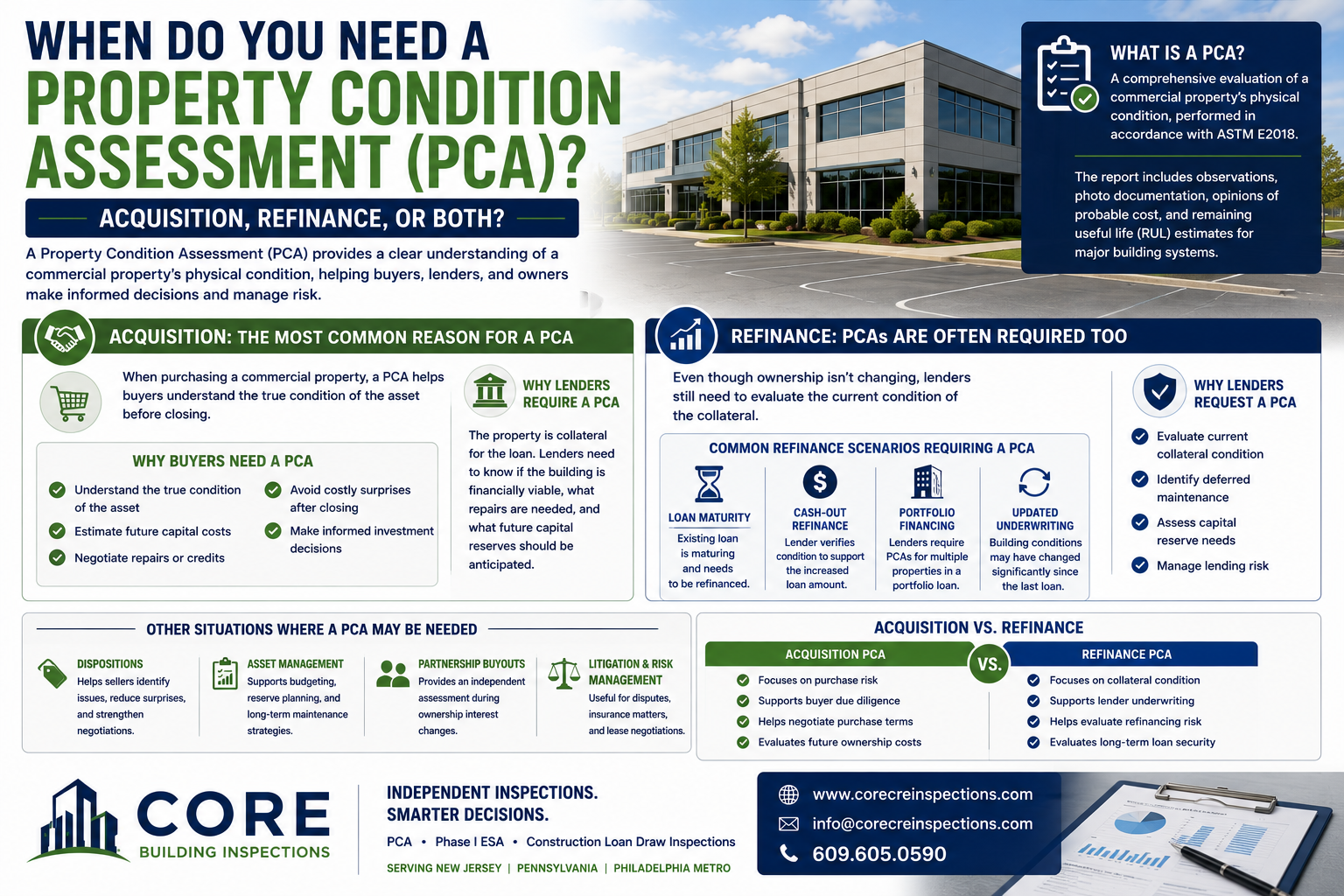
Deferred maintenance often becomes a major issue during financing, refinancing, or acquisition. Lenders rely on PCAs to understand near-term and long-term risks.
Common outcomes include:
- Required repair escrows
- Reduced loan proceeds
- Increased interest rates
- Delayed or failed closings
From a lender’s perspective, deferred maintenance represents uncertainty and risk, particularly when major systems are near or beyond their expected useful life.
3. Operational Disruptions and Tenant Impact
Deferred maintenance doesn’t just affect budgets—it impacts operations. Mechanical failures, electrical outages, and plumbing issues can disrupt tenant operations, leading to complaints, lease disputes, or vacancy.
In multi-tenant and industrial properties, we frequently see deferred maintenance contribute to:
- Business interruptions
- Reduced tenant satisfaction
- Increased turnover or early lease termination
These operational disruptions often carry hidden revenue losses that extend well beyond the repair cost itself.
4. Accelerated System Deterioration
Building systems are designed to work together. When one component fails, it often accelerates deterioration in adjacent systems.
Examples include:
- Roof leaks damaging insulation, decking, and interior finishes
- Poor drainage leading to foundation or slab movement
- HVAC condensation issues causing corrosion or microbial growth
Deferred maintenance compounds over time, shortening the remaining useful life (RUL) of multiple systems simultaneously.
5. Code, ADA, and Life-Safety Exposure
Another hidden cost of deferred maintenance is regulatory and liability exposure. Outdated life-safety systems, accessibility deficiencies, and electrical issues can place owners at risk of enforcement actions or legal claims.
During commercial inspections, we often identify:
- Expired fire alarm or sprinkler inspections
- Inadequate emergency lighting or egress
- ADA noncompliance that triggers required upgrades
Correcting these issues under enforcement deadlines is often more expensive and disruptive than proactive planning.
How Deferred Maintenance Is Identified During Inspections
A professional commercial building inspection or PCA identifies deferred maintenance by evaluating:
- System age versus expected useful life
- Evidence of temporary or recurring repairs
- Maintenance history and documentation
- Physical signs of deterioration or distress
At Core Building Inspections, our reports are prepared in general conformance with ASTM E2018-18, providing lenders and investors with a defensible assessment of current conditions and future capital needs.
Why Property Condition Assessments Matter
A Property Condition Assessment (PCA) helps quantify the hidden costs of deferred maintenance by:
- Identifying immediate repair needs
- Forecasting capital expenditures over a reserve period
- Supporting informed negotiations and pricing decisions
- Reducing post-closing surprises
For investors and lenders operating in New Jersey and Pennsylvania, PCAs are an essential tool for understanding true asset performance.
Managing and Reducing Deferred Maintenance Risk
Deferred maintenance cannot always be eliminated, but it can be managed strategically. Best practices include:
- Conducting regular commercial building inspections
- Establishing realistic capital reserve budgets
- Prioritizing repairs based on risk and lifecycle
- Addressing small issues before they escalate
Proactive planning is consistently less expensive than reactive repairs.
Commercial Building Inspections in NJ & PA
Core Building Inspections provides commercial inspections, PCAs, ADA accessibility inspections, and Phase I Environmental Site Assessments throughout:
- New Jersey (South, Central, and North NJ)
- Pennsylvania, including the Philadelphia Metro area
- Select projects in New York and Delaware
We routinely work with investors, lenders, brokers, attorneys, and property owners to identify risks tied to deferred maintenance before they impact deals.
Final Thoughts
The hidden costs of deferred maintenance extend far beyond the price of repairs. They affect financing, operations, liability, and long-term asset value. Identifying and addressing these issues early is one of the most effective ways to protect commercial real estate investments.
If you are evaluating or managing a commercial property in NJ or PA, a professional inspection can provide the clarity needed to move forward with confidence.
Core Building Inspections is here to help uncover hidden risks and support informed decision-making.