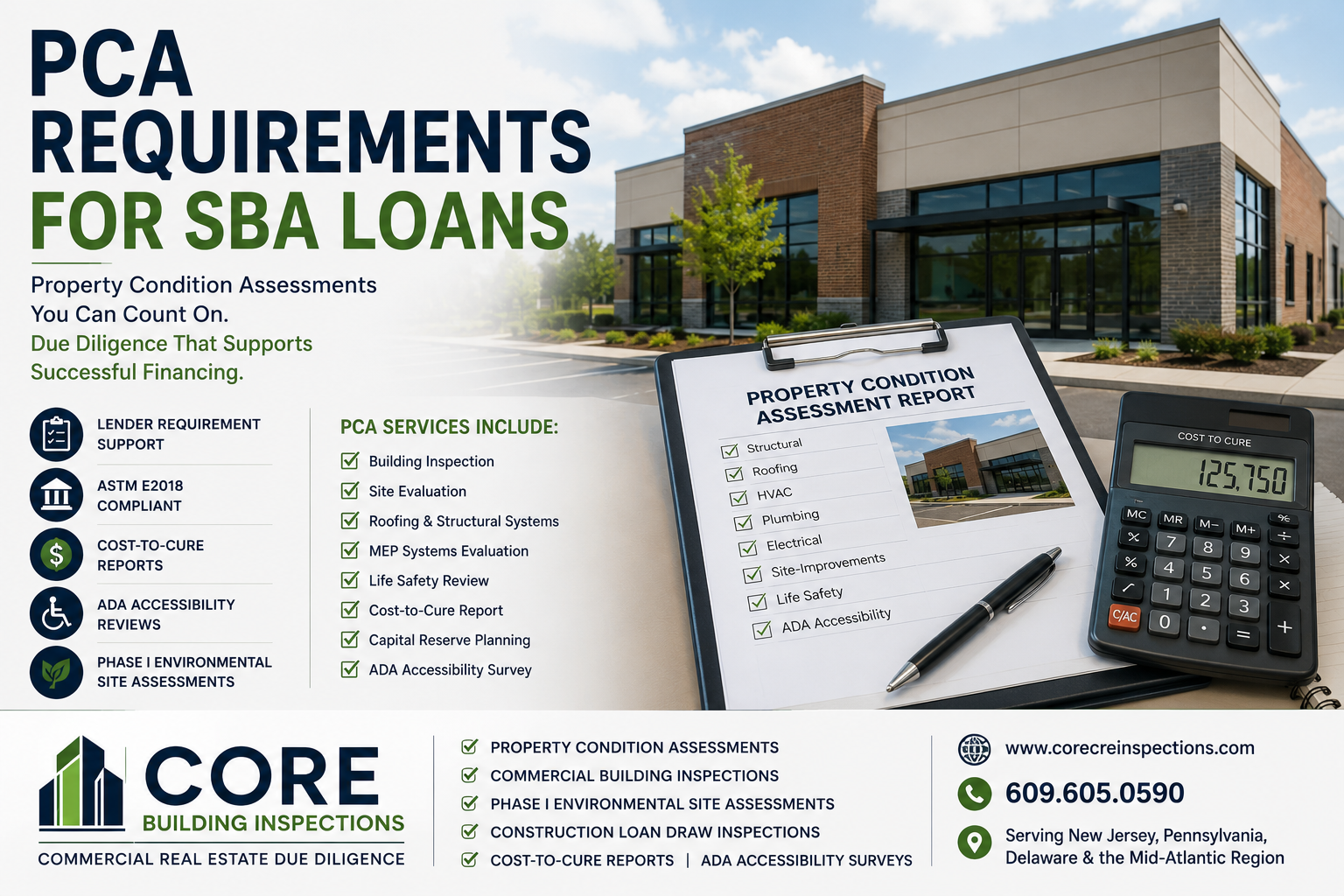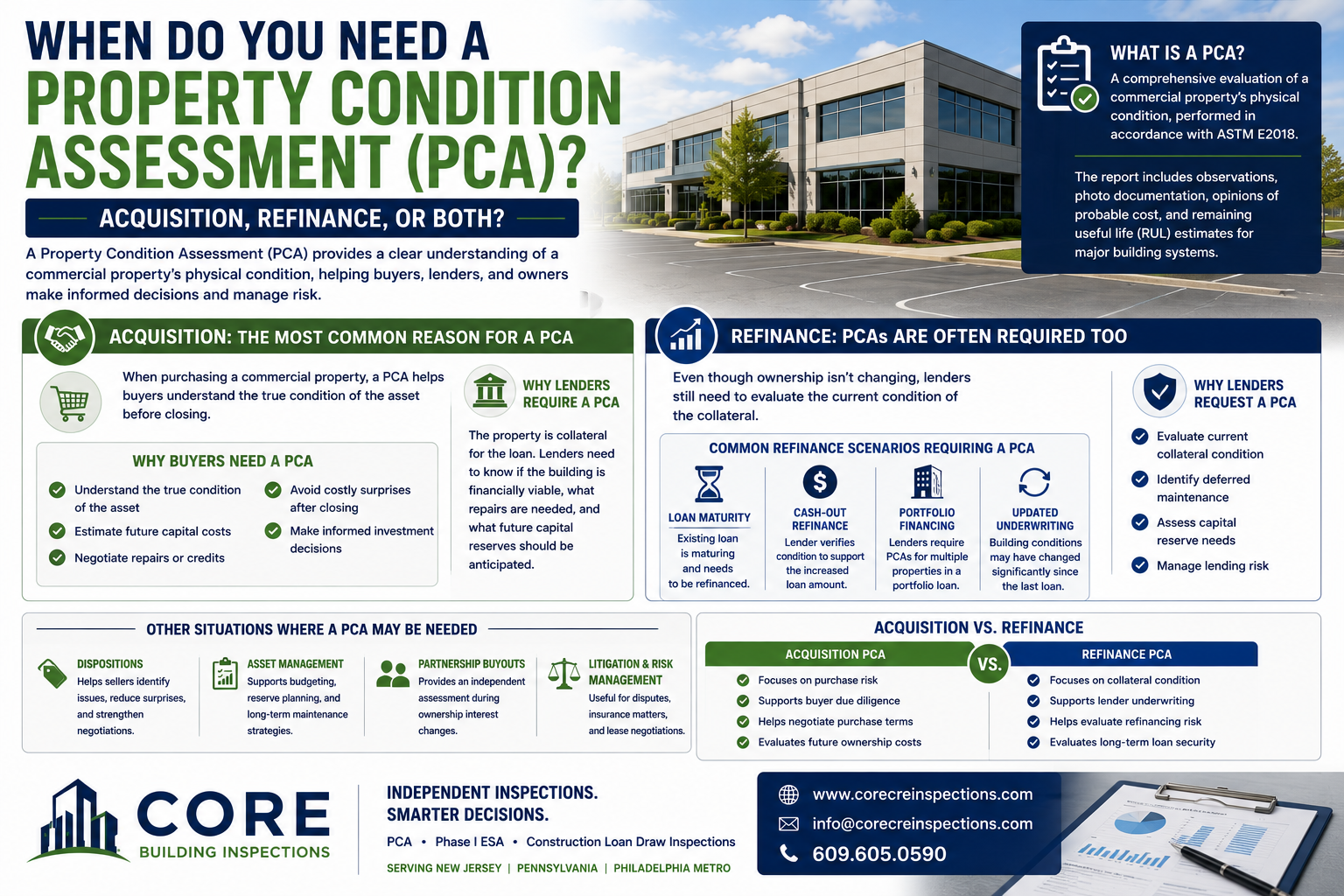
In commercial real estate transactions, the inspection process often becomes a turning point in negotiations. Understanding how buyers use PCA reports in price negotiations can significantly impact the outcome of a deal. A well-prepared Property Condition Assessment (PCA) doesn’t just document building conditions—it provides buyers with objective data that can justify price adjustments, repair credits, or reserve allocations.
In markets like New Jersey and the Philadelphia metro area, where many commercial buildings are older and maintenance histories vary widely, PCA findings frequently become a key negotiation tool during due diligence.
Why PCA Reports Influence Negotiations
Commercial real estate deals are ultimately about risk allocation. Buyers want to ensure they are not inheriting hidden capital expenses, while sellers want to protect the value of their asset.
A PCA helps bridge that gap by identifying:
- Deferred maintenance
- Major system deficiencies
- Near-term capital expenditures
- Long-term replacement risks
Because the report is prepared by an independent third party following ASTM E2018 standards, lenders, brokers, and attorneys often treat the findings as credible evidence during negotiations.
Identifying Deferred Maintenance
One of the most common ways buyers use PCA reports in negotiations is by identifying deferred maintenance that was not previously disclosed.
Examples frequently seen in New Jersey and Pennsylvania commercial buildings include:
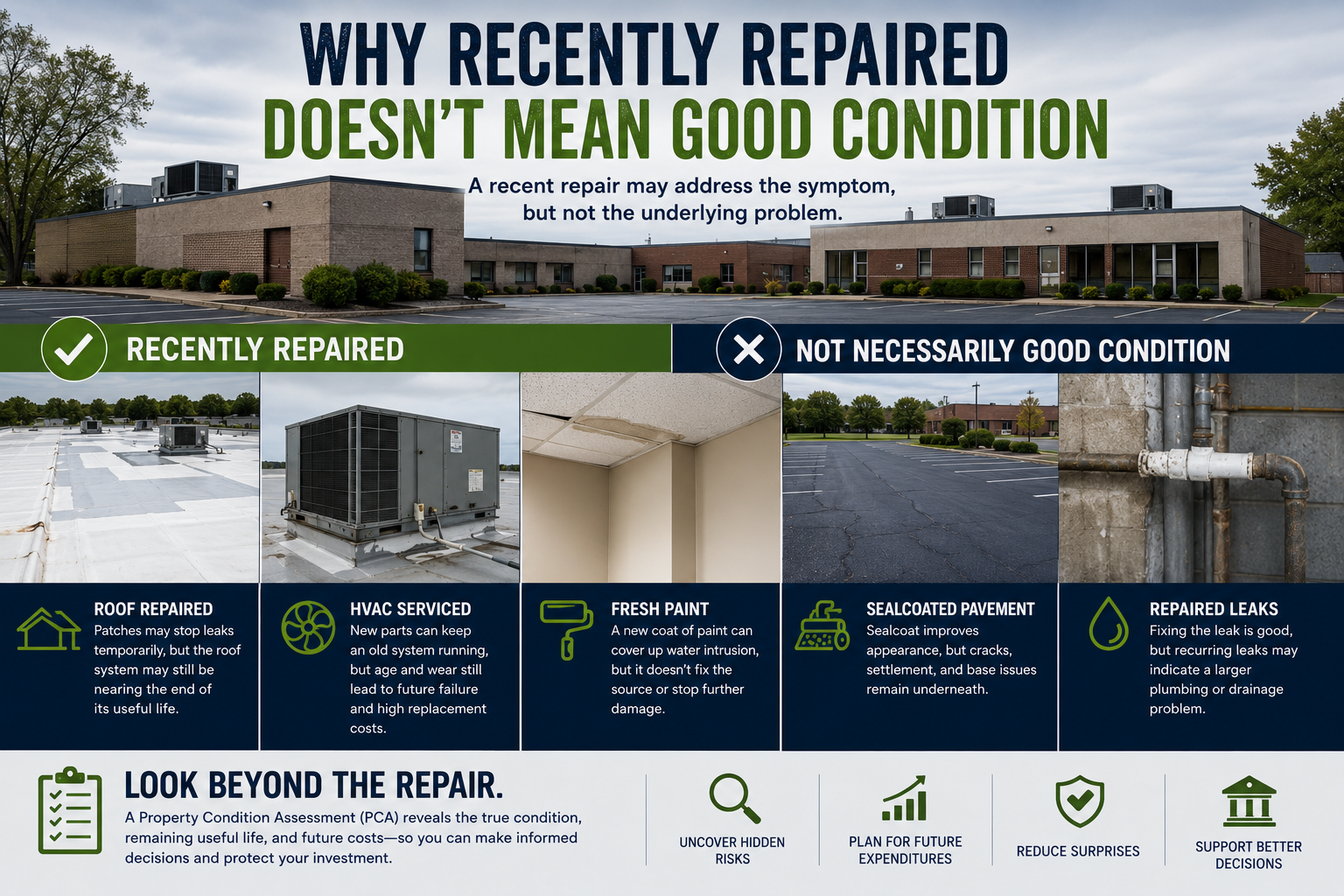
- Roof systems near the end of their useful life
- Aging HVAC units with limited remaining life
- Electrical panels that require upgrades
- Water intrusion or façade deterioration
When these issues are documented in a PCA, buyers can request:
- A reduction in purchase price
- Seller-funded repairs before closing
- Escrow reserves to cover upcoming costs
Quantifying Capital Expenditures
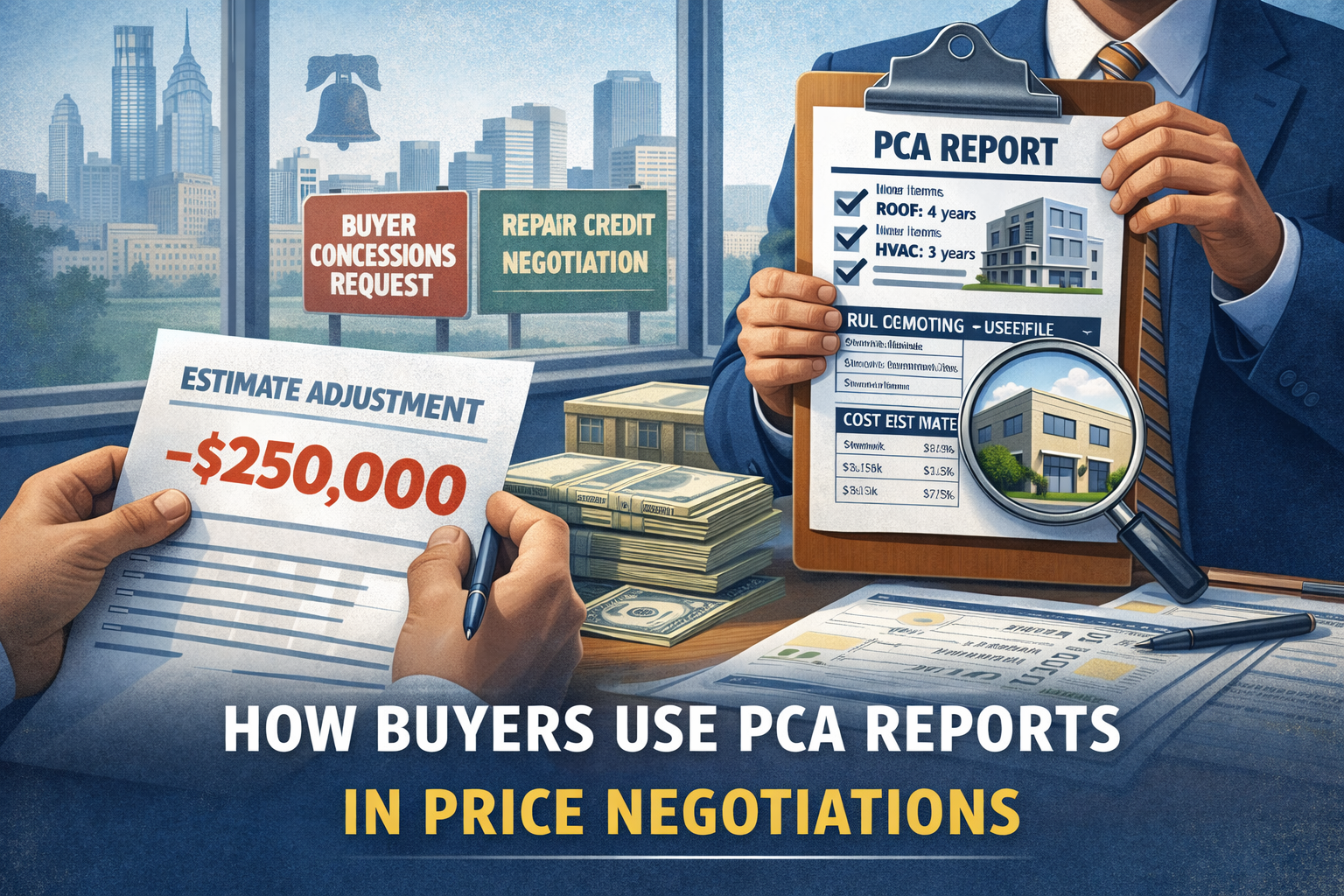
A PCA doesn’t just identify problems—it also provides cost estimates and capital reserve projections. This is one of the most powerful tools buyers have during negotiations.
For example, if a PCA identifies:
- $150,000 in near-term roof replacement
- $80,000 in HVAC upgrades within five years
The buyer can demonstrate that these expenses were not reflected in the original purchase price.
This allows the buyer to argue that the price should be adjusted to account for the property’s true capital position.
Using the Remaining Useful Life (RUL) Analysis
The Remaining Useful Life (RUL) section of a PCA is closely scrutinized during negotiations. Buyers use RUL estimates to show that key building systems may require replacement sooner than expected.
For instance:
- A roof originally assumed to have 10 years remaining may realistically have only 3–4 years left.
- HVAC systems may be operating but nearing the end of their economic life.
This information allows buyers to negotiate adjustments based on future capital exposure, not just current condition.
Negotiating Repair Credits Instead of Price Reductions
In many transactions, buyers use PCA findings to negotiate repair credits rather than lowering the purchase price.
Repair credits can be attractive because:
- They simplify the transaction
- They avoid lender complications tied to price reductions
- They allow buyers to control how repairs are completed after closing
In competitive markets like the Philadelphia metro area, this strategy often keeps deals moving while still protecting the buyer.
Supporting Lender Underwriting
Another reason PCA reports influence negotiations is that lenders review them closely. If a lender sees major deficiencies, they may require:
- Capital reserve escrows
- Repairs before closing
- Adjusted loan terms
Buyers can use these lender requirements to support negotiation requests with sellers.
Instead of appearing subjective, the buyer can point to lender underwriting standards as the reason for adjustments.
Creating Leverage Through Transparency
The most effective negotiations occur when both parties rely on transparent, defensible information. A PCA provides exactly that.
When buyers present clear findings supported by photographs, narratives, and cost estimates, discussions become less emotional and more data-driven.
This often results in:
- Faster negotiations
- Fewer disputes
- Greater confidence from lenders and brokers
Why Sellers Should Understand PCA Negotiation Dynamics
Sellers sometimes view PCA findings as a threat to the transaction, but in reality they often help keep deals together.
When issues are documented early, both parties can:
- Adjust pricing
- Allocate reserves
- Structure repair agreements
Without this information, problems may surface later and jeopardize the entire deal.
Final Thoughts
Understanding how buyers use PCA reports in price negotiations is essential for anyone involved in commercial real estate transactions. A well-executed PCA doesn’t just identify building conditions—it provides the objective data needed to structure fair and informed agreements.
In markets like New Jersey and Pennsylvania, where many commercial assets require ongoing capital investment, this information can be the difference between a successful transaction and a failed one.
If you are purchasing or refinancing a commercial property in New Jersey or the Philadelphia metro area, request a Property Condition Assessment from Core Building Inspections. Our lender-ready PCA reports provide the detailed analysis buyers and lenders need to make informed decisions.