
When purchasing or financing a commercial property, due diligence is one of the most critical phases of the transaction. Among the various reports and evaluations involved, the property condition assessment (PCA) plays a central role in identifying risk, forecasting capital expenditures, and supporting informed decision-making.
Understanding the role of the PCA in commercial real estate due diligence helps buyers, lenders, and investors evaluate not just the current condition of a property—but its future financial performance.
What Is a Property Condition Assessment (PCA)?
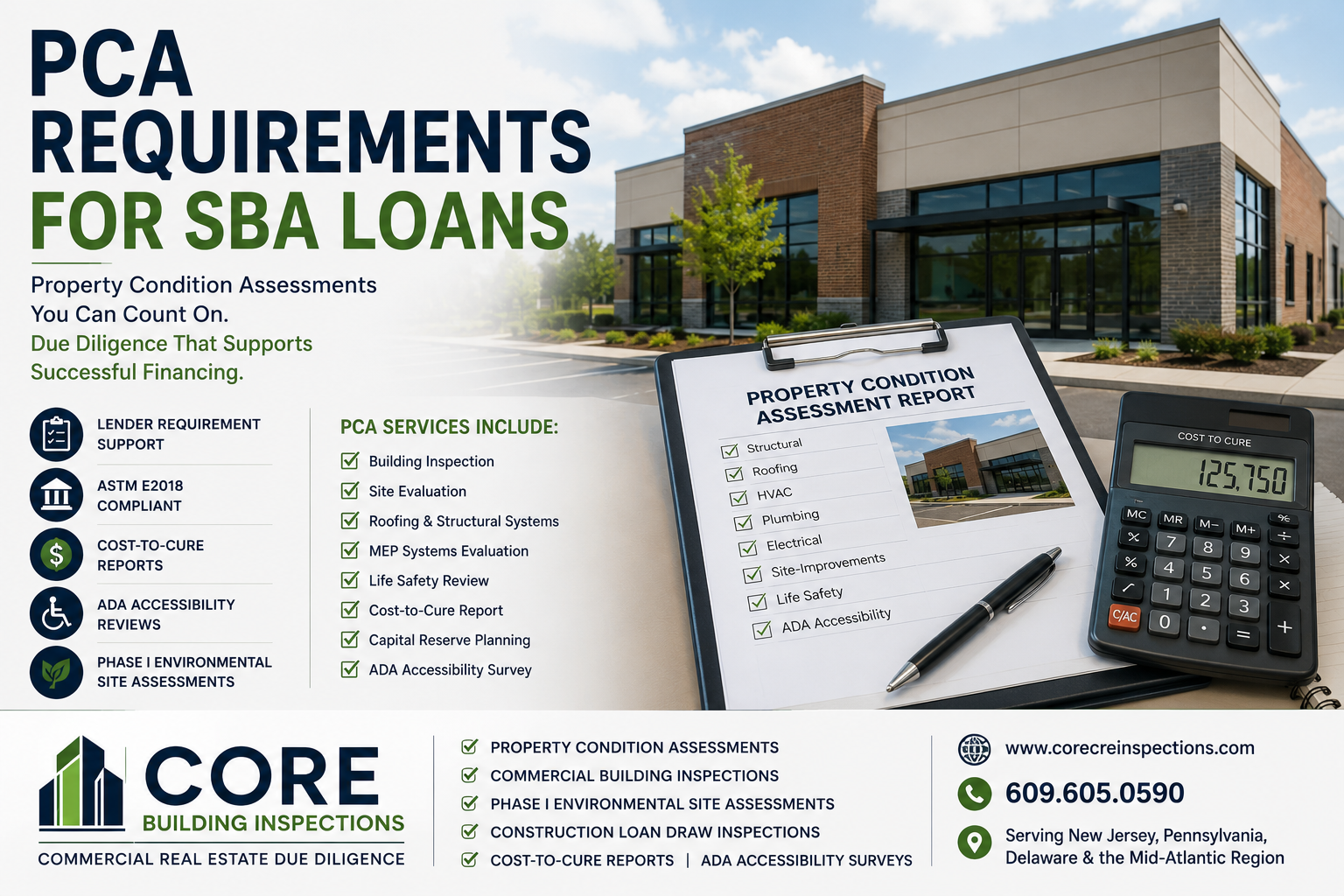
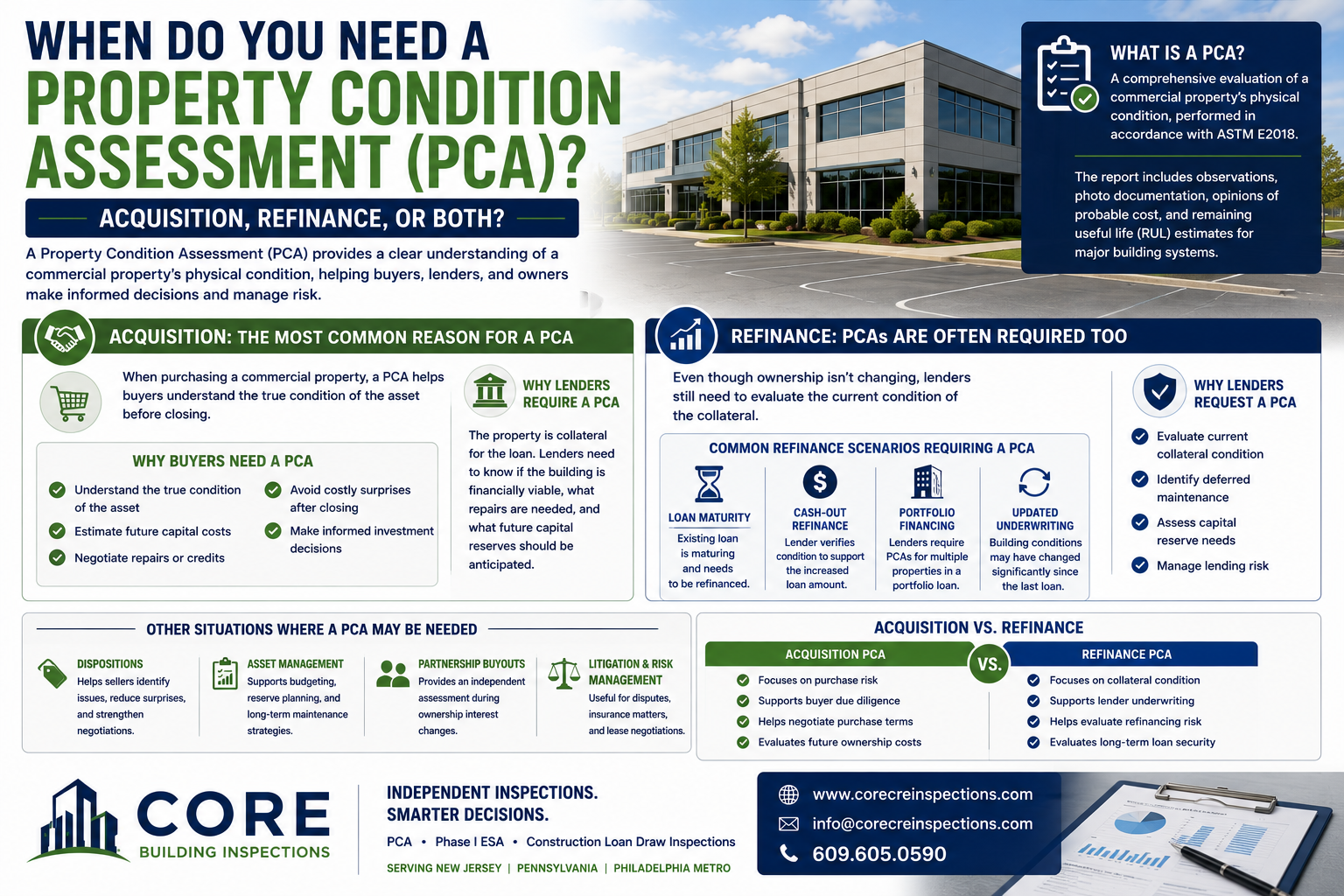
A property condition assessment (PCA) is a comprehensive evaluation of a commercial property’s physical condition, typically performed in accordance with ASTM E2018.
A PCA focuses on:
- Major building systems (roof, structure, HVAC, electrical, plumbing)
- Site improvements (parking areas, drainage, sidewalks)
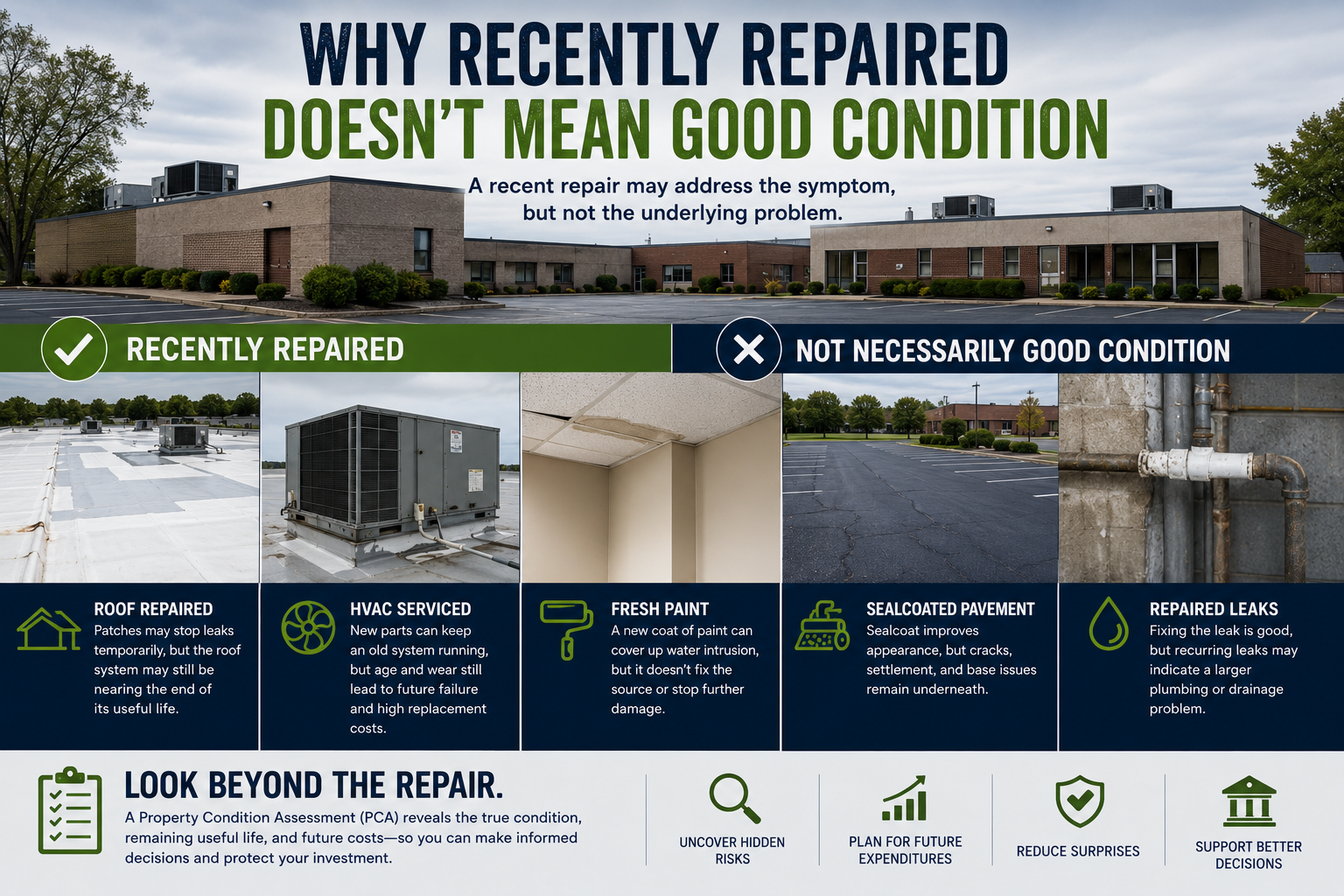
- Deferred maintenance
- Remaining useful life (RUL)
- Capital reserve planning
Unlike a basic inspection, a PCA is designed to connect physical condition to financial risk.
Where the PCA Fits in Due Diligence
Commercial real estate due diligence typically includes:
- Title review
- Financial analysis
- Lease review
- Environmental assessment (Phase I ESA)
- Physical inspection (PCA)
The PCA serves as the primary tool for evaluating the physical asset, ensuring that the building aligns with the financial assumptions of the transaction.
Key Functions of a PCA in Due Diligence
1. Identifies Physical Deficiencies
A PCA documents observable deficiencies across all major building systems. These may include:
- Roof deterioration
- HVAC system deficiencies
- Structural concerns
- Site and drainage issues
Identifying these issues early allows stakeholders to understand the condition of the property before closing.
2. Quantifies Capital Expenditures
One of the most important roles of a PCA is to translate physical deficiencies into estimated repair and replacement costs.
The report provides:
- Immediate repair costs
- Short-term capital needs
- Long-term capital reserve projections
This information is essential for budgeting and underwriting.
3. Supports Lender Underwriting
Lenders rely heavily on PCA reports to evaluate risk associated with the collateral.
The PCA helps lenders determine:
- Whether the asset is financially viable
- Required capital reserves
- Repair escrows
- Loan risk exposure
In many cases, the findings of the PCA directly influence loan structure and approval.
4. Strengthens Negotiation Leverage
PCA findings often become a key factor during purchase negotiations.
Buyers may use the report to:
- Request price reductions
- Negotiate repair credits
- Establish escrow agreements
This ensures that the purchase price reflects the true condition of the property.
5. Improves Investment Decision-Making
For investors, a PCA provides clarity on the long-term performance of an asset.
It helps answer critical questions such as:
- What major systems will need replacement soon?
- How much capital should be reserved annually?
- Are there risks that could impact returns?
This allows investors to make more informed decisions.
PCA vs Other Due Diligence Reports
While a PCA is essential, it is only one component of a broader due diligence process.
For example:
- A Phase I ESA evaluates environmental risks
- Financial analysis evaluates income and expenses
- Legal review evaluates ownership and compliance
The PCA specifically addresses physical condition and capital planning, making it a critical piece of the overall puzzle.
Regional Considerations in NJ & PA
In New Jersey and the Philadelphia metro area, PCAs are especially important due to:
- Aging commercial building stock
- Freeze–thaw cycles impacting roofs and façades
- Older HVAC systems nearing end of life
- Historic property uses with deferred maintenance
These factors increase the importance of a thorough physical evaluation.
Why Skipping a PCA Is Risky
Skipping a property condition assessment (PCA) can expose buyers and lenders to significant risk.
Without a PCA:
- Deferred maintenance may go unnoticed
- Capital costs may be underestimated
- Financial projections may be inaccurate
This can lead to unexpected expenses after closing and reduced investment returns.
Final Thoughts
The role of the PCA in commercial real estate due diligence is to provide a clear, objective understanding of a property’s physical condition and future capital needs. It bridges the gap between building performance and financial analysis, helping stakeholders make confident decisions.
For buyers, lenders, and investors, a PCA is not just an inspection—it is a critical risk management tool.
If you are acquiring, refinancing, or evaluating a commercial property in New Jersey or the Philadelphia metro area, schedule a Property Condition Assessment with Core Building Inspections. Our ASTM-compliant PCA reports provide the detailed insights needed to support successful transactions.