Fire and life safety deficiencies are among the most consequential findings in any commercial property evaluation. A blocked exit, a non-functional fire alarm, a compromised fire barrier, or a lapsed sprinkler inspection does not just create code exposure. It creates occupant risk, liability exposure, insurance complications, and the potential for catastrophic loss. A commercial fire and life safety inspection gives buyers, owners, and lenders a clear picture of how well a building protects its occupants and how close it stands to code compliance. Core Building Inspections performs commercial fire and life safety inspections throughout the Philadelphia metro area and across PA, NJ, NY, and DE.
Our inspections follow a systematic, standards-referenced approach aligned with CCPIA, ICC, and ASTM guidelines. We evaluate the full range of fire and life safety features: means of egress, exit signage and emergency lighting, fire alarm and detection systems, automatic sprinkler systems, fire extinguishers, fire-rated construction and barriers, fire doors, interior finish, and hazardous area separation. Each inspection is scoped to the property type, occupancy classification, building age, and purpose of the evaluation.
Fire and life safety is not a single system. It is the interaction of dozens of building features, from the width and number of exits to the integrity of fire-rated walls to the operational status of alarm and suppression systems. In commercial buildings, these features are more complex, more heavily regulated, and more expensive to remediate than in residential properties. A commercial building may serve hundreds or thousands of occupants across multiple floors, tenant spaces, and occupancy types, each with its own code requirements.
Commercial fire and life safety inspection identifies conditions that compromise occupant safety, violate applicable codes, or create liability and insurance exposure. For buyers, it quantifies the cost and scope of bringing fire protection and egress features to an acceptable standard. For owners, it supports proactive maintenance and helps prioritize corrections before the authority having jurisdiction (AHJ) issues violations. For lenders, it documents the building’s life safety posture at the time of financing and reduces risk associated with code non-compliance.
NFPA 101, the Life Safety Code, is the most widely adopted code in North America for protecting building occupants from fire and related hazards. It establishes requirements for means of egress, fire protection features, interior finish, and occupancy-specific provisions. NFPA 101 connects a network of system-specific standards that govern individual fire protection components:
Our inspection evaluates the building against the practical requirements of this framework, identifying conditions where fire and life safety features do not meet their intended function. While our inspection is not a code enforcement action performed by the AHJ, it identifies the same types of deficiencies that trigger violations, fines, and forced remediation.
Fire protection contractors who inspect alarm systems, sprinklers, and extinguishers perform valuable system-specific testing, but their scope is limited to the systems they service, and their business model creates an inherent interest in selling upgrades and service contracts. A life safety inspection is broader: it evaluates the building as a whole, not just individual systems, and it considers how egress, construction, and protection features work together.
Core Building Inspections is not a fire protection contractor. We do not sell alarm systems, sprinkler repairs, extinguisher services, or fire door installations. Our only deliverable is an objective, documented evaluation of the building’s fire and life safety condition. This independence is critical for pre-purchase due diligence, insurance and liability assessments, and capital planning where unbiased findings drive the decisions.
As CCPIA, ICC, and ASTM-credentialed inspectors, we bring professional accountability and a whole-building perspective that system-specific contractors, by the nature of their scope, cannot provide.
Means of egress is the most critical element of life safety. We evaluate exit access, exit paths, and exit discharge for adequate number and width of exits relative to occupant load, travel distance compliance, clear and unobstructed corridors and aisles, proper door swing direction and operation, and discharge to the public way. Locked, blocked, or chained exit doors are the single most dangerous life safety violation, and identifying these conditions is a priority in every inspection.
Illuminated exit signs must be visible from every direction of travel. Emergency lighting must activate automatically upon loss of normal power and sustain illumination for at least 90 minutes per NFPA 101. We document the presence, condition, and functionality of exit signs and emergency lighting throughout the building. Missing or non-functional emergency lighting with no testing records is one of the most common life safety deficiencies in commercial buildings.
Fire alarm systems, smoke detectors, heat detectors, pull stations, notification appliances, and annunciator panels are visually evaluated for presence, condition, and general operational status. We document the type and age of the fire alarm system and review available inspection records. Fire alarm systems must be installed, tested, and maintained per NFPA 72, and current inspection documentation is a key component of code compliance.
Water-based fire protection is the single most effective fire suppression feature in commercial buildings. We visually evaluate sprinkler coverage, head condition and clearance, control valve positions, gauge readings, fire department connections, and general system condition. Sprinkler systems must be maintained per NFPA 25, and we review available inspection, testing, and maintenance records. Missing, painted, loaded, or obstructed sprinkler heads and insufficient clearance below sprinklers are among the most frequently cited deficiencies.
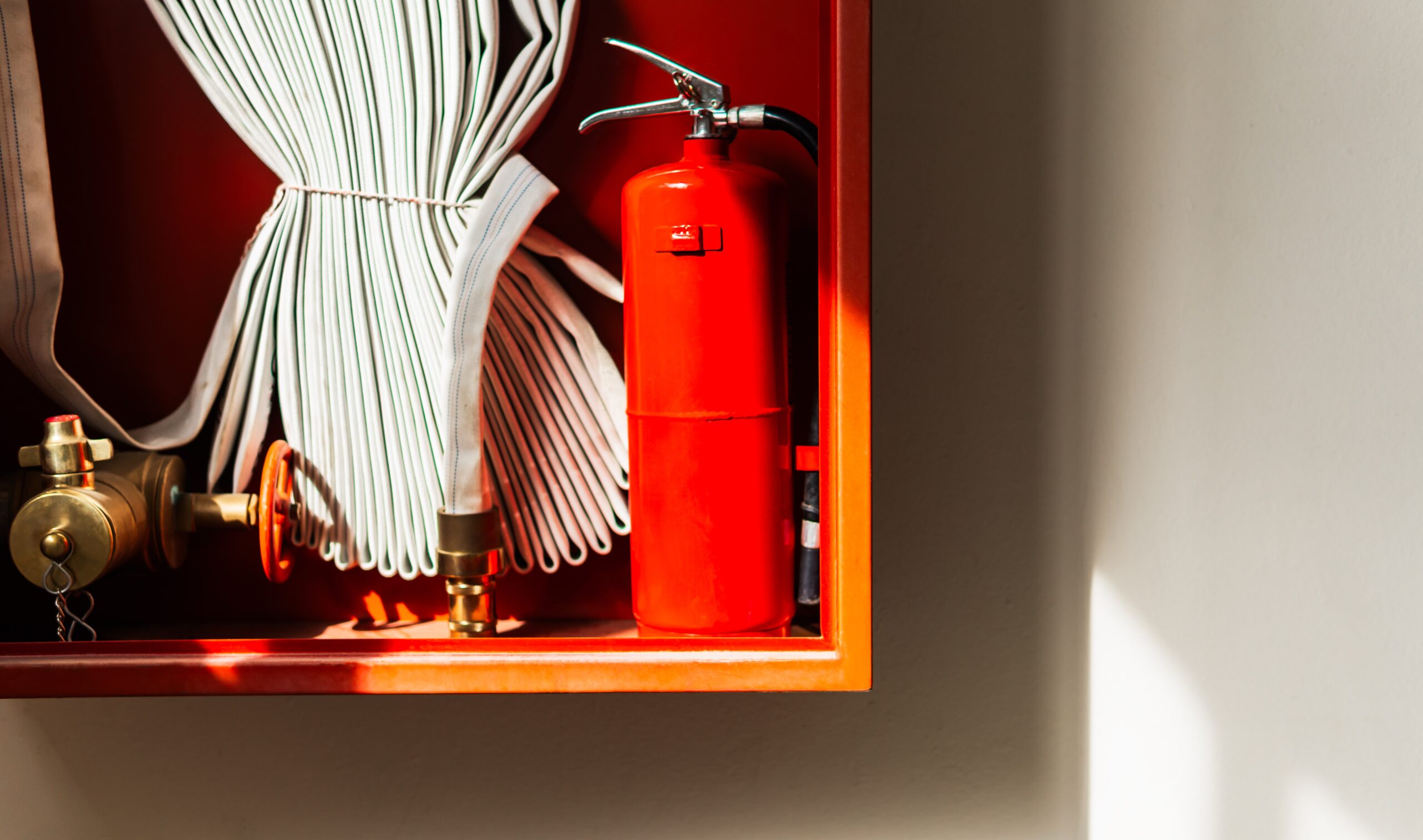
Fire extinguishers are evaluated for presence, proper mounting, accessibility, current service tags, and appropriate type and placement relative to travel distance requirements per NFPA 10. Missing, expired, or unmaintained extinguishers are a common finding, particularly in older buildings and tenant spaces with deferred maintenance.
Fire barriers are rated walls, floors, and ceilings that create compartments to slow fire and smoke spread. We evaluate visible fire-rated assemblies for integrity, including penetration sealing. Unsealed penetrations through fire-rated assemblies, where pipes, cables, or ductwork pass through rated walls without listed firestopping materials, are the most common passive fire protection violation, found in over half of commercial building inspections.
Fire doors must self-close and latch, must not be propped open (unless held by listed magnetic releases tied to the fire alarm), and must bear intact labels. We evaluate fire door condition, closer operation, latching, labeling, and clearances per NFPA 80. Smoke doors are evaluated per NFPA 105 where present. Annual fire door inspections are required by NFPA 101 and NFPA 80, and we document whether inspection records are current.
Wall and ceiling finishes in commercial buildings must meet flame-spread requirements based on occupancy classification per NFPA 101 Chapter 10. We observe interior finish materials and note conditions where materials may not meet the required classification for the occupancy type, particularly in means of egress corridors and assembly spaces.
Storage rooms, boiler rooms, electrical rooms, and similar spaces with elevated fire risk must be separated from the rest of the building by fire-rated construction or protected by automatic sprinklers, depending on the occupancy chapter requirements. We evaluate whether hazardous areas are properly separated and document any conditions where separation is compromised.
Where ductwork penetrates fire-rated or smoke-rated assemblies, fire dampers and smoke dampers are required to prevent fire and smoke migration through the HVAC system. We document visible damper locations and note any evidence of missing, damaged, or non-functional dampers. NFPA 80 and NFPA 105 require periodic inspection and testing of these devices.
Fire and life safety deficiencies follow predictable patterns in commercial buildings. Common findings include:
Identifying these conditions early allows property owners and buyers to plan corrections, negotiate pricing, and avoid costly AHJ violations, insurance complications, or catastrophic events.
Fire and life safety systems can be compromised by fire events, water damage, construction and renovation activity, extended vacancy, and severe weather. Post-event inspections identify fire alarm and detection components damaged by water, heat, or physical impact, sprinkler system damage including frozen or burst piping, compromised fire-rated construction from renovation or tenant build-out, disabled or bypassed fire protection systems that were never restored, and emergency lighting and exit sign failures from power events.
For properties across the Philadelphia metro area, South Jersey, and the Delaware Valley, freeze-thaw exposure affecting wet sprinkler systems, storm damage to exterior fire protection components, and construction activity that breaches fire barriers are recurring seasonal and situational concerns. Timely documentation supports insurance claims, code compliance remediation, and informed capital planning.
Our standard fire and life safety inspection is a visual, non-invasive evaluation aligned with CCPIA commercial standards of practice. In some cases, findings may warrant additional specialized assessment:
Fire Alarm System Testing and Certification: When inspection records are lapsed or system condition raises concerns, a full fire alarm inspection, testing, and certification by a qualified fire alarm contractor per NFPA 72 may be recommended.
Sprinkler System Testing and Flow Testing: When visual findings suggest system deficiencies, a full NFPA 25 inspection including flow testing, trip testing, and internal pipe inspection may be warranted.
Fire Door Inspection Program: NFPA 80 requires annual inspection of fire door assemblies by qualified individuals. For buildings without current fire door inspection records, we recommend establishing a formal inspection program.
Firestopping Survey: For buildings with extensive unsealed penetrations, a dedicated firestopping survey and remediation program can systematically identify and correct passive fire protection failures throughout the building.
These specialized assessments are recommended based on the specific findings of our visual evaluation. Our role is to identify when additional testing or remediation adds value and to clearly communicate that recommendation.
Fire protection system upgrades, fire alarm replacements, sprinkler system modifications, fire door replacements, and firestopping remediation programs are significant capital expenditures. A well-timed fire and life safety inspection supports capital planning by identifying where the building stands relative to current code requirements, what corrections are needed to maintain compliance and insurability, and what upgrades should be budgeted over the next one to five years.
Our inspection reports provide the observational data needed to support capital reserve planning, insurance discussions, and long-term ownership strategy. For properties where granular cost estimates are needed, our Cost to Cure Reporting service provides detailed financial analysis tied to specific fire and life safety repair and upgrade items.
Fire and life safety is a critical component of every Property Condition Assessment. Our commercial fire and life safety inspection can be performed as a standalone service or as part of a broader PCA conducted in general conformance with ASTM E2018. When performed within a PCA, the fire and life safety evaluation contributes to the overall capital needs table, code compliance observations, and opinions of probable cost.
For properties where fire and life safety is the primary concern, a standalone inspection provides focused, detailed documentation without the full scope and cost of a complete PCA.
Our fire and life safety inspection clients include commercial real estate buyers, investors, property managers, asset managers, lenders, attorneys, building owners, and facility managers. Reports are structured to support acquisition due diligence, loan underwriting, capital planning, insurance underwriting, and ongoing portfolio management.
A small amount of preparation shortens inspection time and improves report quality. Before your scheduled inspection, gather any available fire and life safety documentation: fire alarm inspection and testing reports (NFPA 72), sprinkler inspection and testing reports (NFPA 25), fire extinguisher service records (NFPA 10), fire door inspection records (NFPA 80), emergency lighting test logs, and any AHJ violation notices or correction orders. Ensure access to all stairwells, mechanical rooms, fire command centers, sprinkler risers, and fire alarm panels.
If specific areas of concern exist, such as recent construction or renovation activity, known code violations, tenant spaces with modified egress, or systems that have been taken out of service, communicate those to the inspector in advance. This context allows the inspection to focus additional attention on known problem areas while still providing a complete evaluation of the building’s fire and life safety features.
We provide commercial fire and life safety inspections throughout the Philadelphia metropolitan area, all of New Jersey, New Castle County in Delaware, and select markets in New York. This regional footprint supports buyers, owners, and lenders working across the tri-state area and beyond.



Certified under nationally recognized commercial inspection standards to ensure consistency, accuracy, and professional accountability.

CCPIA Certified
Certified under nationally recognized commercial inspection standards to ensure consistency, accuracy, and professional accountability.

ICC Certified
Ongoing education and training aligned with current safety practices, codes, and inspection methodologies.

ASTM Member
Inspections performed in general conformance with ASTM standards, supporting due diligence and lender requirements.

Years of Experience
Extensive field experience inspecting diverse commercial properties across multiple asset types and markets.

Highly Trained
Continuous training and practical expertise focused on risk identification, system performance, and long-term planning.

 David129 days ago
Trustindex verifies that the original source of the review is Google.
I rely heavily on accurate due diligence and trusted professionals when evaluating acquisitions. Core Building Inspections exceeded my expectations at every stage of the process. Their level of professionalism, technical expertise, and attention to detail was exceptional. The inspection report was comprehensive, well-organized, and provided valuable insights that helped me assess risk and make informed decisions with confidence. What truly sets Core Building Inspections apart is their ability to communicate complex building conditions in a clear, practical manner. Their responsiveness and commitment to client service reflect a deep understanding of the commercial real estate industry. I would not hesitate to use their services again and highly recommend them to investors, lenders, and property owners seeking a first-class commercial building inspection firm. Chris Nocera131 days agoAs a commercial real estate investor, I’ve worked with many inspection companies over the years, and this team stands out. Their inspection was thorough, professional, and delivered in a way that helped me make informed investment decisions with confidence. The report was detailed, easy to understand, and completed on schedule. Their responsiveness and attention to detail were impressive from start to finish. I would highly recommend their services to any investor, buyer, or property owner in need of a high-quality commercial building inspection.
 Jordan Patruskey133 days agoI’ve worked with a number of inspection firms over the years, and Core Building Inspections is one of the best. Their team was professional, responsive, and extremely thorough throughout the process. The report was clear, detailed, and gave me the information I needed to move forward with confidence. If you’re involved in commercial real estate and need a dependable inspection company, I highly recommend Core Building Inspections.
No. A fire marshal inspection is a code enforcement action performed by the authority having jurisdiction (AHJ). Our inspection is an independent, objective evaluation that identifies the same types of deficiencies but is performed for the benefit of buyers, owners, and lenders rather than as a regulatory action. Our findings do not carry enforcement authority but provide the documentation needed for informed decision-making.
The most common findings include locked or obstructed exit doors, missing or non-functional emergency lighting, propped-open fire doors, unsealed penetrations through fire-rated walls, lapsed sprinkler and fire alarm inspection records, missing or expired fire extinguishers, and obstructed or painted sprinkler heads. Unsealed penetrations are found in over half of commercial building inspections.
A fire protection contractor inspects the systems they service and has a financial interest in selling repairs and upgrades. An independent inspector evaluates the entire building’s fire and life safety posture without any conflict of interest. Core Building Inspections does not sell fire protection products or services. Our only deliverable is an objective, documented condition assessment.
Our reports document fire protection system condition, egress compliance, and life safety features with date-stamped photographs and location-specific narratives. This documentation supports insurance underwriting, premium negotiations, loss prevention planning, and claims documentation after fire or damage events.
No. Sprinkler inspections (NFPA 25) and fire alarm inspections (NFPA 72) are system-specific tests performed by fire protection contractors. Our fire and life safety inspection evaluates the building as a whole, including egress, construction, and all fire protection features, providing a comprehensive picture that system-specific inspections do not individually address.